Supreme Court Clarifies Air India Crash Pilots Not To Blame, Agrees To Examine Fresh Plea For Independent Probe

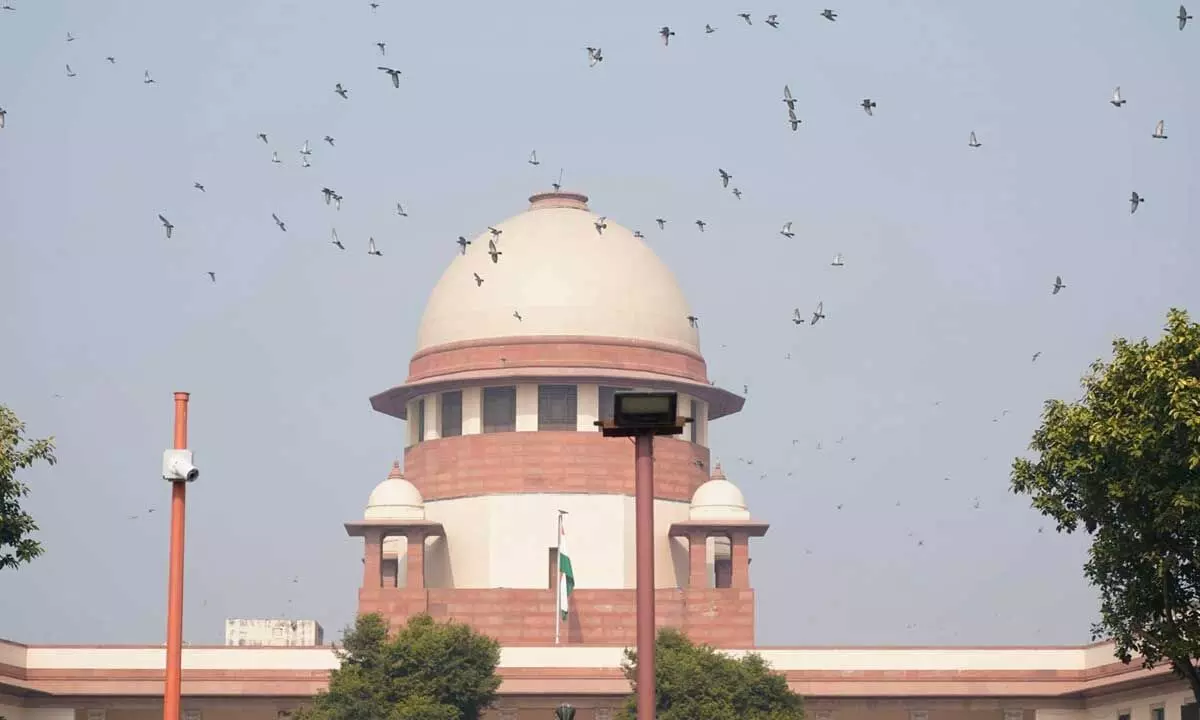
- The Supreme Court stated that pilots of the June 12 Air India Flight AI-171 crash cannot be held responsible for the tragedy, noting no government report attributes fault to them.
- The court will hear a plea from the pilot’s father seeking a judicially monitored investigation next week.
The Supreme Court on Friday emphasized that the pilots of Air India Flight AI-171, which crashed soon after takeoff from Ahmedabad on June 12, killing over 250 people, should not be blamed for the disaster. The court made it clear that no official report has assigned responsibility to the cockpit crew and expressed readiness to record this on file.
A bench of Justices Surya Kant and Joymalya Bagchi addressed senior advocate Gopal Sankaranarayanan, who represented the pilot-in-command’s father, Pushkaraj Sabharwal. The judges assured him that his late son, Captain Sumeet Sabharwal, bore no blame, stressing that public perception must not burden the family.
“This was a tragic accident, but there is no indication that the pilot was at fault,” the bench said, referring to the investigation report which merely mentions a routine cockpit exchange and no evidence of error. Notices were issued to the Centre and the Directorate General of Civil Aviation (DGCA) as the matter was scheduled for further hearing next week, alongside a similar plea by NGO Safety Matters Foundation.
The petition, filed by Sabharwal and the Federation of Indian Pilots, challenges the Aircraft Accident Investigation Board’s (AAIB) preliminary findings of “human error,” calling them biased and incomplete. It demands a court-supervised inquiry, citing possible system failures in the Boeing 787’s digital architecture.
Sankaranarayanan argued that the investigation lacked independence and questioned the line of inquiry directed toward the pilot’s personal life. He criticized foreign media reports implying pilot negligence, saying they had shaped false public opinion. The bench responded that such claims should be addressed legally in the U.S. courts and reaffirmed that “no one in India believes the pilot is to blame.”
The court also advised the petitioners that any challenge to the ongoing probe must include a constitutional challenge to the investigation rules themselves.
Earlier, the bench had described selective leaks from the AAIB’s preliminary report as “unfortunate,” warning that such disclosures could unfairly stigmatize the families of deceased crew members.
Flight AI-171 had crashed shortly after takeoff, killing all 241 on board and 19 on the ground. The AAIB, assisted by U.S. and U.K. agencies and Boeing experts, led the probe. Initial findings showed both engine fuel switches moved from RUN to CUTOFF moments after takeoff, causing a total loss of thrust. While one engine briefly recovered, the aircraft failed to regain altitude before crashing.
A Wall Street Journal report later implied that the captain might have turned off the power, which the AAIB dismissed as “irresponsible.” The current petition contends the crash resulted from electrical or software failure, not human error, and seeks a transparent, expert-led judicial inquiry to prevent future tragedies.
Next Story