
Impact of AI on Future Roles for B-School Graduates

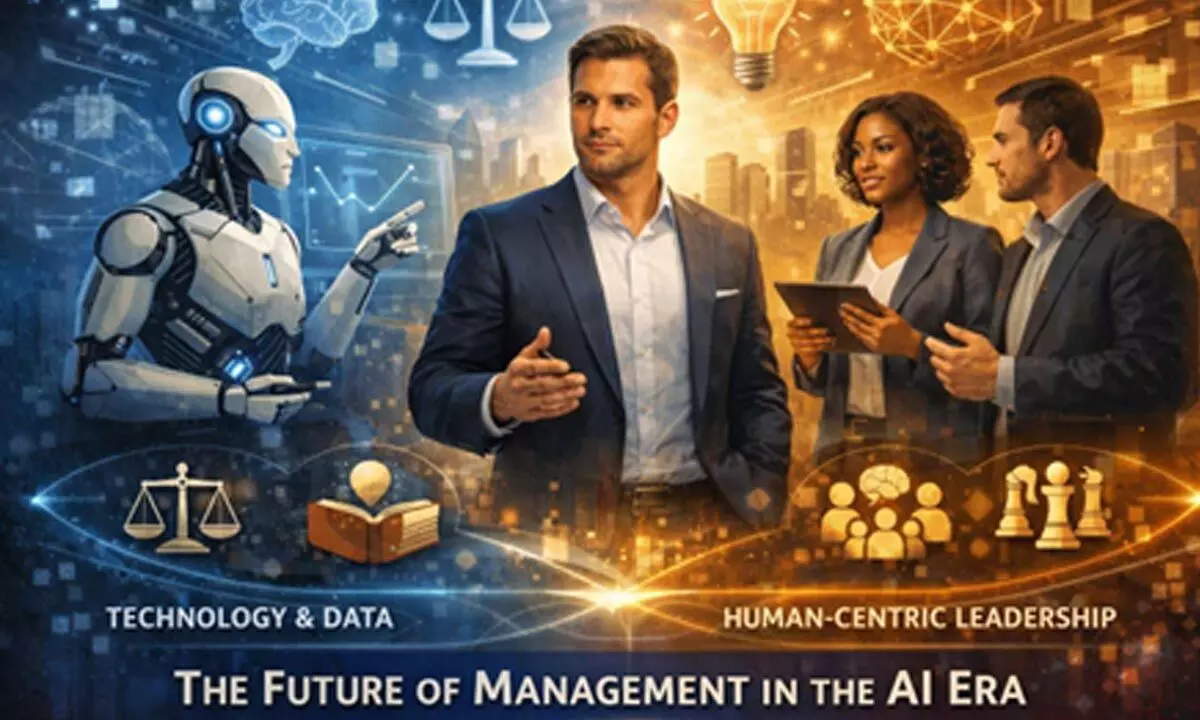
Artificial Intelligence is transforming the future of management careers, redefining what it means to lead and decide in a data-driven world. As AI becomes central to business strategy across functions, B-school graduates are expected to blend managerial judgment with technological fluency. Educators and industry leaders agree that the managers of tomorrow will succeed by working alongside AI, not competing with it
Artificial Intelligence is rapidly redefining the future of work, reshaping not just how organisations operate but also what they expect from tomorrow’s management talent. Across functions such as marketing, finance, consulting, HR, and operations, AI has evolved from a support system into a central driver of business strategy and decision-making. For B-school graduates, this shift signals a clear imperative: success will depend on building hybrid capabilities that combine strong business fundamentals with a working fluency in AI.
“In today’s shifting digital ecosystem, AI is no longer just an enabler—it is a core component of managerial work,” says Dr. Harshit Kumar Singh, Assistant Professor, Information Systems, XLRI Jamshedpur. He explains that AI-powered tools enhance clarity by generating insights, forecasting outcomes, and enabling scenario simulations, but they stop short of replacing human judgment. “AI elevates the role of managers rather than diminishing it. Leaders must still apply values, ethics, and contextual understanding to guide final decisions,” he notes. According to Dr. Singh, leadership in the AI era will be defined by the ability to integrate advanced technology with empathy, creativity, and ethical foresight.
From an employer’s perspective, expectations from management graduates are undergoing a fundamental transformation. Siddharth Shahani, Co-Founder and Executive President, ATLAS SkillTech University, points out that future roles will be inherently interdisciplinary. “AI is redefining the skill set expected of today’s B-school graduates. Success now depends on the ability to apply business knowledge alongside AI to deliver measurable impact,” he says. Organisations, he adds, are increasingly looking for professionals who can interpret AI-driven insights, connect cross-functional viewpoints, manage growing complexity, and translate data into decisive strategic action.
Viewing the shift from both academic and industry lenses, Nitish Kumar, Head – Digital Marketing, Sharda University, describes AI as a career accelerator rather than a disruptor. He highlights how automation is steadily taking over routine tasks in marketing, finance, HR, and operations. “As repetitive work gets automated, the demand for strategic thinking, leadership, and innovation rises,” he explains. Kumar points to emerging roles such as AI-enabled marketing strategist, growth analyst, product manager, and digital transformation consultant as areas set to witness strong demand. He also emphasises that skills like data literacy, prompt engineering, ethical decision-making, and collaboration are no longer optional but core management competencies.
Taken together, these perspectives underscore a decisive shift in the professional landscape. The B-school graduate of the future will not compete with AI but collaborate with it—leveraging intelligent systems to make responsible decisions, spark innovation, and build resilient, human-centric organisations ready for an AI-enabled world.


