Rajiv Kumar demits office

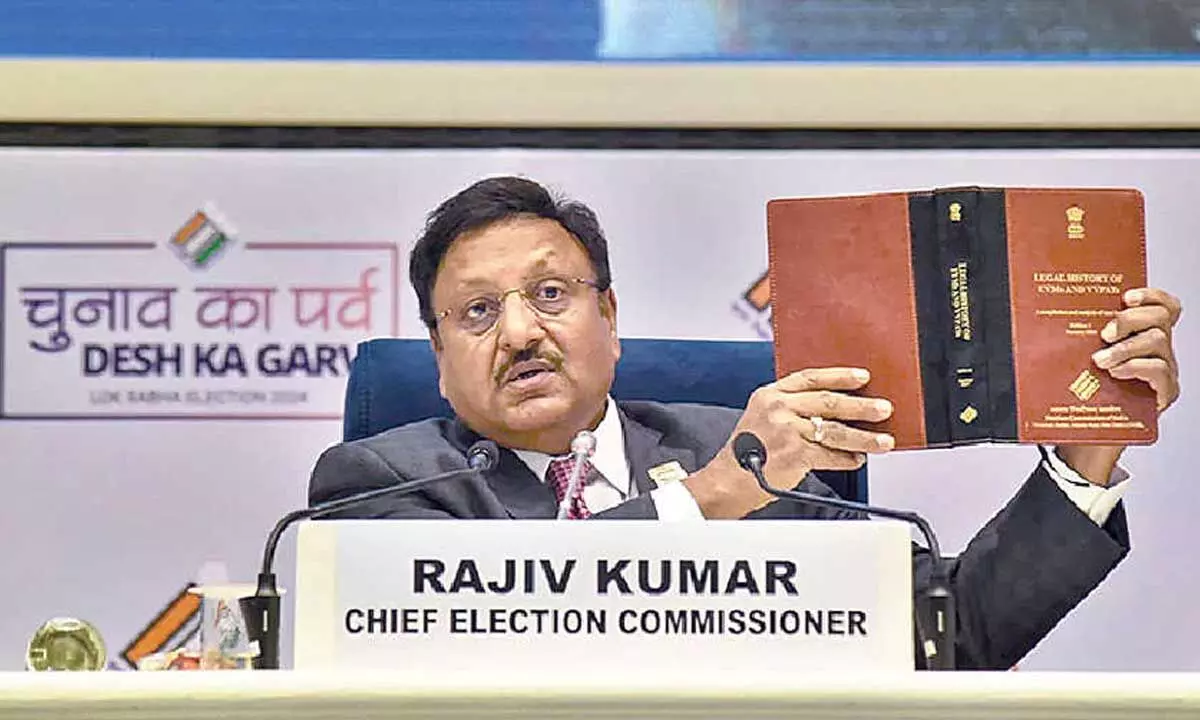
Rajiv Kumar, who oversaw the 2024 Lok Sabha elections and the crucial Jammu and Kashmir assembly polls, demits office on Tuesday as the 25th chief election commissioner
New Delhi: Rajiv Kumar, who oversaw the 2024 Lok Sabha elections and the crucial Jammu and Kashmir assembly polls, demits office on Tuesday as the 25th chief election commissioner after a nearly three-year tenure marked with high electoral successes but also repeated allegations of bias by opposition parties.
Kumar joined the poll panel as an Election Commissioner on September 1, 2020, and assumed charge as the 25th CEC on May 15, 2022.
He served the EC for about four-and-a-half years in the two capacities. During his time with the EC, he effected reforms across various aspects of it functioning: structural, technological, capacity development, communication, international cooperation and administration.
Kumar completed one “full electoral cycle” by overseeing the conduct of elections in 31 states and union territories, the Presidential and Vice Presidential elections in 2022, Lok Sabha elections in 2024 and Rajya Sabha polls. However, he often faced criticism of opposition parties and activists on several issues including the efficacy of Electronic Voting Machines, alleged fudging of voter data and being “lenient” on the ruling BJP. While the Commission responded -- and rejected -- to the allegations in writing, Kumar often took to poetry to defend himself and the poll authority. When he was attacked for “being lenient on the ruling BJP to bag a post-retirement job”, Kumar announced he would go to the “deep Himalayas” for six months after demitting office to “detoxify” himself. On his last day in office on Tuesday, Kumar told PTI Videos he is leaving the EC in very capable hands -- the government announced on Monday night Election Commissioner Gyanesh Kumar will succeed Rajiv Kumar -- and the Indian voter will stand behind the Commission with all their might. In his media interactions, Rajiv Kumar often questioned the timing of petitions raising doubts over poll processes. He said the intent behind filing petitions just before an election was to discredit the EC and the entire electoral process. In his farewell address, Kumar said he “observed a pattern in the timing of certain narratives”.
“The live reporting of hearing of long-pending cases at critical junctures, sometimes fuel distrust that the petitioner intends to create. It would be beneficial if such proceedings are scheduled with due consideration to the election period, ensuring that the electoral process remains smooth and undisturbed. This is a specific expectation of India’s esteemed constitutional Courts,” he said.
He also said that the Election Commission remains steadfast in its commitment to addressing concerns surrounding promises of unchecked freebies and overpromising manifestos. “While the matter related to freebies is currently sub-judice, and I hope for a timely decision from the court, it is imperative in the interim that political promises are backed by clear disclosures on their financial viability and their effect on the fiscal health of the state,” he said.