
Rajasthan Twin Sisters Achieve Remarkable Identical 97.17% Board Results

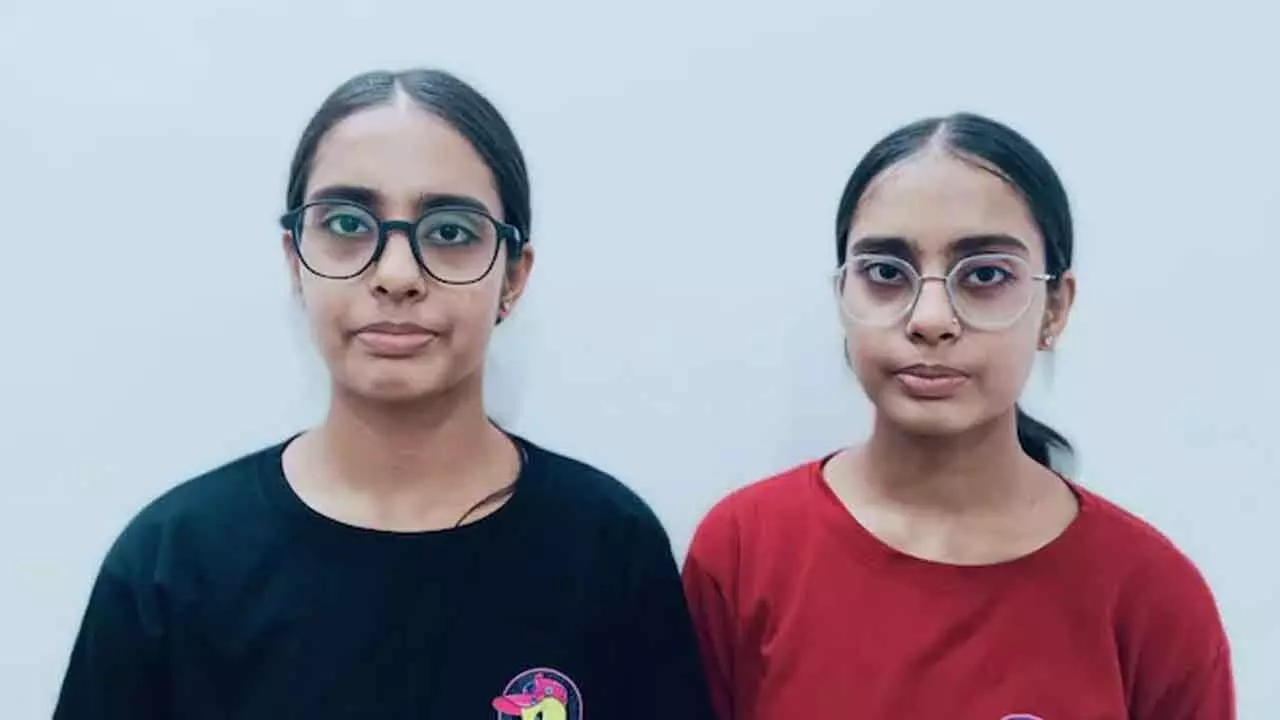
Twin sisters Kanishka and Kartika Chaudhary from Rajasthan's Nagaur district create history by scoring exactly 97.17% each in Class 10 RBSE board examinations, stunning their village and school community.
Twin sisters from a small Rajasthan village have created an unprecedented academic milestone by achieving exactly identical marks in their Class 10 board examinations. Kanishka and Kartika Chaudhary, students from Chhapri Khurd village in Nagaur district, both secured precisely 97.17% in the Rajasthan Board of Secondary Education examinations, leaving their family, teachers, and entire community astounded.
The extraordinary achievement became apparent when results were declared on May 28, prompting disbelief from family members who initially thought there might be an error in the mark sheets. The identical scores represent far more than statistical coincidence, reflecting the sisters' shared dedication, synchronized study habits, and mutual support throughout their academic journey.
Both students attend Kalpana Chawla International Private School on Merta Road, where their consistent collaborative approach to learning has been evident throughout their educational career. Their academic partnership extends beyond mere sibling support, encompassing shared study sessions, coordinated preparation strategies, and continuous motivation for each other's success.
The sisters come from a modest family background, with their father Shivnarayan Chaudhary working as a conductor for Rajasthan Roadways and their mother Suman Chaudhary managing household responsibilities. Despite limited resources, the family has prioritized education, with both parents providing unwavering support for their daughters' academic aspirations.
Shivnarayan Chaudhary expressed immense pride in his daughters' achievement, emphasizing their mutual support system and collective work ethic. He highlighted how the twins consistently refused to leave each other behind academically, always ensuring both progressed together through their studies.
The remarkable results gained additional significance considering the competitive nature of this year's examinations. Over 10.7 lakh students participated in the Class 10 RBSE examinations conducted from March 6 to April 4, with an overall pass percentage of 93.6%. The board results once again demonstrated superior performance by female students compared to their male counterparts.
Currently, both sisters have relocated to Sikar, a renowned educational hub where students typically prepare for competitive entrance examinations. Their career aspirations reflect their individual interests while maintaining their pattern of complementary goals. Kanishka has set her sights on pursuing engineering, while Kartika aims to enter the medical profession.
The village community has responded with overwhelming enthusiasm to the twins' success, with plans underway for a celebratory welcome upon their return home. Local residents view the achievement as a source of pride and inspiration, particularly given the rural setting and the family's humble circumstances.
Suman Chaudhary credited her daughters' success to their persistent hard work, ambitious dreams, and most importantly, their unwavering mutual support. She emphasized that the twins never allowed individual struggles to overshadow their collective progress, always ensuring both remained motivated and focused on their goals.
The identical scoring phenomenon extends beyond mere academic achievement, representing a testament to the power of collaborative learning and sibling cooperation. Educational experts note that such precise score matching is extraordinarily rare, particularly at such high percentage levels, making this case statistically remarkable.
The twins' success story resonates particularly strongly in rural educational contexts, where limited resources often pose challenges for academic excellence. Their achievement demonstrates that dedication, family support, and collaborative learning can overcome socioeconomic barriers to educational success.
Their academic journey reflects broader themes of educational equity and rural talent development, showing how students from small villages can achieve exceptional results when provided with appropriate support systems and educational opportunities.
The sisters' story has begun attracting attention beyond their immediate community, with educators and media outlets recognizing the uniqueness of their achievement. Their success serves as an inspiration for other rural students, demonstrating that geographical location need not limit academic potential.
As Kanishka and Kartika prepare for their next educational phase in Sikar, their identical board results represent just the beginning of what promises to be continued academic excellence. Their story reinforces the importance of family support, collaborative learning, and persistent effort in achieving educational goals, regardless of background circumstances.


