Political Storm Erupts Over Chidambaram's Comments On Pahalgam Terror Attack Origins

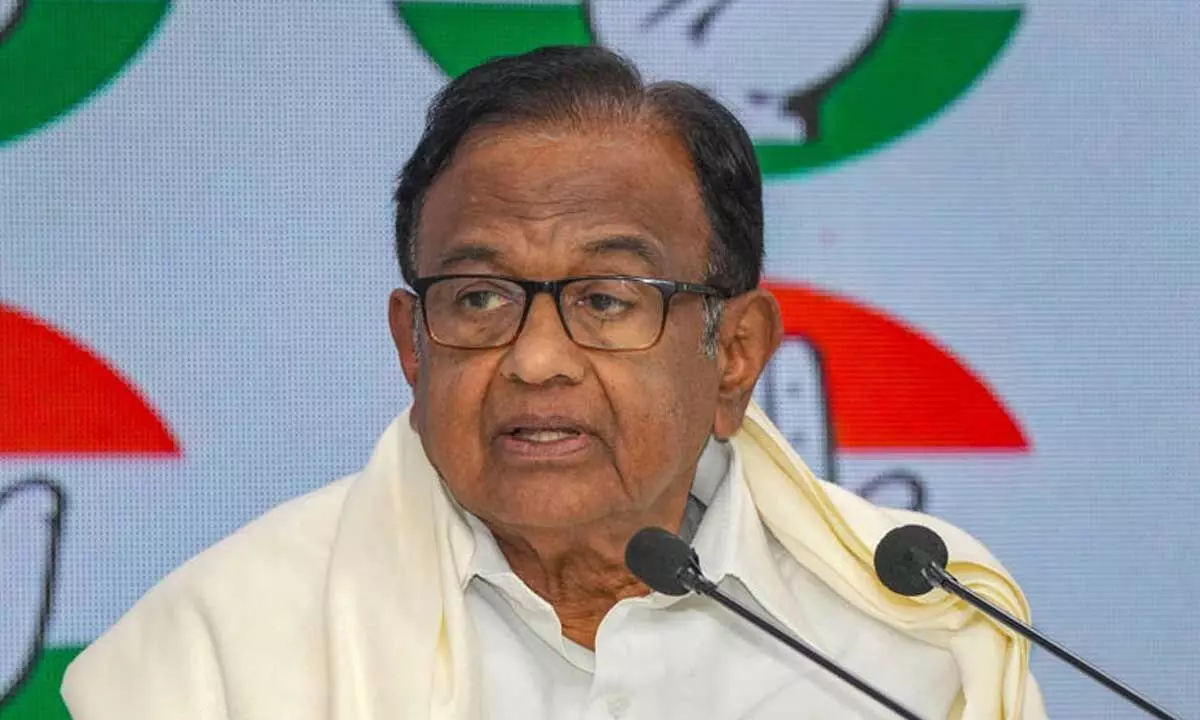
P Chidambaram faces BJP backlash after questioning Pakistan's role in Pahalgam terror attack, suggesting terrorists might be homegrown. Congress defends leader amid national security debate.
Senior Congress politician P Chidambaram found himself at the center of a heated political controversy on Monday after defending his recent statements about the Pahalgam terror incident, which he claimed were being deliberately distorted through a coordinated misinformation effort. The veteran leader pushed back against accusations from the Bharatiya Janata Party, who alleged he was providing unwarranted support to Pakistan's position on terrorism.
In a social media post on X, Chidambaram expressed frustration over what he described as selective editing and misrepresentation of his comments from a recent television interview. He criticized those spreading misinformation as the "worst kind" of trolls who deliberately suppress complete recorded interviews, extract isolated sentences, silence specific words, and present speakers in a negative light to serve their political agenda.
The political firestorm began following Chidambaram's interview with The Quint, where he raised questions about the government's assertions linking Pakistan to the devastating April 22 attack in Jammu and Kashmir's Pahalgam region. The assault resulted in 26 fatalities, with the majority being innocent civilians caught in the violence.
During the interview, Chidambaram challenged the official narrative by questioning whether authorities had successfully identified the perpetrators or determined their origins. He suggested that the attackers could potentially be domestic terrorists rather than foreign infiltrators, emphasizing the absence of concrete evidence supporting claims of Pakistani involvement in the deadly incident.
The BJP responded with fierce criticism, accusing the opposition Congress party of compromising national security interests and aligning with Pakistan's official stance on terrorism. Party officials characterized Chidambaram's remarks as providing undeserved legitimacy to Pakistan's denials of involvement in cross-border terrorism.
Amit Malviya, who leads the BJP's information technology cell, used social media to condemn what he viewed as Congress's pattern of defending Pakistan following terrorist attacks. He questioned why Congress leaders consistently appeared to advocate for Pakistan's position rather than supporting India's security forces in their fight against state-sponsored terrorism.
The criticism intensified when BJP Member of Parliament Nishikant Dubey escalated the rhetoric by labeling the entire Congress organization as traitorous. Speaking to the ANI news agency, Dubey referenced various allegations against Congress leadership, including claims about Rahul Gandhi's interactions with China's Communist Party and unsubstantiated corruption charges, while praising Prime Minister Modi's leadership as an obstacle to what he characterized as Congress's anti-national agenda.
Another BJP parliamentarian, Deepak Prakash, echoed similar accusations, claiming that Congress was aligning itself with those who oppose India's interests and warning that the Indian population would never forgive political leaders who undermined national security.
Several prominent Congress representatives rallied to defend Chidambaram against the mounting criticism, arguing that the BJP was attempting to deflect attention from its own shortcomings in addressing terrorism effectively. They characterized the attacks on Chidambaram as a deliberate diversionary strategy designed to avoid accountability for security failures.
Congress MP Manickam Tagore specifically pointed to what he described as the BJP's failure to properly execute Operation Sindoor, suggesting that the governing party was using the controversy to distract from more substantive issues surrounding the Pahalgam attack and the government's counter-terrorism efforts. He emphasized Congress's unwavering support for India's armed forces in their ongoing battle against terrorist threats.
Veteran Congress leader Pramod Tiwari raised pointed questions about the investigation's progress, highlighting that three months after the attack, the perpetrators remained unidentified. He questioned the government's effectiveness in tracking down those responsible for killing what he described as the husbands of 26 women, criticizing the administration's handling of the security situation in Kashmir as potentially harmful to national interests.
The controversy also drew commentary from outside the Congress-BJP divide, with Shiv Sena (UBT) Member of Parliament Priyanka Chaturvedi offering criticism of Chidambaram's position. Drawing on his extensive experience as a former Home Minister and cabinet member in multiple portfolios, she argued that his comments were inappropriate given the well-established pattern of Pakistani involvement in similar attacks over several decades.
Chaturvedi referenced the initial claim of responsibility by The Resistance Front (TRF), which was subsequently withdrawn, and noted Pakistan's advocacy for such groups in international forums like the United Nations as clear evidence of the source of terrorist threats facing India. She maintained that the origins of such attacks should be obvious given historical patterns and Pakistan's documented support for militant organizations operating in the region.
The debate reflects broader tensions over how political parties approach discussions of national security and terrorism, with opposition parties seeking to hold the government accountable for security failures while governing parties demand unity in facing external threats. The controversy also highlights the challenges of maintaining productive political discourse on sensitive security matters without compromising either democratic debate or national solidarity in confronting terrorism.
As the political storm continues, both sides appear entrenched in their positions, with Congress defending its right to question government claims and demand accountability, while the BJP maintains that such questioning undermines national security and provides comfort to hostile foreign actors. The resolution of this controversy may depend on whether new evidence emerges regarding the Pahalgam attack or whether political attention shifts to other pressing national issues.