
Pakistan Deputy PM Reveals Urgent Ceasefire Appeal Following Devastating Indian Air Base Strikes

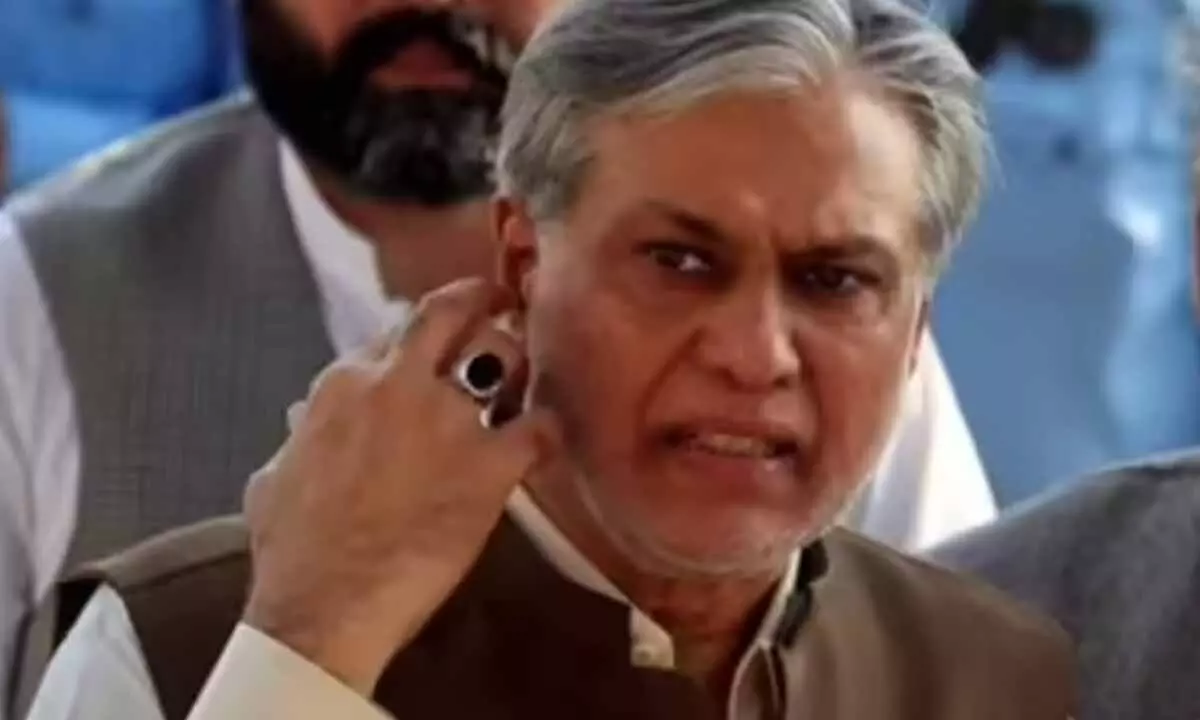
Pakistan's Deputy Prime Minister Ishaq Dar admits country sought immediate ceasefire through Saudi Arabia and US intervention after India's Operation Sindoor destroyed key military installations in May 2025.
Pakistan's Deputy Prime Minister Ishaq Dar has made a remarkable public admission that his country was forced to urgently seek a ceasefire with India last month following devastating strikes on two critical Pakistani air bases during Operation Sindoor. The revelation came during a television interview where Dar detailed the behind-the-scenes diplomatic scramble that followed India's precision military response to the Pahalgam terror attack.
During his television appearance, Dar confirmed that Indian forces successfully targeted two of Pakistan's most strategically important military installations: the Nur Khan air base in Rawalpindi and the Shorkot air base, officially designated as PAF Base Rafiqui, located in Punjab province. The strikes prompted immediate panic within Pakistan's political and military leadership, leading to desperate appeals for international intervention to halt the escalating conflict.
The sequence of events unfolded dramatically in the early hours of May 8, when India launched Operation Sindoor at approximately 2:30 AM. The operation was conceived as a direct response to the April 22 terrorist attack in Jammu and Kashmir's Pahalgam region, which resulted in the deaths of 26 tourists. India's military planners had identified nine terror training facilities across Pakistan and Pakistan-Occupied Kashmir as targets for retaliatory strikes.
According to Dar's account, the immediate aftermath of the Indian strikes triggered a frantic series of diplomatic communications. Within just 45 minutes of the attacks, Saudi Prince Faisal contacted the Pakistani Deputy Prime Minister, having learned of ongoing conversations between Pakistani officials and US Secretary of State Marco Rubio. The Saudi royal sought authorization to directly engage with India's External Affairs Minister S Jaishankar to convey Pakistan's readiness for de-escalation if India would cease its military operations.
The Nur Khan air base represents one of Pakistan's most sensitive military compounds, strategically positioned between Rawalpindi and Islamabad. This facility serves dual purposes, housing both operational air force units and VIP transport aircraft used by Pakistan's political and military leadership. Its location between Pakistan's military headquarters in Rawalpindi and the political capital of Islamabad makes it particularly significant for the country's defense infrastructure.
Satellite imagery analysis revealed the precision and effectiveness of India's strikes. Pre-strike images from April 25 showed intact facilities and equipment at the targeted locations. However, post-strike imagery from May 10 documented the complete destruction of two command and control trailer trucks at Nur Khan, demonstrating the accuracy of Indian missile strikes. Subsequent satellite images from May 17 captured Pakistan's cleanup operations at the damaged air base.
The second target, PAF Base Rafiqui, functions as one of Pakistan's primary fighter aircraft installations. This facility houses a diverse array of combat aircraft, including Chinese-manufactured JF-17 fighter jets, French-built Mirage 5 fighters, and Alouette III helicopters. The base serves as a critical component of Pakistan's air defense network and its targeting sent clear signals about India's military capabilities and intentions.
The diplomatic intervention proved crucial in preventing further escalation. US officials had reportedly anticipated the potential for increased tensions and were already in communication with both sides before the strikes occurred. While maintaining public neutrality, American officials delivered firm messages to Pakistani leadership, essentially ordering them to activate direct military communication channels with India and pursue immediate de-escalation.
The formal ceasefire process involved direct communication between the military leadership of both countries. On May 10, Pakistan's Director General of Military Operations, Major General Kashif Abdullah, placed a direct call to his Indian counterpart, Lieutenant General Rajiv Ghai, at 1535 hours Indian Standard Time. This communication led to an agreement to cease all military actions across land, air, and sea domains, with the ceasefire taking effect at 5:00 PM that same day.
However, the agreement faced immediate challenges as Pakistan reportedly violated the ceasefire terms within hours of its implementation. This breach further complicated the already tense situation and demonstrated the fragility of the diplomatic resolution.
The broader impact of Operation Sindoor extended beyond the immediate military targets. Pakistan's retired Air Marshal Masood Akhtar later confirmed the loss of an Airborne Warning and Control System aircraft during the Indian strikes. This AWACS aircraft, which provided long-range radar surveillance and airspace control capabilities, was reportedly destroyed at Islamabad's Bholari air base, representing a significant blow to Pakistan's air defense capabilities.
Social media documentation of the strikes included multiple videos purportedly showing the Nur Khan Air Base engulfed in flames following massive explosions. These images provided visual confirmation of the strike's impact and circulated widely across digital platforms, adding to the public awareness of the military action's scope.
The entire episode highlighted the rapid escalation potential inherent in South Asian regional conflicts and the critical role of international mediation in preventing broader warfare. The involvement of both Saudi Arabia and the United States in facilitating dialogue demonstrated the global stakes involved when nuclear-armed neighbors engage in military confrontation.
Dar's public admission represents an unusually candid acknowledgment of Pakistan's vulnerability during the crisis and its reliance on external diplomatic intervention to secure a face-saving exit from the escalating conflict. Such revelations typically remain classified within official circles, making his television appearance particularly significant for understanding the crisis dynamics and Pakistan's internal assessment of its military position during the confrontation.


