Pak Defence Minister's Controversial Claim: ‘US Leaders Take Bribes From Israel Openly, I’ll Do It Privately’

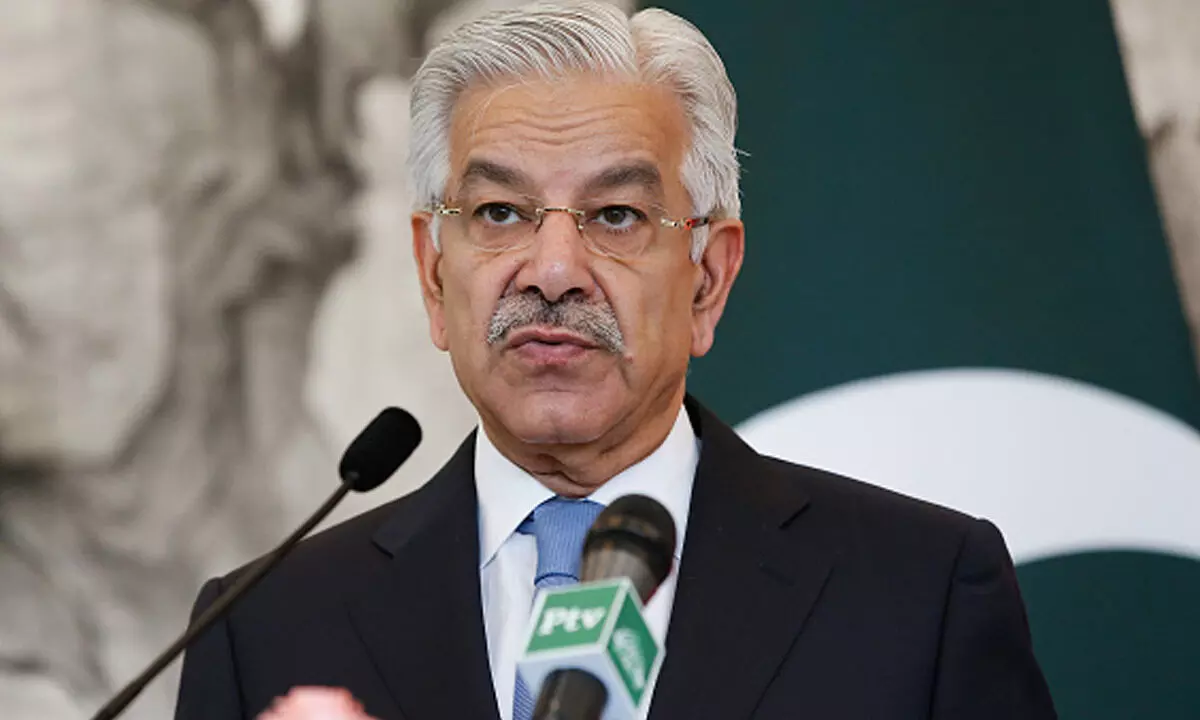
- Pakistan’s Defence Minister Khawaja Asif sparked outrage by comparing corruption in his country to U.S. politicians allegedly accepting bribes from Israel openly.
- Amid rising corruption allegations in Pakistan, his remarks question global double standards and call for stronger alliances among Islamic nations.
In a statement that has drawn widespread criticism, Pakistan’s Defence Minister Khawaja Asif defended his country against corruption allegations by pointing fingers at the United States. In an interview with journalist Shahzeb Khanzada on Geo TV, Asif claimed that while Pakistan is being maligned for bribery, U.S. politicians accept funds from Israel openly without repercussions. He provocatively added, “If I were to accept bribes, I would do it discreetly, not in front of everyone.”
Asif accused the military leadership, parliament, and ruling elite in the U.S. of financing Israeli interests, contrasting this with Pakistan’s treatment in global discourse. His remarks come at a time when Pakistan is grappling with allegations of corruption and lack of transparency. Earlier this year, he accused high-ranking diplomats of using illicit funds to flee to Portugal and lamented that corruption has left ordinary politicians scrambling for power without proper plots or foreign residency.
The Defence Minister’s comments also touched upon broader geopolitical issues. He urged Islamic nations to consider forming a military alliance similar to NATO, aimed at defense rather than offense. His controversial remarks coincide with intensified tensions in the Middle East, with Israel’s ongoing military operations in Gaza receiving strong backing from U.S. officials.
Asif’s statement reflects deeper concerns about perceived hypocrisy in global politics and raises uncomfortable questions about how corruption is judged differently across nations. His remarks are likely to fuel further debate over accountability, fairness, and the politicization of corruption charges.
Next Story