Manipur President's Rule Extended For Six More Months Despite NDA MLAs' Opposition

Home Minister Amit Shah to present resolution in Rajya Sabha extending President's Rule in Manipur until February 2026, despite ongoing campaign by state NDA legislators for democratic government restoration.
Union Home Minister Amit Shah will present a resolution in the Rajya Sabha on Friday seeking parliamentary approval to extend President's Rule in Manipur for an additional six-month period. The proposed resolution formally requests legislative endorsement for continuing the constitutional arrangement that has governed the northeastern state since February.
The resolution's text specifies parliamentary approval for maintaining the Presidential Proclamation originally issued on February 13, 2025, under Article 356 of the Constitution, extending its validity for another six months starting August 13, 2025. This extension would effectively maintain central government control over Manipur's administration through early 2026.
The decision to prolong President's Rule occurs against the backdrop of sustained political pressure from the state's own National Democratic Alliance legislators, including both Meitei and Naga representatives, who have been actively campaigning for months demanding the restoration of democratic governance in their state. These lawmakers have consistently argued for the reestablishment of an elected government rather than continued central administration.
The current period of President's Rule was initially implemented on February 13, following the resignation of former Chief Minister N. Biren Singh. Singh's departure from office resulted primarily from mounting political pressure and internal dissent from fellow Bharatiya Janata Party legislators within the Meitei community, who had expressed opposition to his continued leadership during the state's ongoing ethnic crisis.
During previous parliamentary discussions, Shah had justified the imposition of President's Rule by explaining that no political leader had come forward to stake a claim for forming a new government following Singh's resignation. This constitutional provision was invoked when the state appeared to lack viable political alternatives for governance.
However, since April, a unified front of NDA legislators has emerged, including Singh himself, his political allies, and even those who previously opposed his leadership. This broad coalition has been persistently advocating for the restoration of what they term a "popular" government, arguing that President's Rule lacks public support and has failed to demonstrate sufficient progress toward restoring normalcy in the conflict-affected state.
The proposed extension of central rule is anticipated to generate additional frustration and discontent among Meitei and Naga legislators, who view the continuation of President's Rule as undermining democratic principles and local governance. These lawmakers contend that an elected government would be better positioned to address the state's complex challenges and restore public confidence.
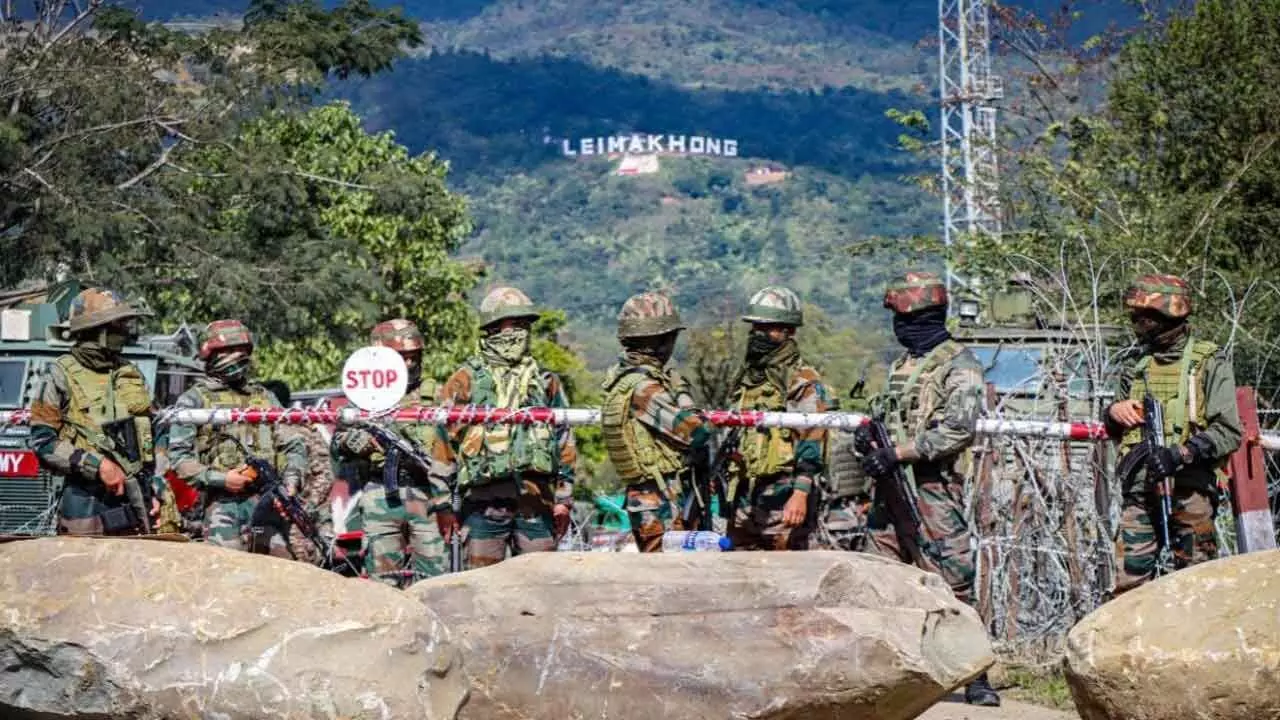
Despite the political tensions surrounding governance, Manipur has experienced several months of relative tranquility, particularly in the sensitive foothill regions where the Meitei-majority valley intersects with the Kuki-Zo majority hills. These areas had previously witnessed some of the most severe violence during the ongoing ethnic conflict that has plagued the state.
The most recent major outbreak of intercommunal violence occurred in November of the previous year, suggesting a gradual de-escalation of tensions between the affected communities. This period of reduced conflict has provided some hope for long-term stability in the region.
Recent security developments have shown positive trends, with three significant weapons recovery operations conducted by security forces within the past month. These successful operations demonstrate continued efforts to remove illegal armaments from circulation and reduce the potential for renewed violence.
Government officials have expressed optimism about facilitating the return of displaced populations to their original homes by the end of the current year. A substantial number of people were forced to relocate due to the ethnic violence, and their successful reintegration represents a crucial step toward normalizing life in the state.
However, despite these encouraging developments, meaningful dialogue between representatives of the Meitei and Kuki-Zo communities remains elusive. More than twenty-six months have passed since the conflict began, yet no substantial progress has been achieved in establishing formal communication channels or negotiation processes between the primary stakeholders from both communities.
The absence of constructive dialogue continues to represent the most significant obstacle to achieving lasting peace and reconciliation in Manipur. Without genuine engagement between community leaders and representatives, the underlying issues that sparked the conflict remain unresolved, potentially setting the stage for future tensions despite the current period of relative calm.