Mamata Banerjee Honors Legacy Of Bengal's Pioneering CM Bidan Chandra Roy On National Doctors' Day

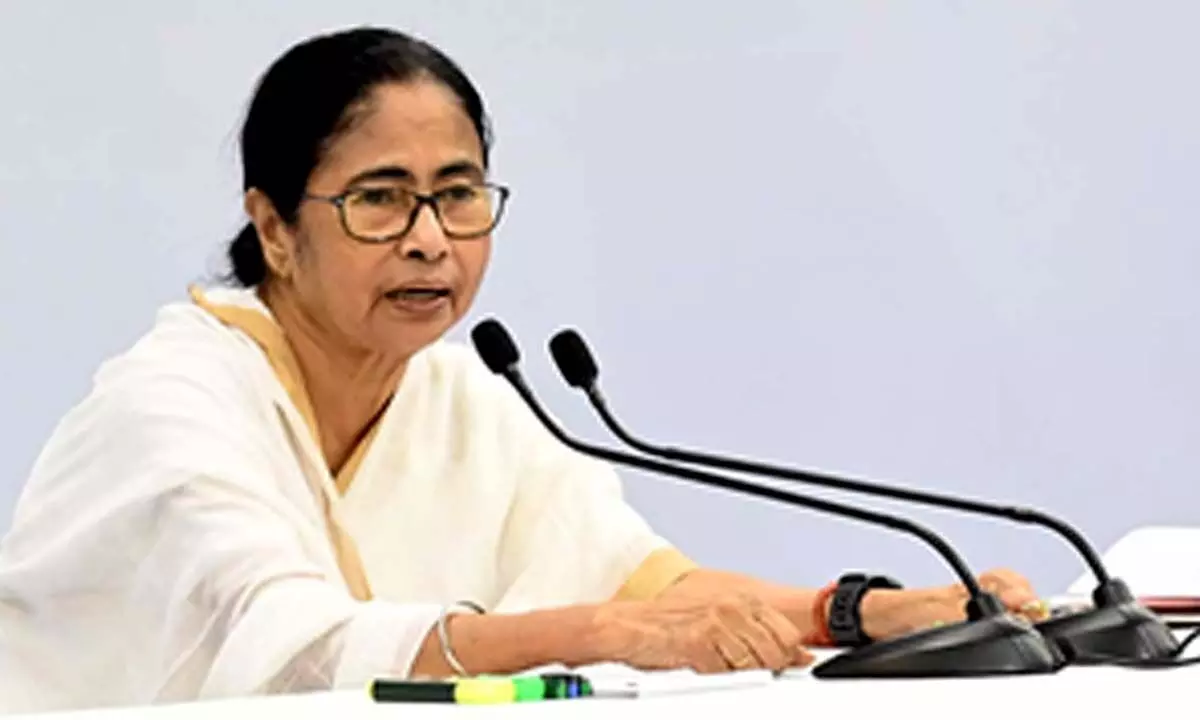
BJP Criticizes Mamata Banerjee’s Comment on Durgapur Incident, Calls It ‘Insensitive’
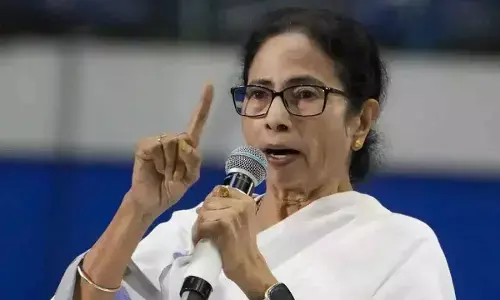
West Bengal CM Mamata Banerjee pays tribute to Dr. Bidhan Chandra Roy, the state's first Chief Minister and architect of modern Bengal, on his birth-death anniversary coinciding with National Doctors' Day.
West Bengal Chief Minister Mamata Banerjee commemorated the remarkable legacy of Dr. Bidhan Chandra Roy on Tuesday, marking both his birth and death anniversary which coincides with National Doctors' Day across India. The current Chief Minister took to social media to honor the pioneering leader who served as Bengal's inaugural Chief Minister and is widely recognized as the architect of modern West Bengal.
In her tribute message posted on social platform X, Banerjee expressed heartfelt reverence for Roy's enduring contributions while simultaneously acknowledging the dedication of healthcare professionals throughout the state. She extended warm congratulations to all medical practitioners and healthcare workers, recognizing their vital role in serving society on this significant observance.
Dr. Bidhan Chandra Roy's extraordinary life story encompasses both remarkable coincidence and exceptional achievement, as he was born and died on the same calendar date exactly 80 years apart. Born in 1882, Roy dedicated his life to public service and medical advancement before passing away in 1962, leaving behind an indelible mark on Bengal's development trajectory.
The establishment of National Doctors' Day in 1991 specifically honors Roy's transformative contributions to India's healthcare sector, recognizing his dual role as both a distinguished physician and visionary political leader. This annual observance serves as a tribute to his pioneering work in medical education and healthcare infrastructure development across the country.
Roy's political career with the Congress party spanned over a decade as West Bengal's Chief Minister from 1950 to 1962, during which he fundamentally reshaped the state's urban landscape and industrial foundation. His visionary leadership earned him recognition as the architect of modern West Bengal, with his administrative policies and development initiatives continuing to influence the state's growth patterns decades after his tenure.
The legendary leader's urban planning expertise manifested in the establishment of several major cities that remain integral to West Bengal's economic and social fabric today. His role in founding Kalyani, Durgapur, and Salt Lake City demonstrated his forward-thinking approach to planned urbanization and industrial development, creating sustainable communities that have thrived for generations.
Roy's commitment to educational excellence is perhaps best exemplified by his instrumental role in establishing the Indian Institute of Technology Kharagpur, one of India's premier technical institutions. This achievement, along with his support for numerous other educational and medical institutions, reflects his understanding of the critical importance of quality education and research in driving societal progress.
The pinnacle of recognition for Roy's lifetime of service came in 1961 when he was awarded the Bharat Ratna, India's highest civilian honor, acknowledging his exceptional contributions to the nation's development. This prestigious award recognized not only his political leadership but also his significant impact on healthcare, education, and urban planning throughout his distinguished career.
Mamata Banerjee's tribute underscores the continuing relevance of Roy's legacy in contemporary West Bengal, where his foundational work in city planning, industrial development, and institutional building continues to benefit millions of residents. Her acknowledgment of healthcare workers alongside this tribute highlights the ongoing importance of medical professionals in society, particularly in light of recent global health challenges that have emphasized the critical role of healthcare systems.
The observance of National Doctors' Day on Roy's anniversary serves as a powerful reminder of the intersection between medical practice and public service, embodying the ideal of using professional expertise for broader societal benefit. Roy's example continues to inspire both political leaders and medical professionals who seek to combine their skills with public service for the greater good of their communities.