LPU Students Represented India at Global Future Forum 2025 in Malaysia with AI-Driven Innovation for Sustainable Agriculture

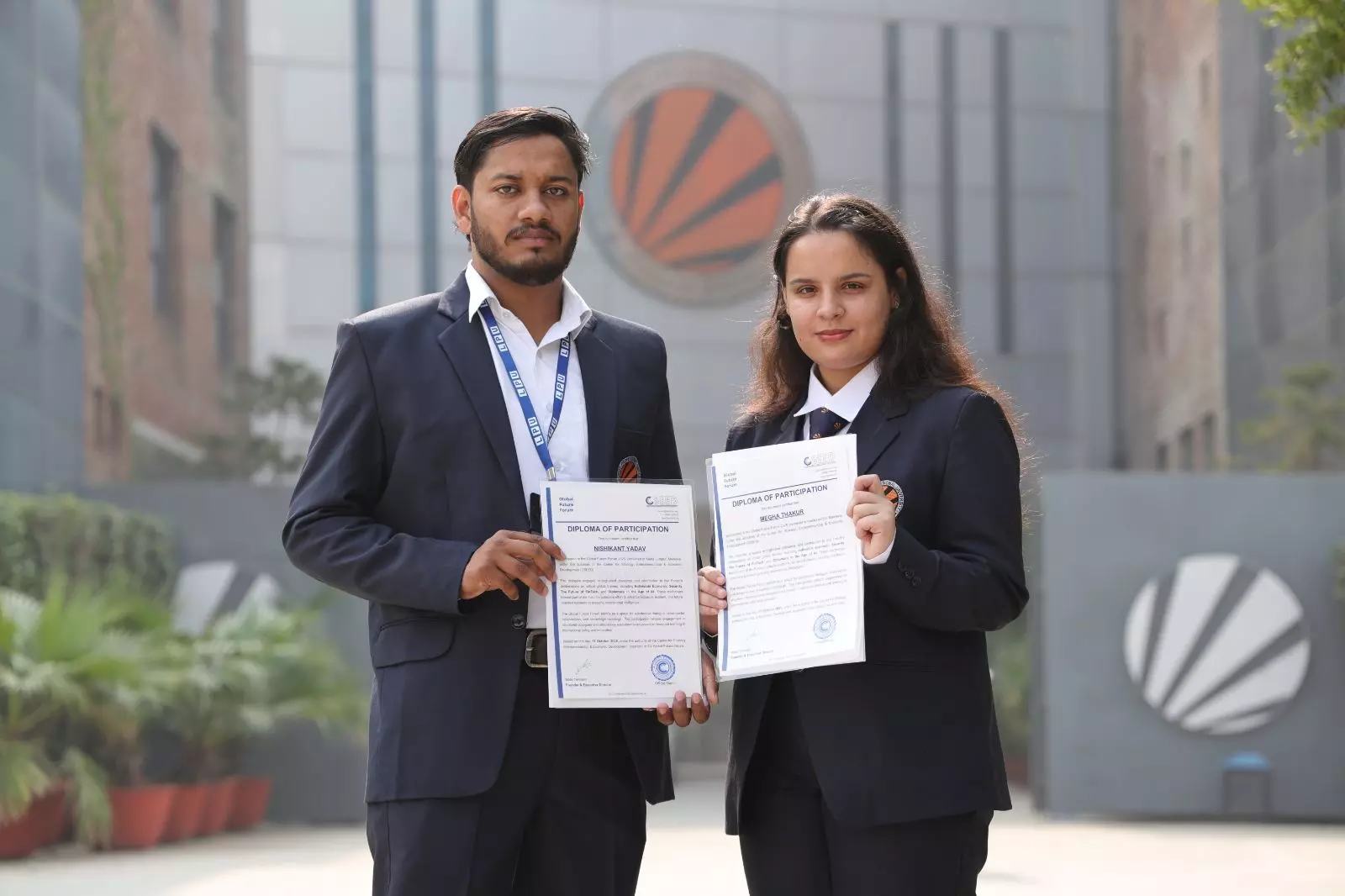
LPU students represent India at the Global Future Forum 2025 with AI-powered Smart Tags that extend produce shelf-life, reduce food waste, and advance sustainable agri-tech innovation.
Jalandhar; In a resounding demonstration of India's burgeoning innovation in agricultural
technology, students of Lovely Professional University (LPU), Megha Thakur and Nishikant
Yadav, represented India on the international stage at the prestigious Global Future Forum
2025 in Malaysia. The 2nd year M.Sc. Fruit Science students presented their groundbreaking
research on using Smart AI Tags to extend the shelf-life of horticultural produce, offering a
potent solution to one of the world's most pressing challenges: global food waste.
The forum served as a confluence of the world’s leading researchers, innovators,
policymakers, and industry pioneers from over 30+ countries, dedicated to harnessing
emerging technologies like artificial intelligence and digital systems to build a more
sustainable and secure future for global food systems and environmental management.
The research ongoing under the expert guidance of Dr. Praveen Verma, delves into the
integration of sophisticated AI algorithms with IoT-based sensors that continuously monitor
critical variables such as temperature, humidity, and ethylene gas concentration around
fresh produce. These intelligent tags are designed to analyze the real-time freshness of
fruits and vegetables, providing stakeholders with actionable data to prevent spoilage.
Col. Dr. Rashmi Mittal, Pro-Chancellor of LPU, stated, “Innovation becomes truly meaningful
when it serves both people and the planet. At LPU, we take pride in seeing young minds
channel technology toward sustainability and social good. Their work reflects the spirit of
global collaboration and the shared pursuit of a more secure and sustainable future.
A central and compelling aspect of their presentation was the technology's potential to
combat the staggering 25–40% of global horticultural produce that is currently lost post-
harvest. By employing machine learning models, their system can predict the optimal
storage conditions for different produce types and send proactive alerts, thereby minimizing
waste, enhancing supply chain efficiency, and contributing significantly to food security.
Sharing the experience, the students shared, “This opportunity allowed us to gain valuable
insights into future trends in agricultural innovation. The exposure has motivated us to
continue developing sustainable, AI-driven solutions to address critical challenges in the
horticulture sector.”
LPU continues to cultivate the next generation of innovators, providing a platform for
groundbreaking research that addresses global challenges and positions the university at
the vanguard of the food security and technology revolution.