
India key driver globally in renewable energy: Joshi

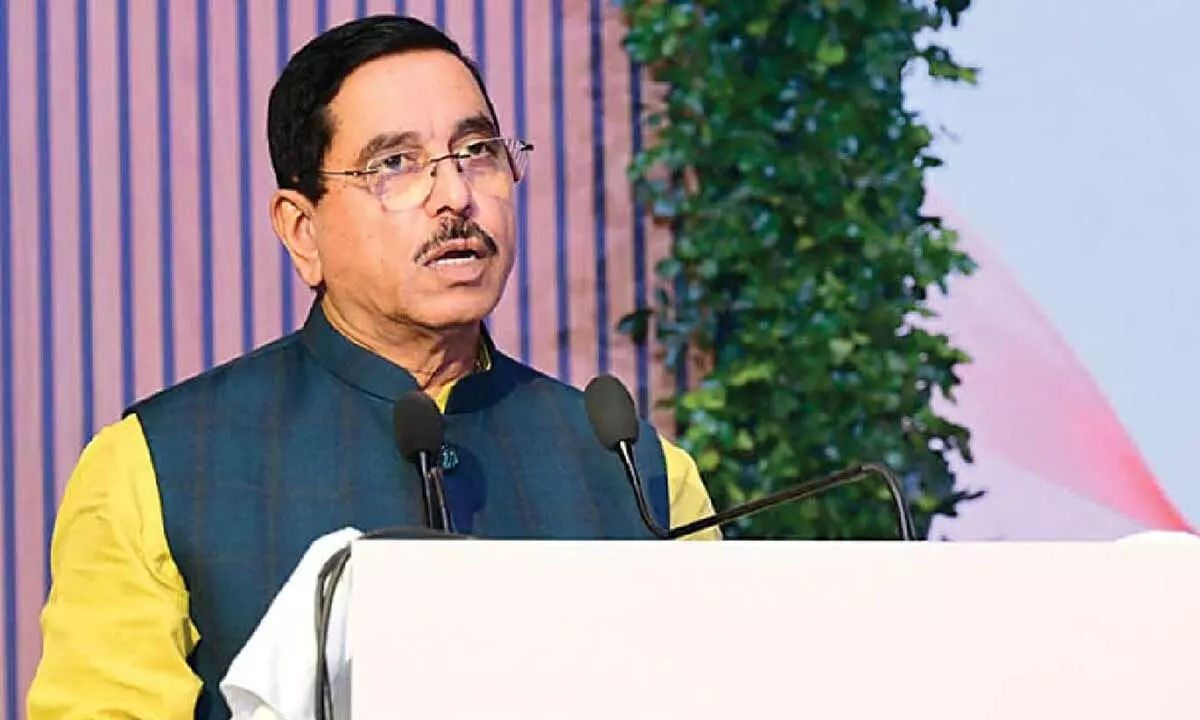
Puri: Union New and Renewable Energy Minister Pralhad Joshi on Saturday said India has recorded the highest-ever addition of green energy capacity in the current financial year at 31.25 GW (Gigawatt), including 24.28 GW of solar power. Addressing the inaugural session of the Global Energy Leaders’ Summit 2025 here, the minister also announced a 1.5 lakh rooftop solar ULA (Utility Led Aggregation) model for Odisha, which would benefit 7-8 lakh people across the State.
The summit was inaugurated by Odisha Chief Minister Mohan Charan Majhi and attended by energy ministers of various States.
After taking nearly 70 years to reach 1 TW (Terawatt) of renewable energy capacity in 2022, the world achieved 2 TW by 2024, Joshi said, adding that the second terawatt was achieved in just two years. “India is a key driver of this explosive global surge in renewable energy. In just 11 years, the country’s solar capacity has grown from 2.8 GW to around 130 GW, a rise of more than 4,500 per cent. Between 2022 and 2024 alone, India contributed 46 GW to global solar additions, becoming the third-largest contributor,” he said.
Noting that India holds the world’s fifth-largest coal reserves and the second-largest consumer of coal, the minister said even with this abundance, India is steadily balancing coal with renewable energy as the transition gathers pace. With global mechanisms now shaping industrial competitiveness, he said India’s shift towards renewable energy has become even more urgent and strategically important.
Noting that the global order undergoes a fast change in which India is poised to play a key role, Joshi said the country needs to adopt a balanced approach in generation of both thermal and solar energy. “India has skill, abundant resources, skilled manpower and everything to move forward and take lead in the global scenario. We have to generate solar power along with usual thermal power to emerge as a leader in manufacturing. Once the energy cost comes down, there is no difficulty to manufacture goods at lower cost and become competitive in global market,” he said.
Joshi said an estimated Rs 7 is spent on generating one unit of electricity from thermal sources while it is only Rs 4.70 per unit in solar with battery system. “It is unimaginable that the cost of production of per unit solar energy plus battery cost only Rs 2.70 in Madhya Pradesh,” he said.


