
‘Highly irresponsible’: SC castigates Nishikant over remarks on judiciary

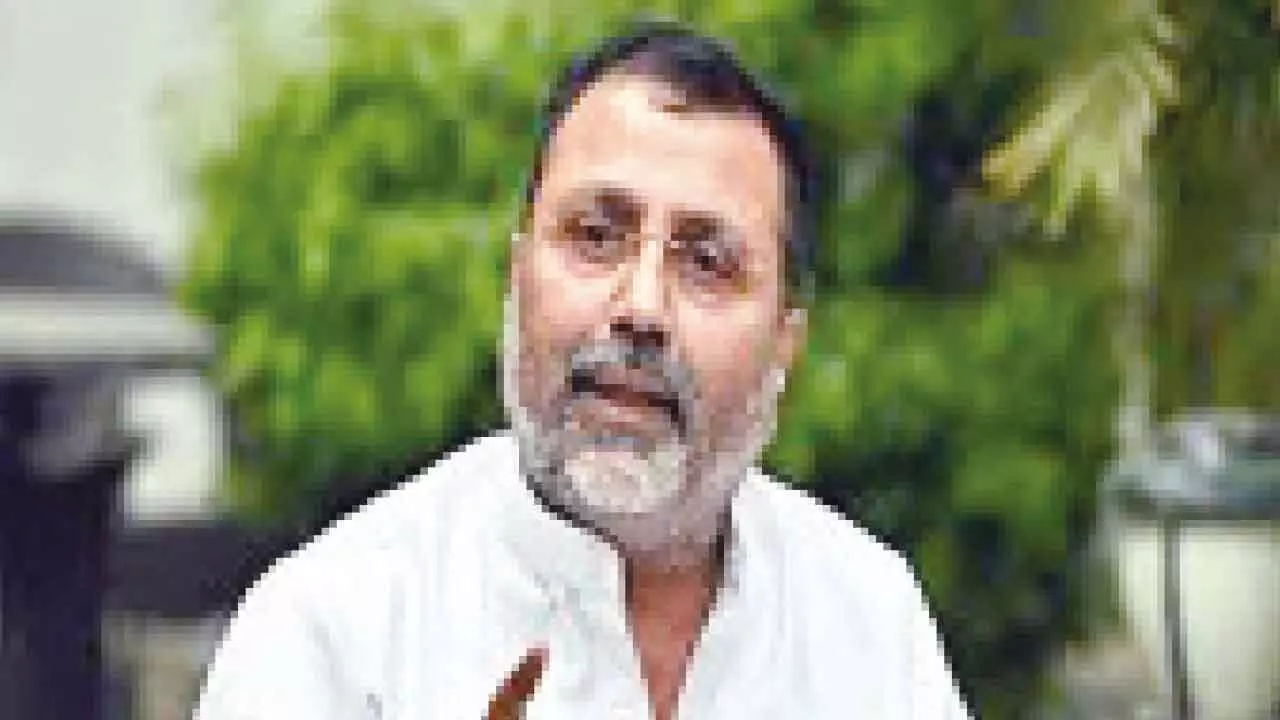
New Delhi: The Supreme Court has castigated BJP Lok Sabha member Nishikant Dubey over his “highly irresponsible” and “absurd” comments on the top court and the Chief Justice of India (CJI).
Amid ongoing hearings on the constitutionality of the Waqf (Amendment) Act, 2025, Nishikant Dubey, a Member of Parliament from Jharkhand’s Godda, during an interview, had said that “Chief Justice of India Sanjeev Khanna is responsible for all the civil wars happening in India” and “to provoke the religious war in this country, only and only the Supreme Court is responsible”.
“In our opinion, the comments were highly irresponsible and reflect a penchant to attract attention by casting aspersions on the Supreme Court of India and the Judges of the Supreme Court,” said a bench of CJI Sanjiv Khanna and Justice Sanjay Kumar, in its order, uploaded on the website of the apex court on Thursday.
Though the apex court refrained from entertaining a public interest litigation (PIL) seeking contempt of court action against Dubey, it said that courts need not protect their verdicts and decisions by taking recourse to the power of contempt.
However, the CJI Khanna-led Bench stressed that any attempt to spread communal hatred or indulge in hate speech must be dealt with an iron hand. “Hate speech cannot be tolerated as it leads to loss of dignity and self-worth of the targeted group members, contributes to disharmony amongst groups, and erodes tolerance and open-mindedness, which is a must for a multi-cultural society committed to the idea of equality,” it said, adding that any attempt to cause alienation or humiliation of the targeted group is a criminal offence and must be dealt with accordingly.
In its order, the top court, after examining Dubey’s statement, said that the contents of his assertions tend to scandalise and lower the authority of the Supreme Court, if not interfere or tend to interfere with the judicial proceedings pending before the court, and have the tendency to interfere and obstruct the administration of justice. Observing that there is no ‘civil war’ in India, the apex court said that judicial decisions are made in accordance with legal principles and not in keeping with political, religious or community considerations.
“Surely, courts and judges have shoulders broad enough and an implicit trust that the people would perceive and recognise when criticism or critique is biased, scandalous and ill-intentioned,” the CJI Khanna-led Bench added.


