
Engines shut, fuel cut off

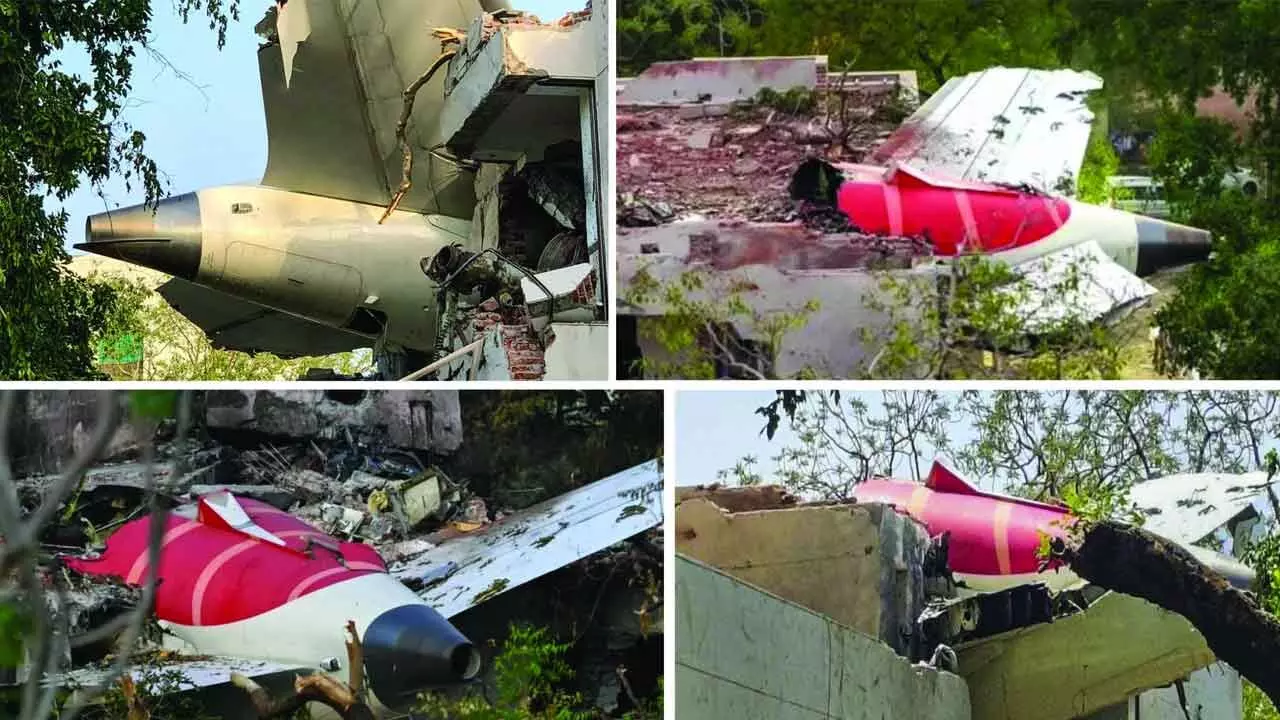
“In the cockpit voice recording, one of the pilots is heard asking the other why did he cut off” the fuel, said the report, by India’s Aircraft Accident Investigation Bureau. “The other pilot responded that he did not do so.” The London-bound plane went down on June 12, about 30 seconds after takeoff from Sardar Vallabhbhai Patel International Airport in Ahmedabad. All but one of the 242 people aboard were killed.
The plane rammed into the dining hall of a medical college before exploding in flames. Altogether, more than 270 people were killed, including dozens on the ground, officials said.
The supply of fuel to the engine is controlled by two switches in the flight deck. Starting about 10 seconds after the fuel was cut off on Flight 171, the data recorder shows, the switches were moved to turn the fuel back on. But the plane could not gain power quickly enough to stop its descent.
Each switch is equipped with a locking mechanism that is supposed to prevent accidental movement, experts said. To turn the fuel supply on, the switch must be pulled outward and then moved to a “RUN” position, where it is released and settles back into a locked position. To turn the fuel supply off, the switch must be pulled outward again, moved to the “CUTOFF” position and then released again.
According to the report, the fuel control switches were turned off “one after another” about a second apart, and “the aircraft started to lose altitude before crossing the airport perimeter wall.”
Safety experts said it appeared unlikely that the switches were moved without human involvement, whether intentional or accidental.
The fuel switches have safeguards built around them to avoid any accidental switching off, said Shawn Pruchnicki, a former airline accident investigator and aviation expert at Ohio State University.
“For example, on the 787 and probably more airliners these days, the switches themselves — you can’t shut them off without actually lifting them up,” he said. “So there’s a little mechanical gate built into the switch — you have to lift it up over this little gate. So you can’t just bump it.” The flight’s captain was Sumeet Sabharwal, who had over 15,000 hours of flying experience, while First Officer Clive Kunder brought 3,400 hours of flying experience, Air India said. That is more experience than officials attributed to the pilots last month, when they estimated a combined experience of about 10,000 hours.
India’s Aircraft Accident Investigation Bureau, the US National Transportation Safety Board and Boeing have been trying to determine what caused Flight 171 to crash.


