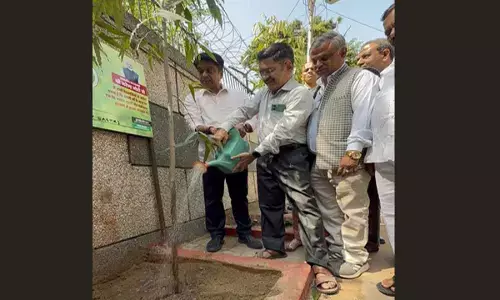
Delhi expands anti-pollution drive with automatic misting systems

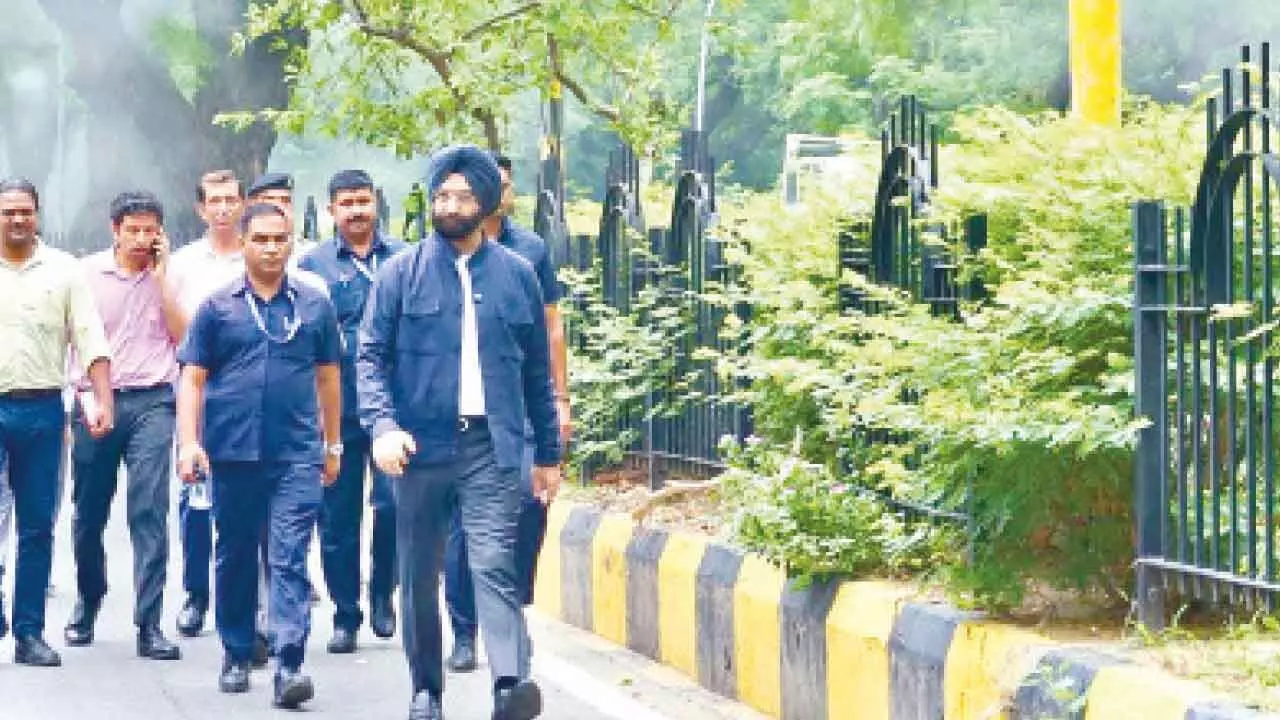
Manjinder Singh Sirsa conducts an on-site inspection of the newly installed system along Lodhi Road
New Delhi: In a major push to combat air pollution, Environment Minister Manjinder Singh Sirsa conducted an on-site inspection of the newly installed Automatic Misting System along Lodhi Road. These high-pressure mist sprayers, designed to suppress dust and reduce carbon emissions, are now operational in central Delhi and have also been deployed on DDA-maintained roads in Dwarka, significantly expanding the city's clean-air efforts.
“Delhi is transforming,” Sirsa said during the inspection. “We’re implementing bold, data-driven, and tech-based solutions to fight pollution. The Automatic Misting System is one such innovation, and it can become a model for other states. With sustained efforts, the vision of building a developed Delhi is turning into reality.”
The Lodhi Road installation spans 560 meters and includes 15 poles, each equipped with 30 high-pressure brass and stainless-steel nozzles. Operating at 40 BAR pressure, the nozzles emit ultra-fine mist at a rate of 2.8 liters per hour per nozzle. The system is powered by a 10 HP misting pump and is supported by stainless steel pipelines, RO filtration units, PVC water tanks, a control panel, and a dedicated pump room — all completed at a total cost of ₹34 lakh.
Building on this, similar installations are already in progress at Africa Avenue (850 meters, 30 poles) and Shanti Path (900 meters, 30 poles). The next phases will cover over 25 major pollution-prone roads, including Bhawandas Road, Tilak Marg, Zakir Hussain Marg, Shahjahan Road, Ashoka Road, Hanuman Mandir, and Khan Market.
Sirsa also detailed the government’s broader, year-round anti-pollution strategy. As part of this effort, Delhi has deployed 1,000 water sprinklers, 140 anti-smog guns, 200 mechanical road sweepers, 70 electric litter pickers, and 38 water tankers to control dust and particulate emissions. These systems are continuously monitored using GPS technology, camera sensors, and centralized dashboards to ensure efficiency and transparency. Moreover, all commercial high-rise buildings over 3,000 square meters — including malls and hotels — have been directed to install rooftop anti-smog guns. AI-powered tools are also being used to monitor real-time compliance at construction and demolition sites across the city.
Sirsa also criticized past governments for what he described as “decades of neglect and empty promises,” blaming them for allowing pollution levels to spiral. “Earlier administrations looted public funds and left the city gasping. Today, Delhi is witnessing real change — not scams, but science-backed solutions and infrastructure investment,” he said.