Centre Directs States To Implement Supreme Court Ban On New Mining In Aravalli Range

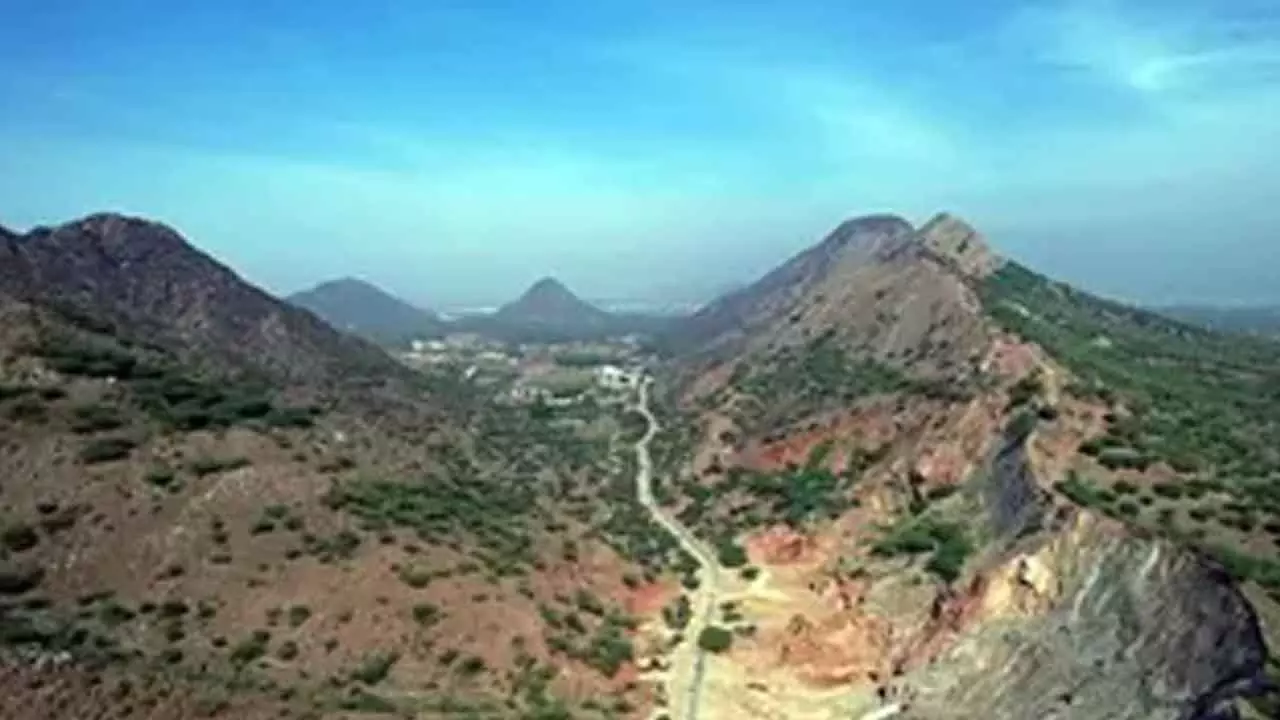
The Environment Ministry has instructed Haryana, Rajasthan, and Gujarat to strictly enforce Supreme Court orders halting new mining in the Aravalli range, while allowing existing mines to operate only under stringent environmental norms.
The Union Environment Ministry has issued formal instructions to the chief secretaries of Haryana, Rajasthan, and Gujarat, asking them to ensure strict implementation of the Supreme Court’s directive that bars the approval of new mining leases across the Aravalli mountain range until a comprehensive management plan is prepared. While fresh mining permissions remain suspended, mines that already hold valid approvals may continue operations, provided they adhere rigorously to environmental regulations.
In parallel, the ministry has written to the Indian Council of Forestry Research and Education (ICFRE), directing it to develop a Sustainable Mining Management Plan. This plan is expected to clearly demarcate zones where mining may be permitted, as well as identify ecologically fragile, conservation-critical, and restoration-priority areas where mining would be allowed only in exceptional situations. No timeline has been set for completing this exercise.
The move comes amid criticism from environmental groups and opposition leaders, who have raised concerns that large parts of the Aravalli ecosystem could be exposed to mining activities. The ministry, however, stated that the proposed exercise would expand the scope of protected and no-mining zones within the region, reinforcing conservation efforts.
Mining, quarrying, and deforestation in the Aravallis have long been the subject of legal scrutiny. One of the key challenges has been the absence of a uniform definition of the Aravalli range across states. A committee of experts, including representatives from the Environment Ministry, has recommended adopting a common standard of regulating mining in areas that rise at least 100 metres above local relief—a criterion already in force in Rajasthan since 2006. Additionally, landforms within 500 metres of two adjoining hills meeting this height threshold would also be excluded from mining consideration, regardless of their individual elevation or slope.
Despite these definitions, the government has not yet provided data on how many hills fall under this framework. A Forest Survey of India report from 2010 had estimated that only a small fraction of the roughly 12,000 hills in the region exceed the 100-metre benchmark, potentially making them eligible for mining. Opposition leaders have criticised the government’s approach, calling the measures inadequate and alleging that the revised definitions continue to pose risks to the fragile Aravalli ecosystem.
Next Story