Aviation Bureau Delivers Initial Findings On Fatal Ahmedabad Air India Crash To Civil Aviation Ministry

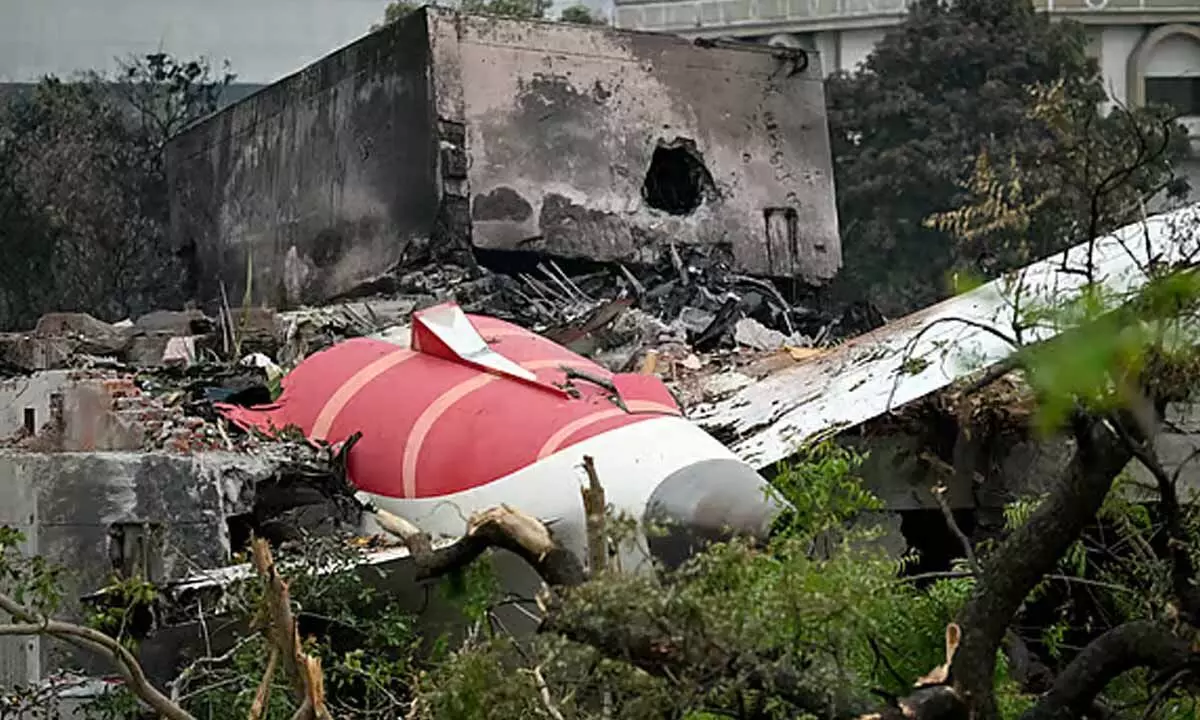
Aircraft Accident Investigation Bureau submits preliminary report on AI-171 crash that killed over 250 people in Ahmedabad, with black box data successfully retrieved and analyzed at Delhi facility.
The Aircraft Accident Investigation Bureau has delivered its preliminary findings on the devastating Air India Flight AI-171 crash to the Ministry of Civil Aviation and relevant authorities, according to sources familiar with the investigation on Tuesday.
The initial report is based on early investigative findings from the June 14 aircraft disaster in Ahmedabad that claimed more than 250 lives, making it one of India's most catastrophic aviation accidents in recent years.
Aviation officials confirmed that the Crash Protection Module from the aircraft's front black box was successfully recovered, with the memory module being accessed and its data downloaded at the AAIB Laboratory on June 25. The data retrieval process utilized what investigators describe as a "golden chassis" - an identical black box used to verify the accuracy of data recovery from the two flight recorders.
The investigation team recovered one black box from a building rooftop at the crash location on June 13, while the second recorder was extracted from the wreckage debris three days later on June 16.
The comprehensive investigation involves a multinational team of experts led by AAIB officials, with technical specialists from the Indian Air Force, Hindustan Aeronautics Limited, and the National Transportation Safety Board from the United States. The NTSB's involvement reflects standard protocol since they represent the country where the aircraft was designed and manufactured.
The Director General of AAIB heads the investigation, supported by an aviation medicine specialist and an Air Traffic Control officer. Sources indicate that the NTSB team is currently based in Delhi, working in close collaboration with Indian authorities at the AAIB Laboratory. Representatives from Boeing and General Electric are also present in the capital to provide technical assistance during the analysis process.
This investigation marks a significant milestone for India's aviation accident investigation capabilities. Previously, the AAIB routinely sent black boxes from damaged aircraft to overseas decoding facilities in countries including the United Kingdom, United States, France, Italy, Canada, and Russia due to limitations in domestic technical infrastructure.
The newly equipped AAIB Laboratory in Delhi now possesses the complete capability to decode both Cockpit Voice Recorders and Flight Data Recorders domestically, eliminating the need for overseas assistance that characterized previous major crash investigations.
Historical aviation accidents in India required extensive international cooperation for black box analysis. The 1996 Charkhi Dadri collision involved decoding at Moscow's IAC facility and the UK's Farnborough laboratory. The 2010 Mangalore crash required NTSB assistance in the United States for recorder repair and decoding. Similarly, the 2015 Delhi incident relied on Canada's Transportation Safety Board engineering laboratory, while the 2020 Kozhikode crash involved DGCA facilities with NTSB support for data processing.
The current investigation represents India's growing self-sufficiency in aviation accident investigation, with domestic facilities now capable of handling complex flight recorder analysis that previously required international expertise and resources.
As families of 47 victims have received interim compensation, the investigation continues to piece together the circumstances that led to this tragic aviation disaster, with the preliminary report serving as the foundation for more detailed analysis expected in the coming months.