Army Chief Calls Out Pakistan's Victory Claims Over Operation Sindoor Chess Game


Army Chief Gen Upendra Dwivedi compares Operation Sindoor to chess, criticizes Pakistan's false victory narrative, and praises government's free hand approach in anti-terror mission.
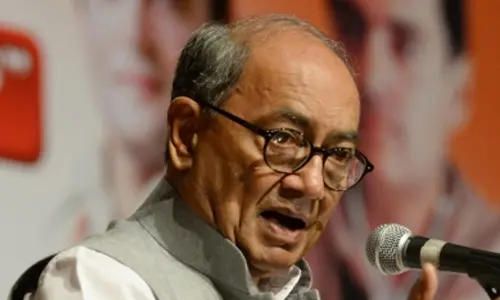
Chief of Army Staff General Upendra Dwivedi has criticized Pakistan's attempts to portray itself as victorious following Operation Sindoor, describing the strategic military campaign as an unpredictable chess match where India ultimately delivered a decisive checkmate. Speaking at an event at IIT Madras, the Army chief mocked Islamabad's narrative management tactics while explaining the complex nature of the grey zone operation.
General Dwivedi compared the anti-terror mission to a strategic chess game, emphasizing the uncertainty both sides faced during the operation. He explained that neither India nor Pakistan could predict the opponent's next move, making it a classic grey zone conflict—one that falls just short of conventional warfare. Despite the risks involved, including potential losses to Indian forces, the Army chief stated that India successfully executed its strategy and achieved victory.
The Army chief specifically targeted Pakistan's propaganda efforts, particularly their decision to promote Army Chief Asim Munir to the rank of five-star general and field marshal as a way to project success. He sarcastically noted how Pakistanis would interpret this promotion as evidence of victory, highlighting the power of narrative management in shaping public perception of military outcomes.
Operation Sindoor was launched on May 7 as retaliation for the Pahalgam terrorist attack, where Pakistan-based militants killed 26 civilians in Jammu and Kashmir. General Dwivedi praised the political leadership's resolve and strategic clarity, particularly commending the decision-making process that granted the military complete operational freedom. He revealed that during high-level meetings with Prime Minister Narendra Modi and Defence Minister Rajnath Singh on April 23, the leadership declared "enough is enough" and gave the armed forces a free hand to determine appropriate action.
The Army chief emphasized the significance of political clarity and confidence shown by the government, describing it as unprecedented. He noted how all three service chiefs were aligned on the need for decisive action, and the political leadership's trust in military judgment enabled effective execution of the mission.
Regarding the operation's naming, General Dwivedi highlighted how "Operation Sindoor" resonated with the entire nation and galvanized public support. He mentioned that the widespread national backing led to questions about why the operation was concluded, indicating strong public appetite for such decisive military action.
The targeted military campaign involved precision strikes against terrorist infrastructure and camps in Pakistan and Pakistan-occupied Kashmir. Indian armed forces utilized a combination of air and missile strikes to hit nine specific targets. While India maintained that the strikes were focused, measured, and non-escalatory, Pakistan attempted retaliatory drone and missile attacks, which were successfully neutralized by India's air defence systems.
Military analysts widely consider Operation Sindoor a comprehensive victory for India, both in military and psychological terms. The mission demonstrated India's capability for high-precision, coordinated military action while successfully dismantling terrorist infrastructure and restoring deterrence against state-sponsored cross-border terrorism.
The Army chief's remarks underscore the importance of narrative warfare in modern conflicts, where perception often matters as much as actual military outcomes. His criticism of Pakistan's propaganda efforts highlights how different nations attempt to frame the same events to suit their domestic and international audiences, making truth a casualty in information warfare.