After devotees, preparations underway to welcome Indian skimmers in UP

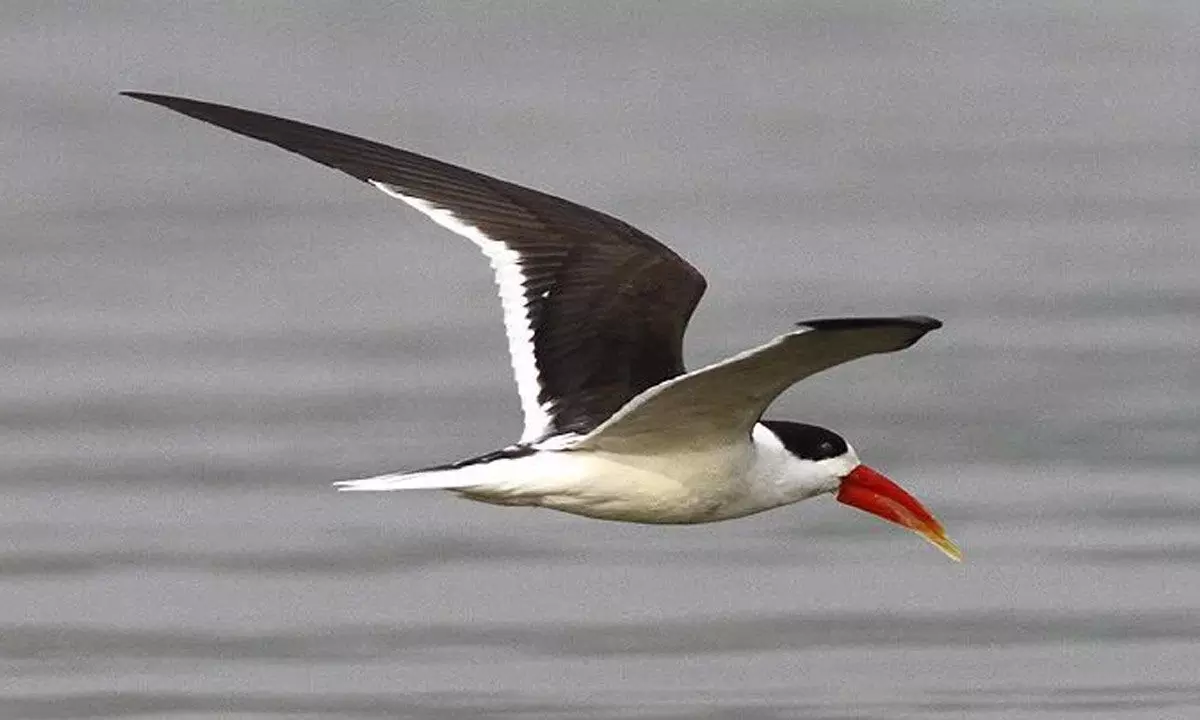
Indian skimmers hide eggs in the sands of Sangam
Prayagraj: After the record-breaking arrival of over 660 million devotees at the Maha Kumbh Mela, preparations have now begun to welcome the tiny Indian skimmers, a rare species, on the sands of the Ganga. At the start of the Maha Kumbh, 150 pairs of Indian skimmers arrived, which typically lay their eggs from December to the end of February or the beginning of March.
To protect these rare birds from wild animals, a large number of watchers have been deployed. Additionally, the wildlife team has been alerted. More than 90 species of native and foreign birds have also arrived at this world’s largest fair, contributing to pollution prevention. Devotees from across the country and abroad come to see them during the Maha Kumbh. In light of this, a bird festival has been organised, alongside a special plan to promote eco-tourism, as directed by Chief Minister Yogi Adityanath. This initiative aims not only to protect the environment but also to create new employment opportunities for local residents. The 150 pairs of Indian skimmers have made the sands of Sangam their home.
DFO Prayagraj Arvind Kumar Yadav noted that during the Maha Kumbh, in addition to over 660 million devotees, more than 150 pairs of Indian skimmers have reached the Sangam area, where they coexist with the natural environment. These birds conceal their eggs in the sand to protect them from predators. To safeguard these birds and promote eco-tourism, various arrangements have been made by the Yogi government. A significant number of watchers have been deployed to protect the rare eggs and birds from wild animals and other threats. Furthermore, a wildlife team is actively engaged in monitoring and counting the birds, patrolling regularly to ensure their protection. With a focus on environmental conservation during the Maha Kumbh, a plan to promote eco-tourism has been established. This initiative is also providing substantial employment opportunities for local communities. More than 90 species of native and foreign birds at this grand fair are enriching the biodiversity of the region.