300-yr-old inscription found in Hanuman temple

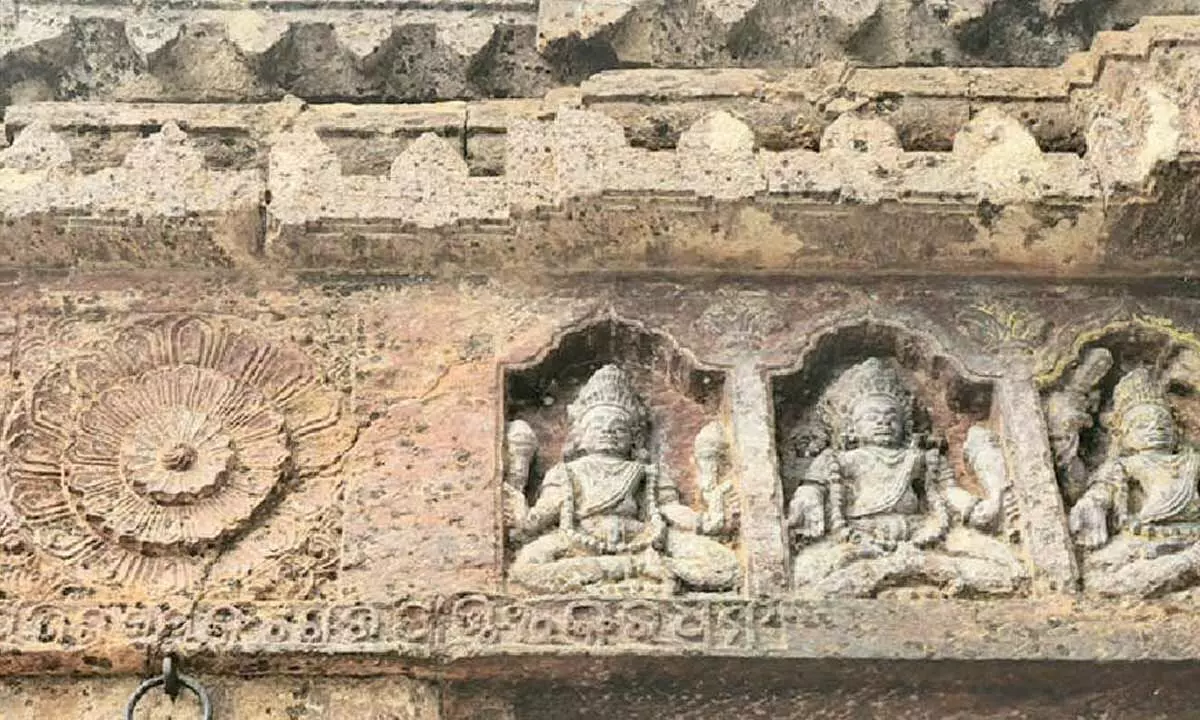
Berhampur: In a remarkable archaeological breakthrough, a 300-year-old bilingual inscription has been discovered at Hanuman temple in Paralakhemundi, a State-protected monument in Gajapati district. The finding marks the first known bilingual inscription from this sacred site, shedding new light on the region’s cultural and linguistic confluence.
The inscription was first noticed by P Appala Raju, a teacher and resident of Purunapatana, who promptly informed noted epigraphist Bishnu Mohan Adhikari. On examining the stone record, Adhikari confirmed that it contains text in both Odia and Telugu, pointing to a rare instance of bilingual epigraphy in southern Odisha. According to his preliminary assessment, the inscription refers to “Dharmma” of Udayagiri Venkata Rao Pantulu. The Odia script, he observed, resembles the writing style prevalent around 1700 CE, suggesting a deep historical lineage.
Adhikari further attributes the inscription to the reign of Gajapati Prataparudra (1706-1748 CE), a period known for vibrant temple patronage and administrative consolidation. He believes that the individual mentioned in the stone record may have been connected to Kama-agrahara, an important institutional establishment under Gajapati rulers.
Adding to the significance of the discovery, the temple precinct also preserves sculptural representations of Prataparudra and the temple’s original builder, offering valuable insights into the shrine’s heritage and architectural evolution.
The finding has sparked keen interest among historians, archaeologists and heritage enthusiasts, positioning Paralakhemundi once again as a treasure house of Odisha’s layered past.