US calls for new nuclear arms control era
Share :
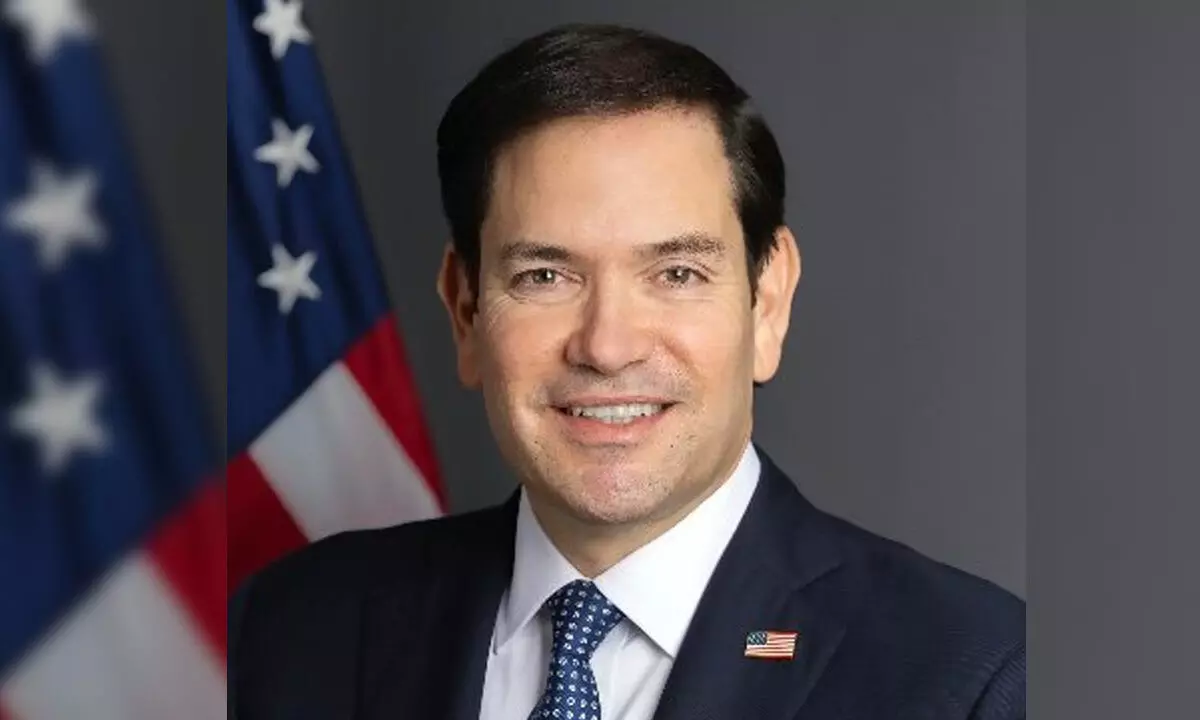
Washington: The United States on Friday called for a new framework for nuclear arms control involving multiple powers, arguing that the expiration of the New START treaty marks the end of a Cold War–era model no longer suited to current global threats.
In an essay released a day after New START formally expired, Secretary of State Marco Rubio said past arms control agreements helped make the United States safer but warned that bilateral treaties with Russia no longer reflect today’s strategic realities.
"Everything has its season, though, and yesterday, New START expired," Rubio wrote, rejecting claims that the treaty’s end signals a US-driven arms race. He noted that Russia stopped implementing the agreement in 2023 "after flouting its terms for years".
"A treaty requires at least two parties," Rubio wrote, adding that the United States faced a choice between binding itself unilaterally or recognising that "a new era requires a new approach".
Rubio said future arms control must account for a changing nuclear balance, particularly China’s rapid buildup. "China’s rapid and opaque expansion of its nuclear arsenal since New START entered into force has rendered past models of arms control… obsolete," he wrote on Substack.
According to Rubio, China has expanded its nuclear stockpile from "the low 200s to more than 600" since 2020 and is "on pace to have more than 1,000 warheads by 2030". Any agreement that ignores China’s buildup, he warned, would leave the United States and its allies "less safe".
The Secretary said President Donald Trump has been “clear, consistent, and unequivocal” that future arms control must address both Russia and China as nuclear peers.
Rubio said Washington formally presented its approach in Geneva, calling for multilateral nuclear arms control and strategic stability talks. He outlined three guiding principles, beginning with rejecting arms control as a purely bilateral issue.
"Other countries have a responsibility to help ensure strategic stability, none more so than China," he wrote.
Rubio also said the United States would not accept agreements that overlook violations. "We will not accept terms that harm the United States or ignore noncompliance in the pursuit of a future agreement," he said.
At the same time, he emphasised deterrence. "We will maintain a robust, credible, and modernised nuclear deterrent," Rubio wrote, while pursuing the President’s stated goal of reducing global nuclear threats.
Acknowledging that negotiations could take years, Rubio said past treaties required decades of groundwork and were negotiated between two powers, not three or more. Still, he argued the effort is necessary.
"Just because something is hard does not mean we should not pursue it or settle for less," Rubio wrote, adding that difficult deals are often "the only ones worth having".
He said the United States hopes others will join the effort to reduce nuclear dangers "in reality, not merely on paper".