Trump Claims Tariff Victory as US, China Strike Temporary Trade Truce

Trump hails 90-day US-China tariff truce as a win, but experts see it as a retreat amid pressure from markets and fears of economic disruption.
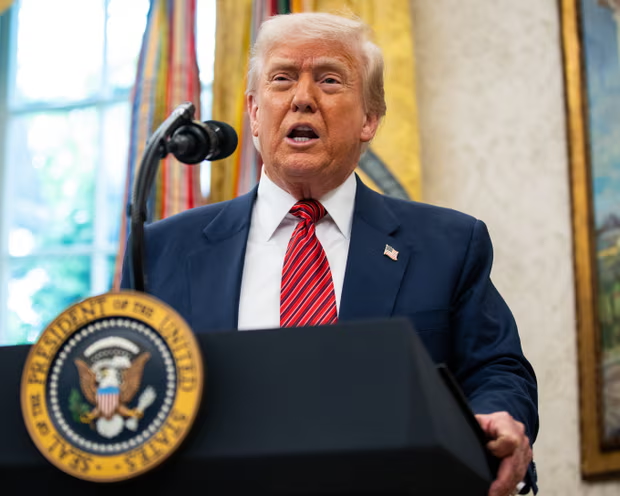
Although market analysts and international investors see the agreement between Washington and Beijing to halt their long-running trade war for 90 days as a tactical retreat rather than a real breakthrough, U.S. President Donald Trump has declared victory.
After U.S. Treasury Secretary Scott Bessent wrapped off talks with Chinese officials in Geneva with an early-morning news briefing, markets reacted favorably. As investors saw the agreement as a de-escalation of tensions rather than a return to the prior trade arrangement, stocks increased and bond rates increased.
For the next ninety days, the agreement will lower the tariffs on Chinese imports to the United States from 145% to 30%. China will reduce its retaliation taxes on American goods from 125% to 10% in return. Both economies are still far from pre-Trump trade norms, despite the fact that this constitutes a considerable reduction of trade barriers.
The White House's statement made no reference to earlier American worries about issues like currency manipulation or intellectual property theft. The emphasis on "a sustainable, long-term, and mutually beneficial economic and trade relationship" instead was a major change in tone from Trump's recent vehement statements against foreign countries taking advantage of the United States.
Observers point out that the White House may have weakened its position due to growing pressure from American retailers and concerns about possible goods shortages, especially in the run-up to the holidays. Trump's bluster seemed to fade when import volumes fell precipitously and concerns of a scarcity similar to that of the Covid era reappeared.
The White House's action suggests a change in strategy more broadly. In Trump's trade offensives, China has always been the most controversial front, and this truce might indicate flexibility in other areas of policy as well, such as talks with the EU, Canada, and Mexico.
But the uncertainty that permeates international trade still exists. The present tariff cuts are just temporary, and Trump's "reciprocal" tariffs with a number of other countries face another 90-day deadline. Companies worldwide still have to deal with erratic trade conditions, and they might be looking for markets outside of the United States more and more.
The fact that 30% tariffs on Chinese goods are still in place despite the brief thaw highlights the fact that the world's two biggest economies are still not fully separated economically.