Russia Confident Oil Exports To India Will Continue Despite US Tariffs And Western Sanctions

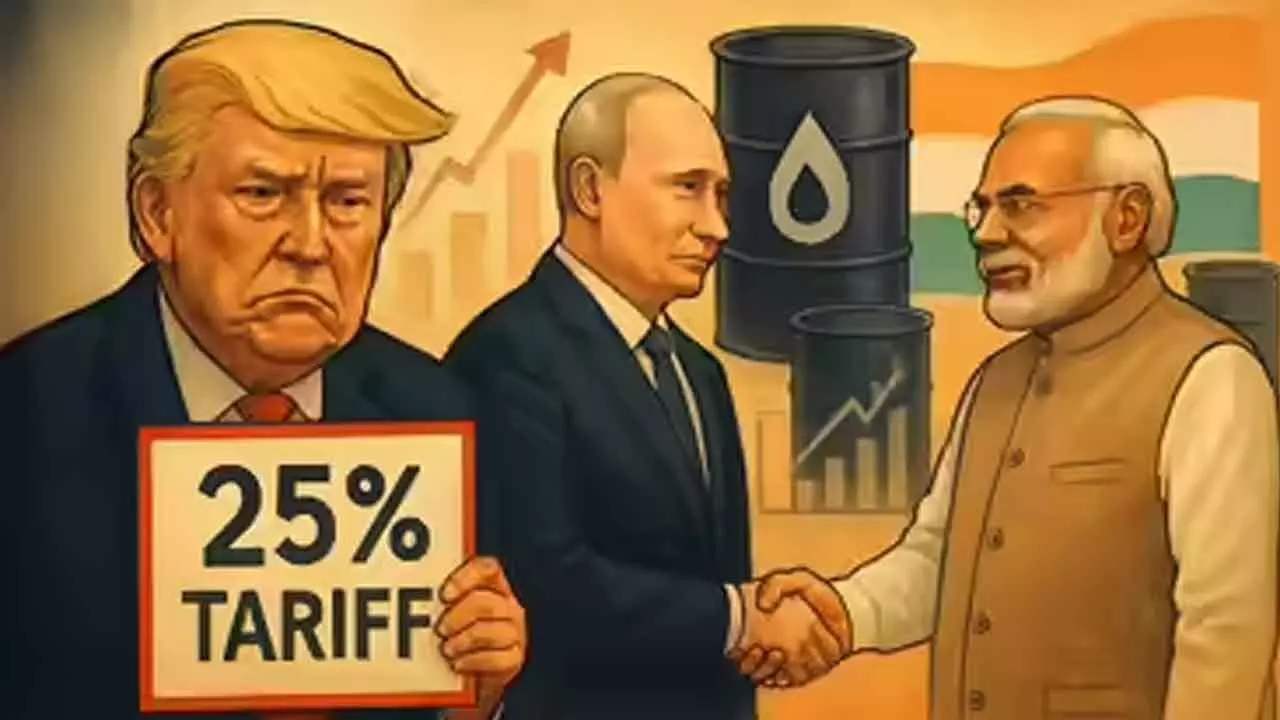
Russia assures uninterrupted oil supplies to India through special mechanisms, dismissing concerns over US tariffs and EU sanctions while strengthening defense partnerships.
Russian officials have expressed confidence that oil exports to India will remain stable despite mounting pressure from US tariffs and European Union sanctions. Speaking at a media briefing on Wednesday, senior Russian representatives dismissed concerns about potential disruptions to energy trade, revealing that Moscow has developed specialized mechanisms to circumvent Western punitive measures.
India currently ranks as Russia's second-largest oil customer after China, with Russian energy accounting for nearly 40 percent of India's total energy imports. This energy partnership intensified significantly following Western sanctions imposed on Russia after its 2022 invasion of Ukraine. The United States has announced plans to implement a 25 percent punitive tariff on Indian exports starting August 28, specifically targeting countries that purchase Russian oil, adding to existing reciprocal trade tariffs.
Deputy trade commissioner Evgeny Griva projected that crude oil import levels would remain approximately unchanged despite the political pressures. He acknowledged the existence of supply mechanisms but declined to elaborate on their specifics, describing them as highly confidential. Chargé d'affaires Roman Babushkin reinforced this position, emphasizing Russia's historical success in overcoming external challenges to maintain bilateral trade relationships based on mutual national interests.
The officials addressed concerns about the Vadinar refinery in Gujarat, a facility jointly operated by Russian energy giant Rosneft and an investment consortium. Despite being targeted under EU sanctions in July, the refinery continues operating without supply interruptions. Rosneft maintains a 49.13 percent stake in India's second-largest single-site refinery, which processes 20 million metric tonnes annually. According to Russian officials, the facility receives direct crude oil supplies as a Rosneft subsidiary, effectively bypassing many sanction-related complications.
Babushkin explained that Russia has successfully reduced its dependence on EU-provided services in recent years, minimizing the impact of European sanctions packages. The officials acknowledged that oil import prices might experience a five percent fluctuation due to Western pressure, though final pricing would depend on bilateral negotiations.
Regarding bilateral trade relations, both countries remain committed to achieving their ambitious target of $100 billion in annual trade by 2030. Current growth rates of approximately 10 percent annually support this goal, with bilateral trade reaching a record $68.7 billion in 2024-25. However, a significant trade imbalance exists, with Indian exports worth only $4.88 billion compared to much larger Russian exports to India.
Babushkin outlined plans to address this imbalance through various measures, including removing trade barriers, facilitating business interactions, developing alternative logistics corridors, and enhancing payment and transaction mechanisms. These initiatives aim to reduce the current $60 billion trade deficit.
In the defense sector, Russia continues positioning itself as India's preferred partner despite criticism from US President Donald Trump and other American officials regarding India's military purchases from Russia. Babushkin highlighted the successful joint development of the BrahMos supersonic cruise missile, a collaboration ongoing since 1998, as evidence of the enduring defense partnership.
Recent military operations have provided what Russian officials term successful field testing for Russian defense systems. Operation Sindoor, launched on May 7 in response to the Pahalgam terror attack, involved four days of hostilities between India and Pakistan. During these operations, India deployed both BrahMos missiles and S-400 air defense systems, with Russian-origin Su-30 combat aircraft firing BrahMos missiles and the S-400 system successfully engaging Pakistani surveillance aircraft at approximately 300 kilometers distance.
Looking forward, Russia expects to participate in India's ambitious Sudarshan Chakra air defense initiative, announced by Prime Minister Narendra Modi during his Independence Day address. This comprehensive defense shield, designed to protect cities and critical infrastructure, integrates both defensive and offensive capabilities with an operational target date of 2035. Given that S-400 systems already form part of India's air defense network, Russian officials anticipate continued involvement in advancing these capabilities.
These discussions occurred as External Affairs Minister S. Jaishankar visited Moscow for diplomatic engagements with Russian Foreign Minister Sergey Lavrov and to co-chair the India-Russia Inter-Governmental Commission on Trade, Economic, Scientific, Technological and Cultural Cooperation meeting alongside Deputy Prime Minister Denis Manturov.
The diplomatic activities serve as preparatory work for President Vladimir Putin's planned visit to India later this year for the annual bilateral summit, though specific dates remain unconfirmed. Putin has maintained regular contact with Modi, including two recent conversations updating the Indian leader on Ukraine developments and his Alaska summit with Trump.
The upcoming annual summit will address a comprehensive agenda encompassing trade expansion, investment opportunities, energy cooperation, infrastructure development, and nuclear power collaboration, including exploration of small and modular reactor technologies. These discussions reflect both countries' commitment to strengthening their strategic partnership despite external pressures and international political complexities.