Pakistan Ends SAARC Visas, Closes Wagah Border After Terror Strike

Pakistan Ends SAARC Visas, Closes Wagah Border After Terror Strike
Pakistan shuts airspace, trade, and diplomatic ties with India in response to the Pahalgam terror attack that killed 26, including two foreign nationals.
In response to the deadly terror attack in Jammu and Kashmir’s Pahalgam that resulted in the deaths of 26 individuals, Pakistan on Thursday announced a series of retaliatory measures aimed at India. The actions were finalized during a meeting of Pakistan’s National Security Committee (NSC) chaired by the Prime Minister.
According to an official release from the Prime Minister’s Office, Islamabad will suspend all bilateral arrangements with New Delhi, including key agreements such as the Simla Accord, until further notice.
Effective immediately, Pakistan has closed its airspace to all aircraft owned or operated by Indian carriers. The ban covers all Indian commercial and cargo flights. Air traffic originating from or routed through Indian operations will be denied access.
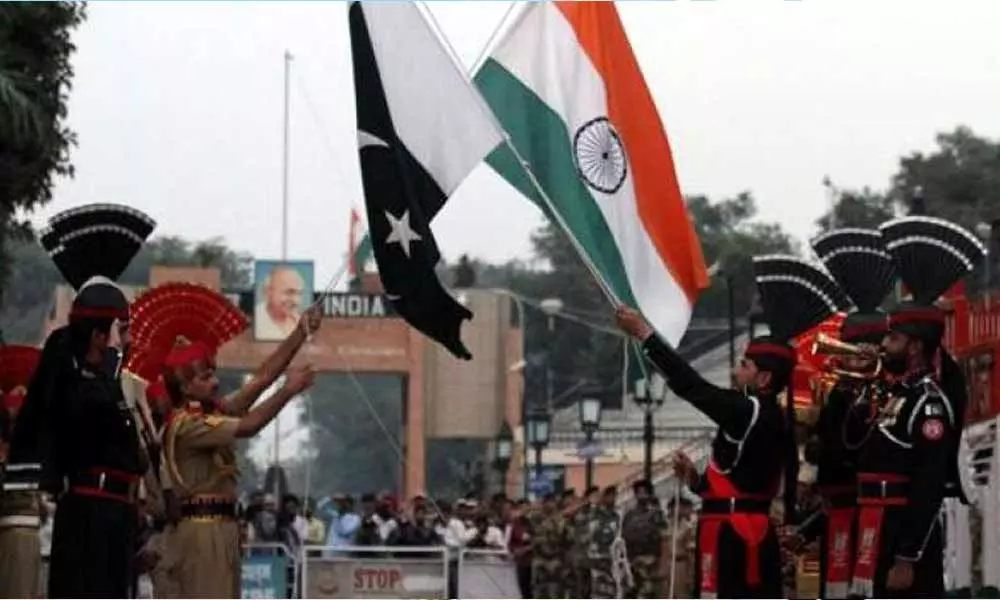
The Wagah land crossing between the two nations has also been shut down. Authorities confirmed that cross-border movement through the post is suspended indefinitely. Indian nationals who previously crossed into Pakistan using valid documentation are being instructed to return via the same checkpoint by April 30.
In a move targeting diplomatic personnel, Pakistan has declared Indian Defence, Naval, and Air Attachés in Islamabad as persona non grata. These officials, along with their accompanying staff, must depart Pakistan no later than April 30. The roles held by these advisors within the Indian High Commission are now considered defunct.
The government also announced a reduction in the Indian High Commission’s personnel strength. Beginning April 30, only 30 diplomatic and non-diplomatic staff members will be permitted to remain in Islamabad.
Pakistan has further invalidated all SAARC Visa Exemption Scheme (SVES) entries issued to Indian nationals, with the exception of Sikh pilgrims. Individuals currently in Pakistan under this scheme have been given 48 hours to exit the country.
Trade ties between the two nations are being severed entirely, including indirect trade facilitated via third countries. All commercial exchanges involving Indian-origin goods are now prohibited.
These measures follow New Delhi's own set of sanctions introduced a day earlier. India’s Cabinet Committee on Security (CCS), headed by Prime Minister Narendra Modi, convened after the Pahalgam incident to formulate a national response. Among its decisions was the suspension of the 1960 Indus Waters Treaty, a pivotal water-sharing arrangement between the two countries.
India’s Ministry of External Affairs stated that the treaty would remain in suspension until Islamabad takes verifiable steps to dismantle infrastructure supporting cross-border militancy. Additionally, India revoked Pakistani military attachés' access and halted operations at the Attari Integrated Checkpost.
Strategic analysts suggest the freezing of the Indus Waters Treaty could significantly impact Pakistan’s irrigation and hydroelectric infrastructure, particularly if projects such as Kishanganga and Ratle restrict water flows to the Indus, Jhelum, and Chenab rivers.
The Pahalgam attack, which targeted a popular tourist zone, claimed the lives of 26 people, including foreign nationals from the UAE and Nepal. The incident has heightened tensions across the region, prompting coordinated retaliatory actions from both sides.