How Community Fitness Programs Are Transforming Lives in Small Cities Across the U.S.

Small cities tend to get overlooked when people talk about health trends. Hard to blame them. The national spotlight usually falls on big metros with glossy wellness districts and corporate funded recreation centers. Still, the more I’ve traveled for work, the more convinced I am that real momentum for healthier living often starts in quieter places. Less noise. Fewer competing agendas. More room for people to build habits that stick.
A Shift You Notice Only When You Slow Down
Walk into a community gym in a town of twenty thousand. You can feel the difference. There’s less of that self conscious energy you see in large fitness chains. People show up in work boots. Retirees wander in at slow pace. Teen athletes train next to office workers who are still shaking off the morning commute.
Something about that mix creates a strange kind of honesty. Effort stands out. Excuses stand out too. You don’t hide in a crowd. This is probably why these programs often lead to long lasting change. The community pays attention. There’s accountability built into the walls.
I first noticed this while consulting for a small energy retrofit project years back. The town had an old rec center sitting next to the water plant. Half the HVAC system was older than the interns. Yet every evening the place filled up with families who treated it like a second home.
Where Structure Meets Belonging
A good fitness program in a small city behaves like infrastructure. Not glamorous. Not perfect. Just stable enough to support real effort. People sometimes assume these centers rely on outdated equipment or limited training options. That’s a mistaken view.
Some of the most disciplined youth programs I’ve seen came out of small city gyms. A place offering the Best youth training in Lehi, Utah would fit perfectly in this pattern. Not because it markets itself heavily. Because it becomes an anchor. Young athletes learn strength and coordination. More importantly, they learn that someone expects them to show up again tomorrow.
Adults need the same thing. Structure with a human face. A training environment that cares enough to nudge you when you stall. Programs considered the Best adult training in Lehi, Utah usually carry this trait. They blend routine with a sense of belonging. Not forced community but genuine familiarity. That mix reshapes behavior much more effectively than posting motivational quotes around a room.
Health as a Side Effect of Connection
If you talk to long time residents in these towns, they rarely say they joined a fitness program to chase perfect health numbers. They show up for simpler reasons. A friend recommended it. A colleague needed a workout partner. Their kids were already training so they stuck around to try a class.
Health grows as a byproduct. That’s probably the most sustainable model we have. People learn from proximity. You watch someone older than you lift with ease. You see a teenager run drills with real discipline. You absorb that energy. Slowly at first. Then faster.
This is the part public policy often misses. Health works best when the environment shapes it quietly. You can’t legislate motivation. You can build spaces that make motivation feel normal.
The Hidden Engineering Behind Good Programs
My background is in energy and systems work. So I tend to look at gyms the way I look at mechanical rooms. What’s the flow. What are the constraints. Where is the wasted effort. It’s surprising how well these frameworks apply.
Good community fitness programs break down barriers. They reduce friction. If someone has to navigate ten steps before attending a class, they won’t. If pricing is confusing, they stop trying. If the schedule doesn’t mesh with local work hours, participation collapses.
Small cities adapt faster because they can listen better. Staff see the same faces every week. They notice when attendance dips. They adjust without running proposals through six committees. That doesn’t make the programs perfect. It makes them responsive. Responsiveness is its own form of engineering.
When Fitness Becomes Cultural Memory
Communities develop identity through repetition. A Saturday morning class becomes a tradition. A youth strength group becomes a rite of passage. Over time these routines create their own social gravity.
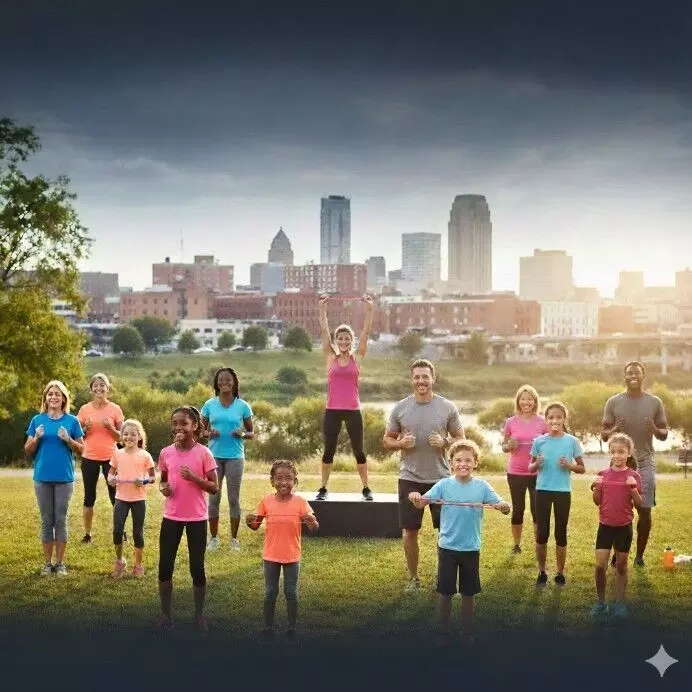
One town in the Midwest hosted a yearly fitness day. Nothing fancy. Booths from local clinics. Kids doing obstacle courses. Adults comparing their training goals. The turnout kept rising not because the marketing improved but because the event stitched itself into the town’s story. Families expected it.
Once a fitness program reaches that point, it stops being optional noise. It becomes part of how people live. You see healthier habits appear outside the gym too. People walk more. Take stairs when they don’t have to. Bring kids to parks instead of handing them screens. Incremental changes, all of them, but change adds up.
The Quiet Confidence These Programs Build
There’s another aspect that often goes unnoticed. Physical confidence shows up in non physical places. When people feel stronger, they negotiate differently. They tackle home projects they once avoided. They handle stress with more patience. Even work performance shifts.
In smaller cities, this confidence spreads quickly because residents cross paths often. Teachers see their students’ parents in workout classes. Managers train next to employees. People treat each other differently when they’ve sweated through the same hour.
That kind of shared hardship creates trust faster than any community meeting.
Challenges That Don’t Always Get Mentioned
Not every small city has the resources to build ideal facilities. Some gyms operate in retrofitted buildings. Some rely heavily on volunteers. In a few places, funding comes in unpredictable cycles. These limits can slow momentum.
Even so, the creativity that emerges from constraints can be impressive. I’ve seen trainers set up morning classes in areas previously used for storage. I’ve seen youth coaching programs thrive with less than half the equipment larger cities take for granted. People adapt. Sometimes rough edges keep a program grounded. Perfection is overrated anyway.
Why This Matters Now
The national conversation around health keeps drifting toward data. Metrics everywhere. Steps. Calories. Heart rate zones. Useful, but sometimes distracting. You can get lost in numbers and forget the human part.
Small city fitness programs remind us that health is social infrastructure. Communities carry people further than apps do. People aren’t algorithms. They need connection more than optimization.
As long as these towns keep investing in places where effort feels shared, we’re going to see steady improvements in physical and mental well being. Not dramatic leaps. Just progress that lasts.