




- ‘Embarrassment To India’: Abhijeet Dipke Slams PM Modi After Release From Detention
- 12 Killed, 309 Injured In Houthi Attack On Riyadh Airport; Trump Weighs US Response
- PM Modi's Chennai visit: Traffic diversion for commercial, heavy vehicles today
- Devotees throng temples across country on first day of Shardiya Navratri
- Telangana state varsities-Give a humane touch to contract faculty regularisation
- Pochampally Ikat: Where threads become geometry
- Indrakeeladri decked up for Dasara festivities
- Green Card crackdown major setback for Indian IT giants
Bangladesh faces stagflation challenge as inflation remains high: Report
In Short
While the traditional definition of stagflation includes high unemployment, economists argue that the concept requires a different interpretation in Bangladesh due to the nature of its labour market, the report by Dhaka-based The Financial Express said.

Share :
Bangladesh is grappling with mounting stagflationary
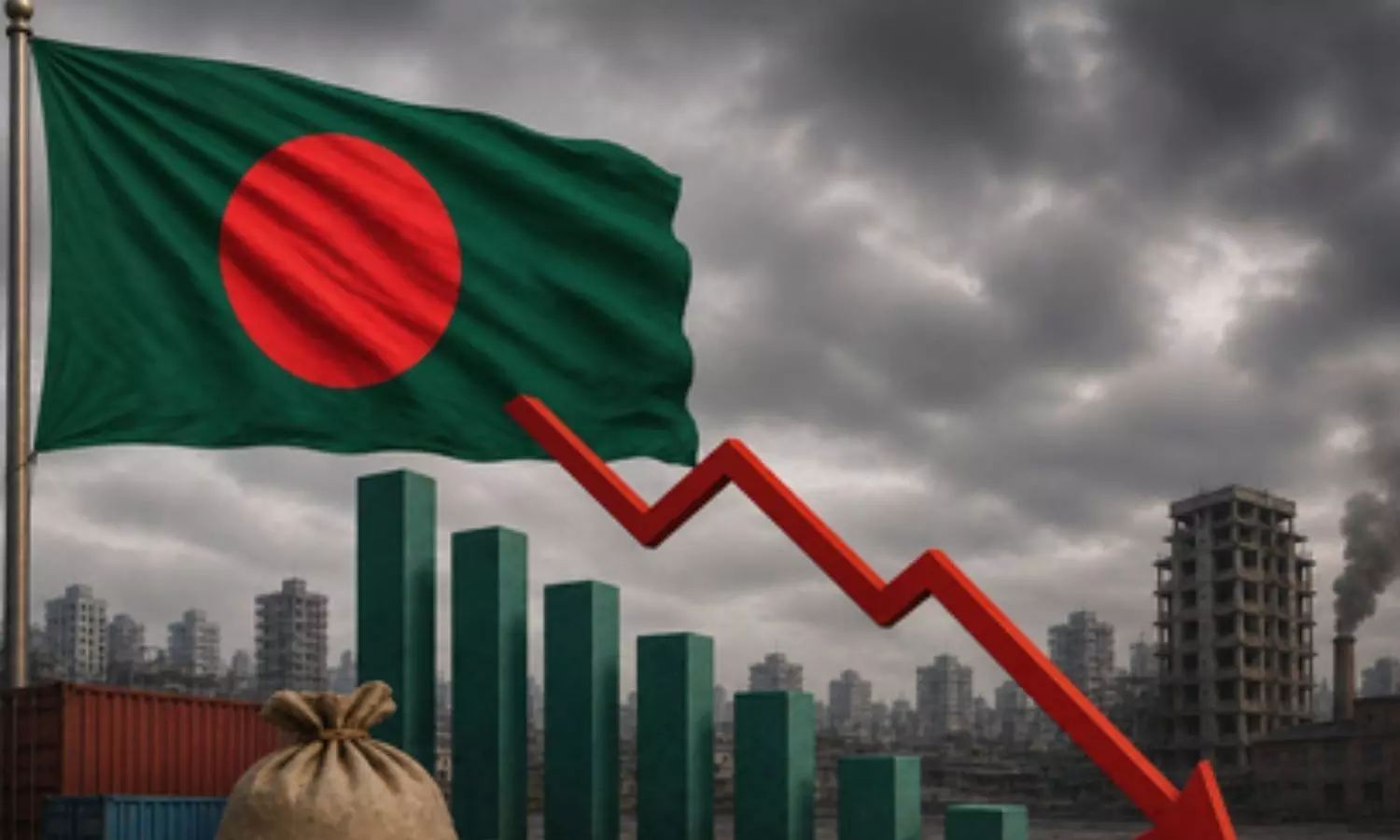
New Delhi: Bangladesh is grappling with mounting stagflationary pressures as persistently high inflation, weak economic growth, subdued private investment and declining household purchasing power combine to weigh on the economy, with experts warning that the ongoing Middle East conflict has amplified, rather than caused, the country's underlying structural weaknesses, a report has said.
While the traditional definition of stagflation includes high unemployment, economists argue that the concept requires a different interpretation in Bangladesh due to the nature of its labour market, the report by Dhaka-based The Financial Express said.
Official unemployment figures remain relatively low, but widespread underemployment, irregular work, and low-productivity jobs indicate significant labour underutilisation across the economy.
Analysts say the country's economic challenges have been aggravated by the ongoing conflict in the Middle East, which has pushed up global energy, transportation and import costs.
However, they caution that the war is acting as an amplifier of existing weaknesses rather than the root cause of the problem, the report noted.
Even if geopolitical tensions ease and oil prices retreat, Bangladesh would still face deep-seated issues including weak private investment, a stressed banking sector, regulatory uncertainty and subdued business confidence, they argue.
Inflation remains one of the biggest concerns.
Headline inflation eased marginally to 8.26 per cent in August from 8.32 per cent in July, but non-food inflation climbed to 9.32 per cent. Wage growth, at around 8.05 per cent, has remained below the overall inflation rate, leading to a continued erosion of real purchasing power.
Economists note that rising costs of housing, transportation, healthcare, education and other essential services are placing pressure on households and weakening consumer demand, particularly among lower- and middle-income groups, as per the report.
Growth prospects have also weakened. The World Bank has projected Bangladesh's economic growth at 3.9 per cent for FY26, while the International Monetary Fund has forecast growth of 3.5 per cent for FY27.
Although these figures remain positive, analysts say they may not be sufficient to create enough productive jobs, boost incomes and support higher investment levels, the report mentioned.
Ponnam challenges BJP chief over SIR voter deletions
PM Modi, CM Vijay flag off first train on Chennai Metro phase 2 network; share ride
Pawan Kalyan launches Adavi Thalli Bata 2.0’ programme
Supreme Court directs normal Metro, rail services, uninterrupted internet in Delhi
PM Modi writes to Andhra Pradesh on Vijayawada Utsav, congratulates govt
AP govt issues orders on BC reservations in urban local bodies


