






- Rahul calls Indian democracy 'sick' in US; BJP says he is against India's democratic fabric
- Google Gemini 4 Neon: New AI Model Promises Three Times Faster Performance
- India’s life insurer new business premium rises 26.2 pc in October
- Political row erupts over proposal to rename Mumbai’s Dadar Station as 'Chaityabhoomi'; MNS corporator protests
- World Bank warns of fresh food-price shocks
- India remains world’s fastest-growing major economy: PM Modi
- Trump opposes AI curbs at APEC, acknowledges risks
- Cyclonic Storm Akvan intensifies, moves to coast at 12kmph speed
Amid Divan spirit, geopolitical tensions cast shadow over COP31 fossil fuel phaseout talks
In Short
COP31 climate negotiations face divisions over fossil fuel phaseout as geopolitical tensions and energy security concerns complicate efforts to reach a global climate agreement in Antalya, Turkey.

Share :
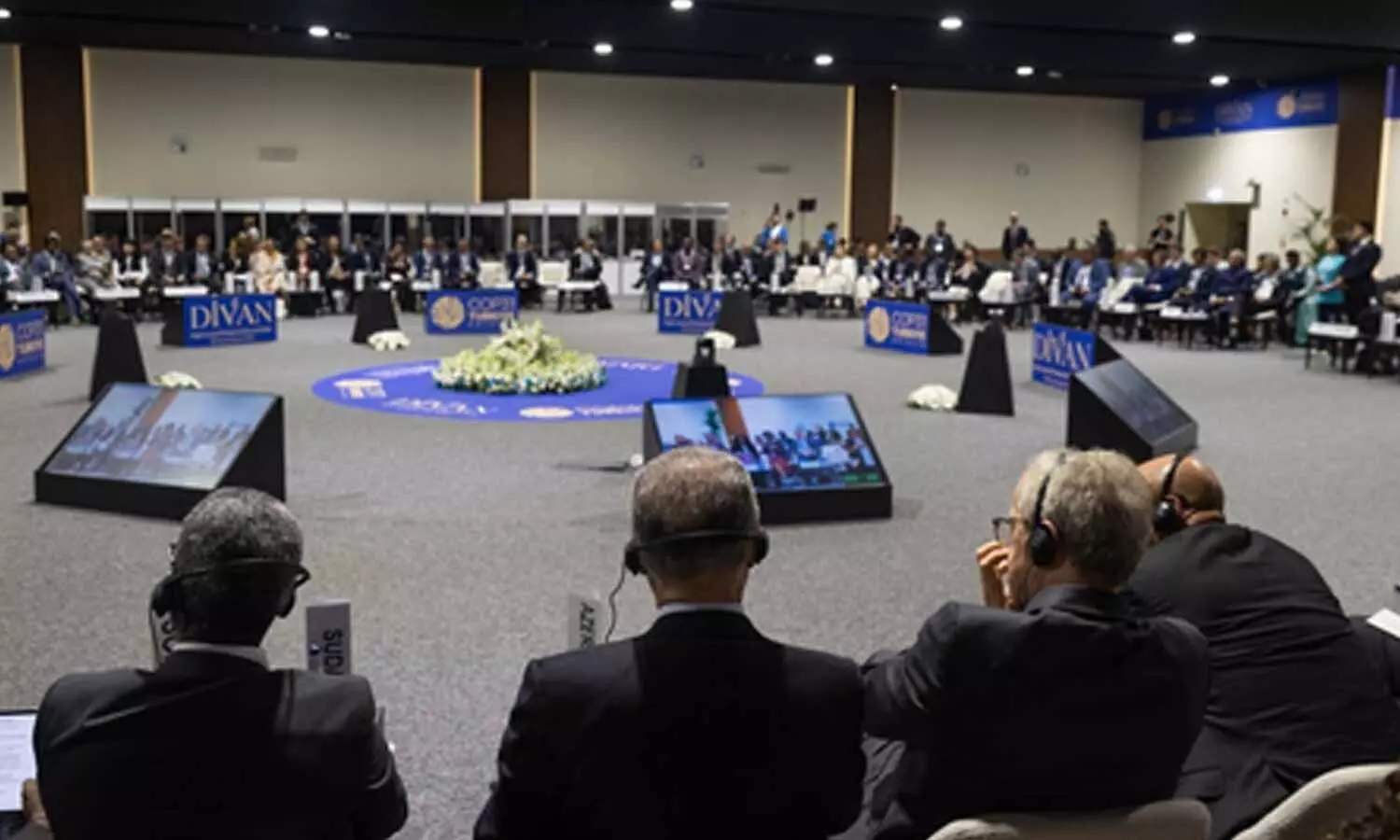
Amid Divan spirit, geopolitical tensions cast shadow over COP31 fossil fuel phaseout talks
Antalya (Turkey): As UN Climate Change Conference (COP31) talks entered their final stretch with the Presidency bringing Turkey’s centuries-old Divan tradition to the final negotiations, ministers remained divided over how quickly the world should move away from fossil fuels, underscoring the deepening tensions between climate ambitions and energy security.
Against this backdrop, the International Energy Agency’s (IEA) World Energy Outlook on Thursday examined how geopolitical conflicts, energy security concerns and eroding trust among countries could reshape global energy markets and fuel choices in the years ahead.
The report explores shifting policy priorities, changing risk perceptions and the evolving mix of fuels and technologies needed to meet rapidly growing energy demand worldwide, as countries grapple with the pace and pathways of the transition away from fossil fuels.
“The Hormuz crisis has delivered a huge shock to the system. While the energy sector and the global economy have shown considerable resilience, the longer the crisis lasts, the deeper the effects will be. And I don’t see any credible pathway for the energy world to return to the way it was before,” said IEA Executive Director Fatih Birol.
A day earlier, nearly 200 nations launched the second five-yearly check of collective progress under the Paris Agreement, named Global Stocktake. In the negotiations to date, 21 issues remain unresolved, and new draft texts are due as ministers try to narrow differences.
A giant signed banner outside the talks underscored civil society’s demand: protect workers and communities as economies go green.
COP31 President Murat Kurum and President of Negotiations Chris Bowen drew on Turkey’s centuries-old Divan tradition of counsel and collective judgment to help ministers find common ground on the political choices needed for a climate agreement in Antalya.
Open to ministerial-level parties, negotiating group chairs and observer constituencies, the COP31 Divan gave ministers a shared space to consider how the work across the different negotiating tracks can come together as part of a balanced package, consider the conference as a whole and build common ground around an overall outcome, in an informal, party-driven and transparent discussion. The Divan brought participants together to discuss key cross-cutting issues and identify where there is room for common ground.
The conversation helps the Presidency bring together the work of the ministerial pairs, Presidency consultations and technical negotiations into a balanced package by the end of the week.
The Divan carries deep institutional and cultural resonance in Turkey. It evokes a place of assembly where those bearing different responsibilities came together to hear one another, weigh difficult choices and determine a common course.
The best-known example is the Divan-ı Hümayun, or Ottoman Imperial Council, which can be traced as far back as the 15th century. It was established to deliberate on the major affairs of the state. Diplomacy, administration, finance and justice were considered not as isolated matters, but as connected responsibilities requiring counsel, judgment and a wider view.
In the same spirit, the COP31 Divan provided a space for frank exchange across the conference agenda. It allowed ministers to hear one another’s priorities, explain where their delegations see room for common ground and what they would need to reach an agreement and consider how different elements can come together in an agreed outcome.
COP31 President Kurum said, “The views we hear here will inform the Presidency’s consultations throughout the remainder of the week. We need to have a clear understanding of both the areas where we are converging and those where differences remain. What we need at this stage is not so much to reiterate our respective positions, but rather to identify where we can move forward together. As we approach the final days of COP31, let us uphold the spirit of the Divan in our discussions here: let us listen to one another, broaden our common ground and translate what is possible into concrete outcomes.”
COP31 President of Negotiations Chris Bowen said, “This is a chance for the world to show we can work together on climate change and deliver on the real economic and energy pressures people are facing. “Now we need to build on common ground and deliver an ambitious, balanced and practical message to the world,” he said.
(Vishal Gulati can be contacted at [email protected])
Modi to India Inc: Chart 10-Year Roadmap to Make India a Viksit Bharat by 2047
Modi to India Inc: Break Out of Comfort Zone, Compete with the World
VC Sajjanar takes charge as Fire Services DG
Rahul Gandhi Says Congress Needed ‘300% Proof’ Before Raising 2014 Election Irregularity Claims
Major fire at slum in South Kolkata; no casualties reported
Cyclone Akvan: North coastal Andhra to receive rains


