




Tirumala’s centuries-old musical tradition continues
In Short
19 traditional instruments are used during different rituals from Suprabhatam to Ekanta Seva

Share :
Tirumala’s centuries-old musical tradition continues
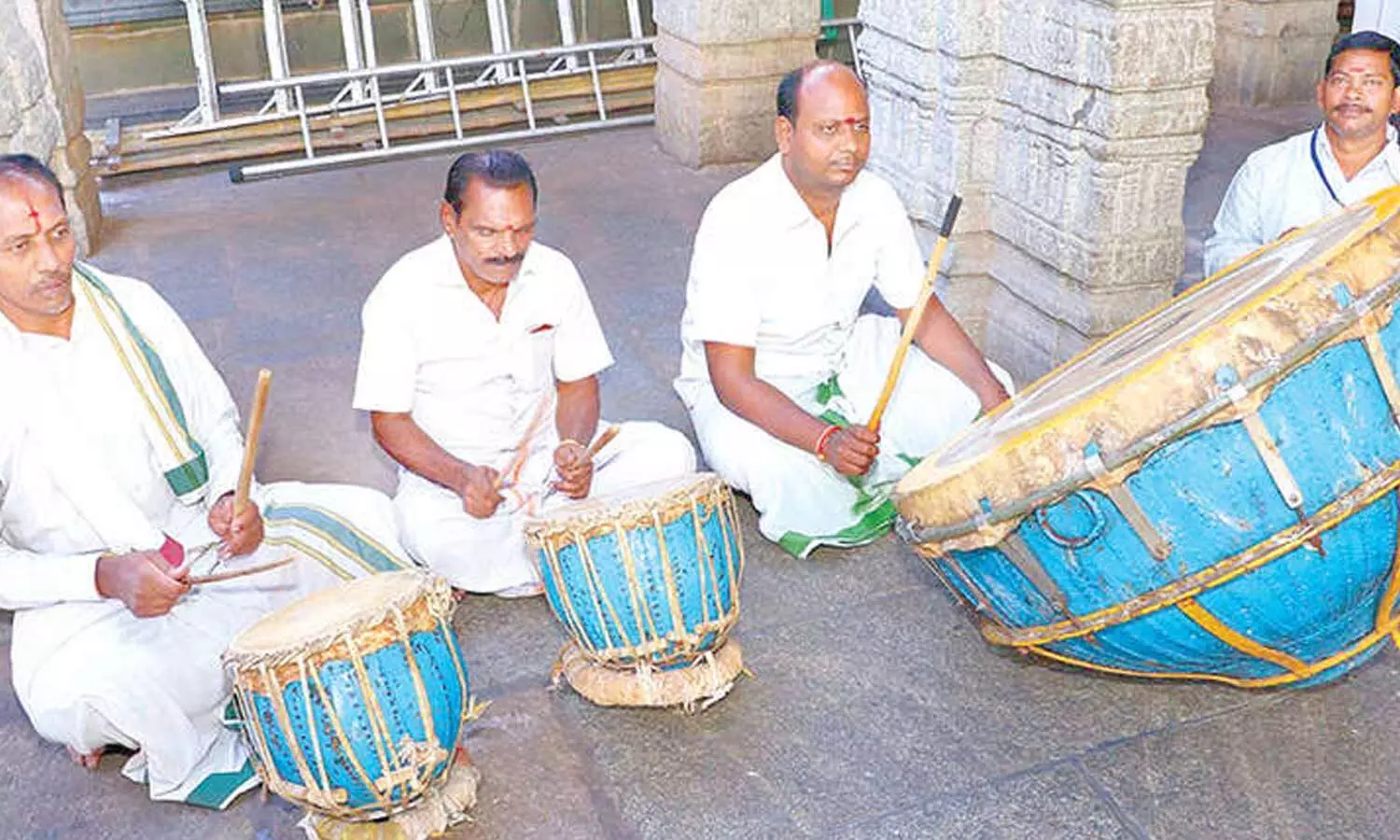
Tirupati: The sounds of traditional instruments have been part of worship at Tirumala for centuries, continuing a musical tradition passed down generations of temple musicians. Nineteen traditional instruments accompany various rituals and services offered to Lord Venkateswara, making music an integral part of worship at the hill shrine.
Music at Tirumala is treated not merely as a performance but as kainkaryam, or devotional service. From Suprabhatam in the early morning to Ekantaseva at night, traditional music remains closely linked with the daily rituals.
Several saint-poets and musicians have contributed to this tradition. Tallapaka Annamacharya, Purandaradasa, and Tarigonda Vengamamba expressed their devotion through sankeertanas, while the Alwars offered pasurams. In later years, renowned Carnatic musicians, including Bharat Ratna MS Subbulakshmi, Dr Mangalampalli Balamuralikrishna and Dr G Balakrishna Prasad also enriched the tradition with their devotional outpourings.
The musical heritage is also associated with the natural sounds emanating from the Seshachalam forests.
According to Puranic traditions, animals such as the bull and elephant worshipped the Lord with their calls.
Instruments such as the Gaurugolu and Tiruchinnam are associated with these sounds and continue to be used in temple services.
The Dolu, Mukkuveena, Tiruchinnam, Gaurugolu, Sanna Dolu and Sruti are among the traditional instruments used at different times of the day. As prescribed by Agama traditions, Mela Vadyam is an essential part of worship and is performe d around 14 times on normal days, with more performances during festivals.
The Nadaswaram accompanies important rituals, naivedyam and processions and is played twice daily at the offering bell. The Gaurugolu and Sanna Dolu announce the arrival of Archakas and Jeeyangars, while the Tiruchinnam is played during Mangala Harathi. The Sruti provides the supporting musical note.
During the Salakatla Brahmotsavams, the traditional ensemble accompanies vahana sevas and processions. Music continues during Ekanta Seva, when specified instruments, including the Mukkuveena, Tiruchinnam, Gaurugolu, Sanna Dolu and Sruti, are played softly during the final rituals.
Historical accounts indicate that temple music received support during the Vijayanagara period, particularly under Sri Krishnadevaraya.
Large ensembles known as Nawbat Khana are said to have included 19 types of instruments.
Generations of musician families have preserved the tradition as a form of service.
TTD continues these efforts through the Sri Venkateswara Recording Project, Nada Neerajanam programmes, and the Sri Venkateswara College of Music and Dance.
Besides, Sri Venkateswara Museum preserves instruments such as the Brahma Nagaara, believed to be around 400 years old.


