
Women artisans breathing life into centuries-old craft

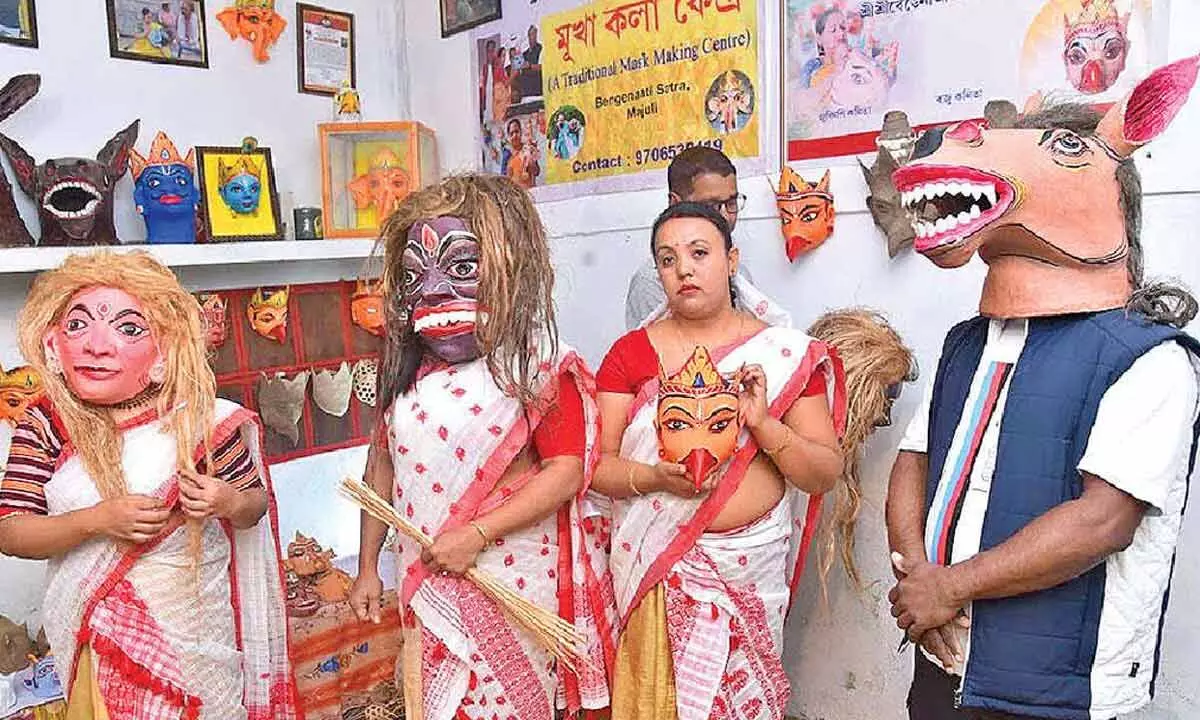
Guwahati; Majuli, nestled in the bosom of Assam, has long been a bastion of various cultures and traditions, especially the mask-making, known as ‘Mukha Shilpa’, a centuries-old craft using natural materials like bamboo, clay, and cow dung to create vibrant masks.
This age-old tradition has been a rich feature of the island’s culture for centuries, with the skills required for this time-honoured craft being handed down through generations, and today, the use of Mukha, or masks, has gone way beyond the cultural space of Satra and Namghar, although its core making process remains the same. Apart from the traditional theatrical performances, these masks are now utilised for various purposes in contemporary plays, home décor, and museum exhibitions, with women in Bengenaati Satra Majuli making a dedicated effort to preserve this heritage even today.
The river island of Majuli in Assam is a hub of Neo-Vaishnavite culture, and according to historians, Srimanta Sankaradeva, a 16th-century Vaishnavite Saint, was instrumental in promoting the philosophies of Neo-Vaishnavism, with the creation of Satras providing a platform for performing arts to engage with the community.
Sankaradeva was pivotal in introducing the Mukha mask in the theatrical art of Bhaona, allowing for the expression of various mythological characters, and these colourful masks, designed to represent gods, demons, and mythical figures, are crafted with a bamboo frame and involve several steps, including layering with clay-soaked cloth, sculpting distinct features, and painting with vibrant colours.
Women in Bengenaati Satra, a small village in Majuli island, have transformed their community into a centre for mask-making, and this talented group of women is crafting masks that have gained international acclaim, a prominence further cemented when the art of Mask Making from Majuli was awarded the prestigious GI tag in 2024. Guri Moni Kolita, a woman making masks, explained that these masks are made from bamboo, clay from the banks of the Brahmaputra, cloth, and cow dung, portraying gods and demons, detailing that the base of each mask is crafted from delicate strips of bamboo, creating a lightweight structure. On top of this, layers of clay obtained from the shores of the Brahmaputra are applied to shape the outlines, which are then allowed to dry in the sunlight; after hardening, a mixture of cow dung and cotton fabric is applied, giving the mask its distinctive strength and texture, before it is dried again beneath the open sky, with the concluding step involving painting, traditionally executed with vibrant colours, ultimately completing the mask, explained Moni Kolita. Majuli island continues to draw visitors globally, eager to witness its rich mask-making tradition, with Ankita Neelam, a tourist from Maharashtra, expressing her admiration after observing the woman artisans at work, saying: “I am truly astonished to witness such culturally rich handicrafts, each crafted entirely by hand. It’s incredible that such a stunning tradition thrives here, yet so few are aware of it.”
The art of mask-making is gaining significant recognition after many years, thanks largely to Hem Chandra Goswami, a Padma Shri awardee (2023) and one of the final pioneers of Mukha Shilpa (mask art), who trained these women in the craft of mask creation. During a visit of a Media Delegation from Telangana to the village, a representative from the Micro Enterprise Development Programme (MEDP) highlighted the inspiring case of the Majuli Women’s Self-Help Group (SHG), which is revitalising the ancient craft of mask-making, stating that over a span of 15 days, the MEDP has trained 15 women to create beautiful handmade masks that embody the island’s vibrant cultural legacy.
“These creations are now being sold to customers both locally and nationally via online channels, transforming a traditional art into a sustainable livelihood opportunity for these families,” said the representative, explaining that the local availability of bamboo and cow dung not only supports the art but also sustains the livelihoods of Majuli’s residents.


