Vajpayee’s life an inspiring open book, says Venkaiah Naidu

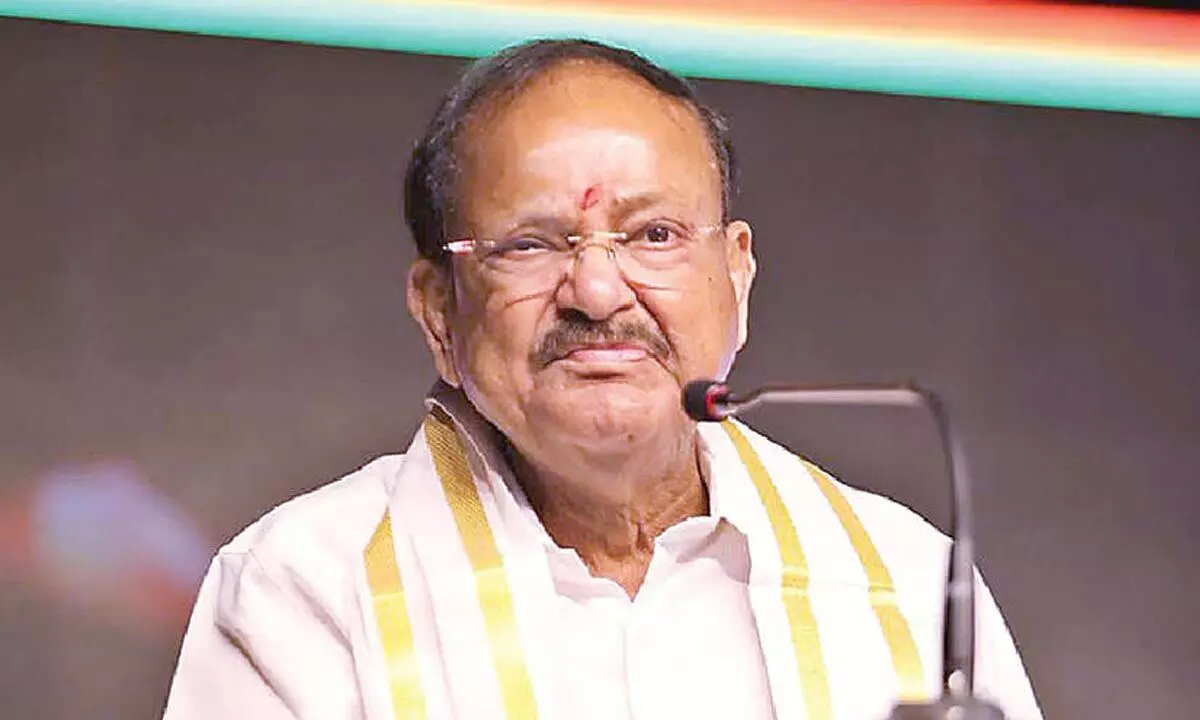
Hyderabad: FormerVice President M Venkaiah Naidu described the life of Bharat Ratna and former Prime Minister Atal Bihari Vajpayee as “an open book, with every page inspiring.” Addressing a programme organised in Hyderabad on Tuesday as part of Vajpayee’s centenary celebrations, Naidu joined leaders and dignitaries to reflect on the statesman’s enduring contributions to Indian politics and governance.
Naidu recalled Vajpayee’s close association with Syama Prasad Mukherjee, noting that Vajpayee was chosen as his disciple and worked tirelessly to fulfil Mukherjee’s aspirations. He emphasised that Vajpayee was among the pioneers who laid a robust foundation for the Bharatiya Janata Party (BJP), and his leadership continues to serve as an ideal for the youth. “Vajpayee means good governance,” Naidu stated, urging party workers to introspect on whether they are truly following the path he established.
Highlighting Vajpayee’s core principles, Naidu stressed the importance of moral governance, social responsibility, and an unwavering dedication to the Constitution.
He cautioned against leaders who resort to coarse language and personal attacks, reminding them that in a democracy, political opponents are not enemies. “I have retired, but not with my lips,” he remarked, underscoring his continued commitment to commenting on public life.
Naidu praised Vajpayee’s role in elevating India’s global standing, particularly regarding national defence. He observed that while PV Narasimha Rao introduced significant reforms, it was Vajpayee who implemented them effectively. He also credited Prime Minister Narendra Modi for demonstrating sophisticated diplomacy on the world stage, while saluting the armed forces and scientists for the success of Operation Sindoor.
Turning to contemporary fiscal issues, Naidu criticised the growing trend of government freebies, questioning the necessity of services such as free bus travel.
He argued that only essential services, including quality healthcare and education, should be provided free of charge, with financial assistance targeted specifically at those genuinely struggling. He warned that indiscriminate freebies could jeopardise economic stability. Furthermore, he cautioned against using minorities for vote-bank politics, insisting that governance must be inclusive and based on national interest rather than electoral calculations.