TG Vigilance memo sparks controversy amid fee reimbursement row

College managements say memo riddled with legal infirmities; fails to withstand court scrutiny
The State government’s recent memo directing the Vigilance and Enforcement (V&E) department to inspect all institutions under the post-matric scholarship and fee reimbursement schemes has triggered a wave of controversy, raising questions about its timing, scope and legal tenability. What began as an administrative move to curb alleged irregularities has now snowballed into a full-blown standoff between the government and private professional colleges.
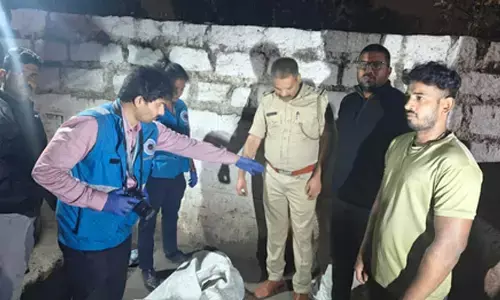
Issued with the stated objective of verifying compliance and rooting out misuse of funds, the memo empowers the V&E department to inspect B Ed, D Ed, engineering, pharmacy, nursing and management institutions. It authorises requisitioning support from the Director-General of Police, CID, ACB, Intelligence and commissionerates of Hyderabad, Cyberabad, Rachakonda and Warangal. However, critics argue that the memo may have been issued in haste, potentially causing more administrative and legal complications than resolving core issues.
The controversy intensified after private colleges, under the Federation of Association of Telangana Higher Institutions (FATHI), announced a Statewide bandh beginning November 3. FATHI, which represents eight major associations of colleges, is reportedly preparing a two-tier action plan to counter what it perceives as coercive tactics by the government.
Speaking to The Hans India, a senior member of the Telangana Engineering and Professional Institutions Management Association (TEPIMS) expressed frustration over the government's approach. “When a Vigilance raiding party lands at an institution, college managements have decided to hand over the keys and let them investigate whatever they want. The fact is reimbursement dues have not been paid for five years. The funds spent were from our own resources; so where is the question of irregularities”, he asked.
The eight-point memo’s terms of reference have also come under scrutiny for lack of temporal boundaries. Legal experts consulted by private colleges point out that the absence of a defined timeframe allows investigating agencies to go into records dating back to the inception of the fee reimbursement scheme, which was launched in united Andhra Pradesh. “If irregularities are found from that period, can the current government make a case against institutions for funds received under a different united AP’s administrative regime?” asked a legal adviser, stating the memo could be challenged as arbitrary if subjected to a judicial review.
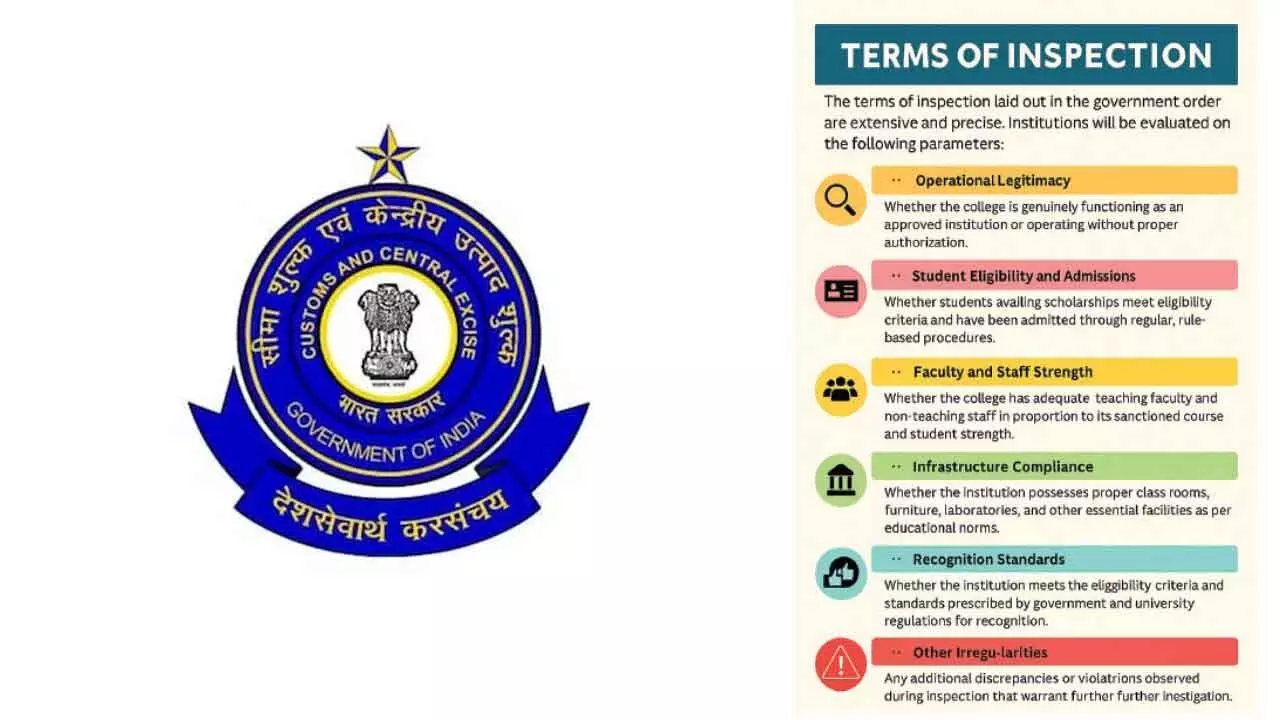
Making things more complicated, points VII and VIII of the memo mandate inspections on a wide range of parameters: whether the institution is genuinely functioning, whether students are eligible and properly admitted, whether infrastructure and faculty meet prescribed norms and whether academic performance and attendance justify reimbursement. Point VII allows probing “any other irregularity” noticed during inspections, further broadening the scope.
Giving sweeping powers to the E&V teams, point VIII of the memo issued by Chief Secretary K Ramakrishna Rao, says, “the above terms of references are only illustrative to show the scope and range of the inspection and the inspecting agencies may probe any aspect of irregularity or deviation from permitted norms based on facts of each case.”
This turns the entire objective of the memo self-defeating, the government’s objective to bring accountability to counter irregularities in the fee reimbursement scheme. “the memo gives sweeping authority to E&V to scrutinise the earlier inspection reports of JNTU-H, Osmania, Kakatiya, Health and other university and subsequently granted recognition and affiliation to the colleges. Promoting what goes in the name of oversight to take action against the university authorities when irregularities were found,” pointed out another member of the Technical Institutions Managements Association.
Meanwhile, the BJP and other parties have intensified their criticism of the memo, particularly its timing, which, amid long-pending dues and rising tensions, may backfire. With legal challenges looming and a bandh on the horizon, the government and private colleges are on a collision course- what lies ahead for higher education landscape remains a million-dollar question for teachers awaiting salaries and students hoping for release of the course completion documents.