IPR workshop highlights need for legal protection of horticultural innovations

SKLTHU leads call for patent culture to safeguard farmer and institutional knowledge
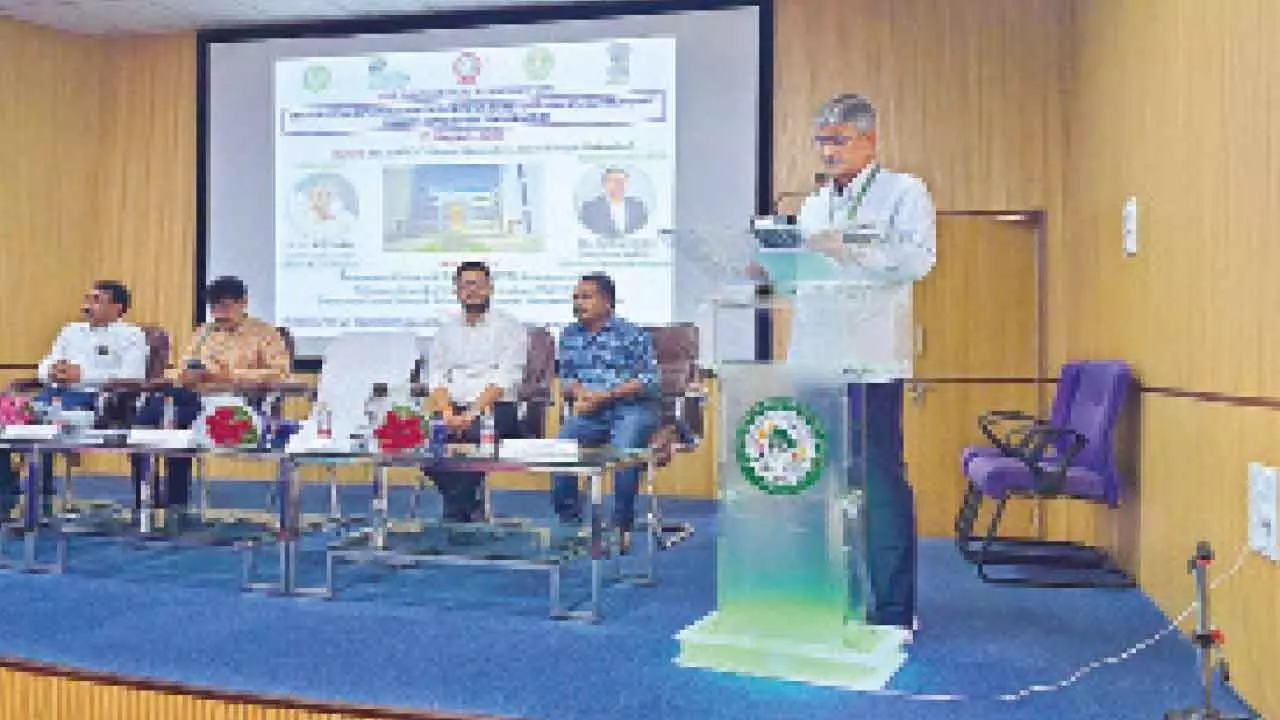
Hyderabad: A national workshop at the College of Horticulture, Rajendranagar, highlighted the vital role of Intellectual Property Rights (IPR) in protecting horticultural innovations.Hosted by Sri Konda Laxman Telangana Horticultural University (SKLTHU) in collaboration with the Telangana Council of Science & Technology (TGCOST) and SKLTHU’s IPR Cell, this one-day event attracted participants from research, academia, law, and farming communities.
Delivering the inaugural address, Dr. Danda Raji Reddy, Vice Chancellor of SKLTHU, underscored the urgency of protecting both farmer-led innovations and institution-driven breakthroughs. He encouraged faculty and students to embrace a culture of patent filing, aiming for one patent per month from the university. “Horticultural progress must align with ethical protection,” he asserted, highlighting SKLTHU’s achievements in varietal development and Geographical Indication (GI) registrations for crops like Balanagar custard apple and Armoor turmeric. He announced financial support for patent-worthy innovations from university researchers and students.
The workshop was financially supported by the Department of Science & Technology (DST), Government of India, and the Environment, Forests, Science & Technology Department, Government of Telangana.
Legal expert Subhajit Saha, Head of Legal & IPR, Resolute for IP, delivered a keynote presentation exploring the benefits of patents and GI protections. He showcased successful GI registration models from across India and praised SKLTHU’s meticulous GI dossier work, citing price advantages of 10–15% for GI-tagged products.
Echoing the call for institutional innovation, Dr. J. Cheena, Dean of Horticulture, advocated for the “One Scientist, One Patent Per Year” approach. Dr. Pidigam Saidaiah, Organising Secretary, detailed SKLTHU’s initiative to compile and safeguard Telangana’s traditional horticultural practices and farmer varieties under the IPR regime.
The event culminated in interactive sessions, case study exchanges, and a united pledge to integrate IPR awareness into horticultural education. Attendees included professors, scholars, students, and grassroots innovators.