IIIT Hyd research redefines cancer as a multi-layered disease

Hyderabad: Cancer research is currently undergoing a massive paradigm shift. Once thought to be triggered by a single genetic error, cancer is now understood as a complex and multi-layered disease shaped by DNA mutations, epigenetic changes, and even hidden regulatory molecules. At the Centre for Computational Natural Sciences and Bioinformatics within IIIT Hyderabad, researchers are bringing these diverse layers together to move closer to early detection and truly personalised cancer care.
A century ago, the somatic mutation theory proposed that abnormalities in a cell’s DNA could trigger uncontrolled growth. Over time, scientists discovered oncogenes that drive cancer and tumour suppressor genes that normally prevent it. Later, it became clear that cancer does not arise from rogue cells alone. The surrounding tissue environment, viruses, carcinogens, and cellular stress also play critical roles. Nita Parekh, Professor of Bioinformatics at IIIT Hyderabad, explains that cancer cannot be explained by mutations alone. Today, it is understood as a multifactorial disease shaped by genetics, gene regulation, environment, and time.
Reading the genome
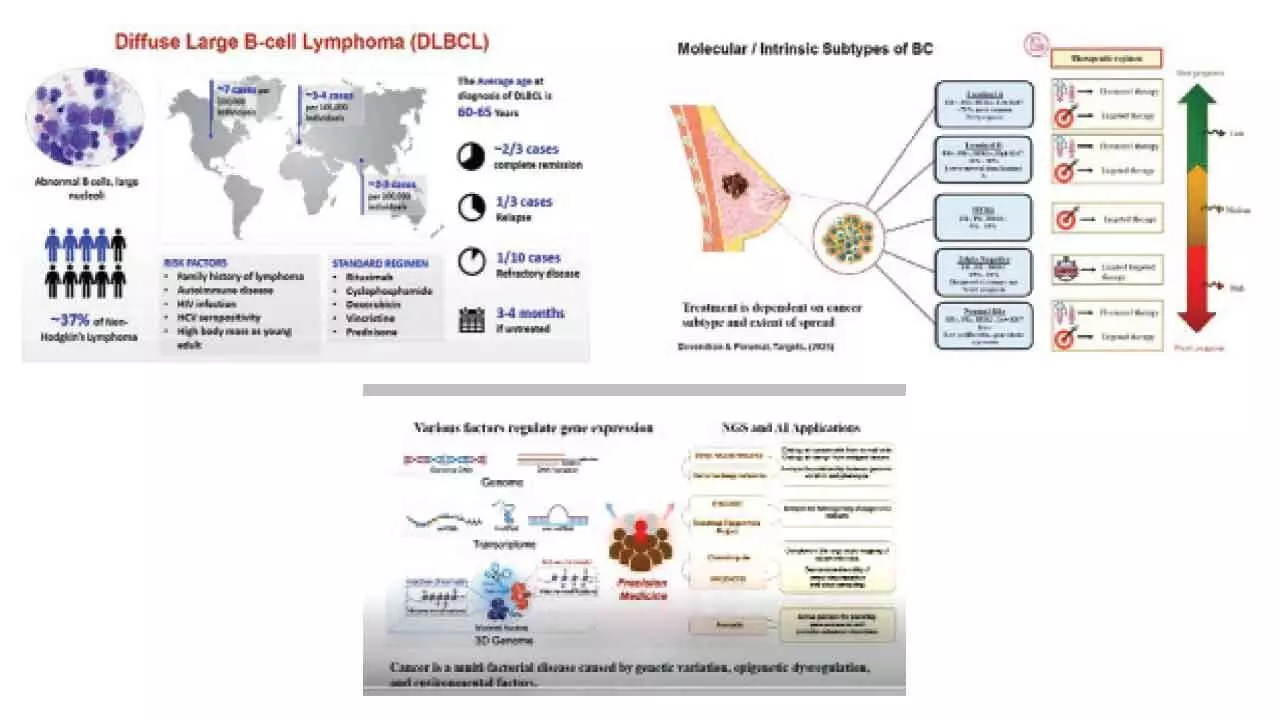
At the heart of modern cancer research is genomics, which is the study of DNA variations. The team led by Parekh analyses both small changes, such as single-letter swaps in the genetic code, and large structural changes like duplications or gene fusions. By profiling cancer genomes, they identify which mutations matter, which pathways they disrupt, and why different cancers behave differently.
Aggressive blood cancers
One focus has been Diffuse Large B-Cell Lymphoma, an aggressive blood cancer with two distinct subtypes. By mapping subtype-specific genetic variations, the team has identified biomarkers that explain why some patients respond well to treatment while others do not. These insights enable genome-guided therapies tailored to each patient’s mutational profile.
Beyond DNA Epigenetics and Non Coding RNAs
Genes alone do not tell the full story of the disease. Epigenetic mechanisms, which act as chemical switches that turn genes on or off, play a major role. DNA methylation, for instance, can silence tumour-suppressing genes or activate cancer-promoting ones. The group is studying methylation patterns across promoters, enhancers, and non-coding RNAs, uncovering regulatory changes that often precede tumour development.
Non-coding RNAs, including microRNAs and long non-coding RNAs, are another hidden layer. Though they do not code for proteins, they regulate gene expression and can either suppress protective genes or activate harmful ones. Mapping these networks offers new insights into why cancers behave differently across patients.
Breast Cancer and Imaging
The team is also working on breast cancer, one of the most common cancers worldwide. By combining DNA methylation data, RNA expression profiles, and machine learning, they have identified molecular signatures that distinguish subtypes and predict patient risk. These findings pave the way for liquid biopsies, which are simple blood tests that detect cancer signals long before symptoms appear. In parallel, the group is developing AI-driven mammography analysis. Large datasets of mammograms are being used to train models that detect abnormalities early, classify tumours, and generate preliminary clinical reports. This work aims to support radiologists, reduce diagnostic delays, and improve screening accuracy, especially in resource-constrained settings.
Why it matters
India faces unique cancer challenges including genetic diversity, younger age of onset, and delayed diagnosis. Research rooted in Indian data is essential for equitable solutions. By integrating genomics, epigenetics, and AI-driven imaging, the research at IIIT Hyderabad is moving cancer care closer to precision medicine, where treatment is guided by the unique biological profile of each patient.