IIIT-Hyd develops low-cost IoT device to detect UPS failures

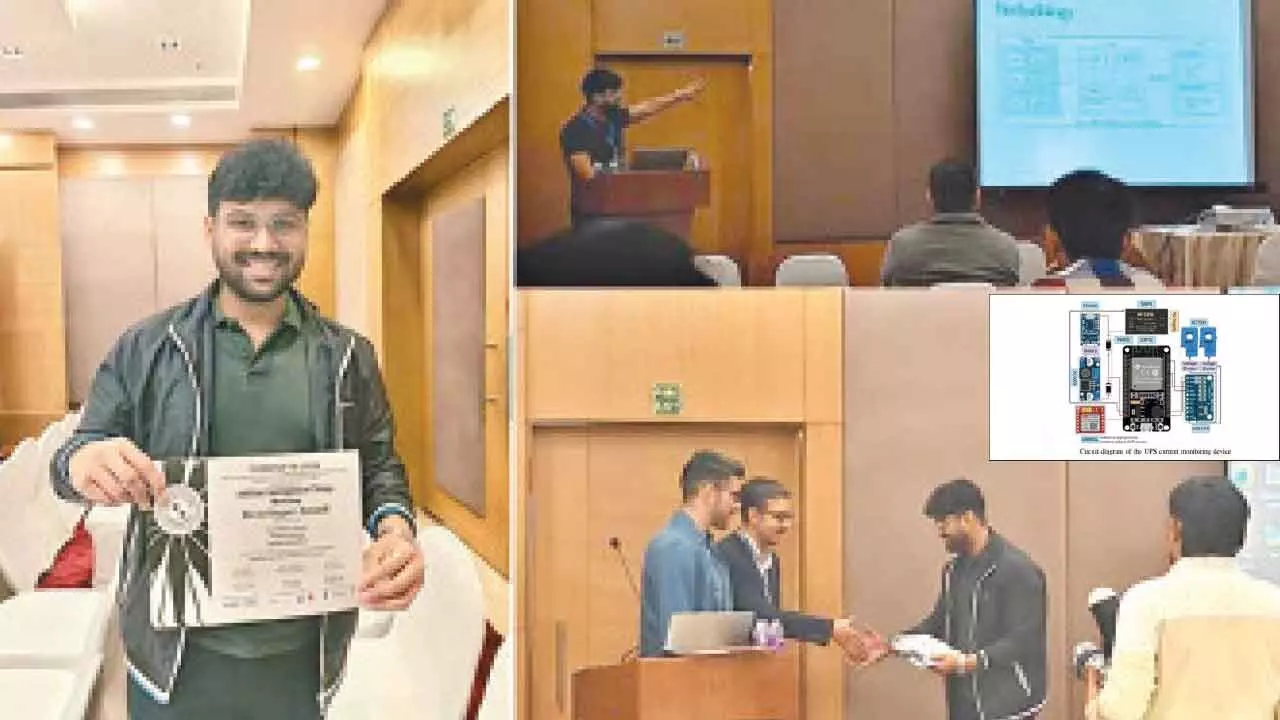
IIIT-Hyderabad has unveiled a groundbreaking IoT-based UPS detection device that promises to transform power monitoring in cost-constrained environments. Developed by researchers Sannidhya Gupta, Prakash Nayak and Prof Sachin Chaudhari, the device recently won the Best Paper award at the 18th International Conference on Communication Systems and Networks (COMSNETS 2026) in Bengaluru. The innovation was born out of a practical challenge faced by the campus IT department, where unexplained equipment failures during frequent power outages raised concerns about the reliability of existing UPS systems.
Commercial monitoring solutions, like SNMP cards, were found to be prohibitively expensive, costing upwards of Rs 20,000 per unit, and often failed when UPS systems themselves lost power. In response, the team designed a non-intrusive, battery-backed monitoring device that continues recording even during complete power and internet failures. The device clamps onto UPS input and output lines, tracking current flow during outages, switchovers, and recovery phases with near-second precision.
During campus trials across four UPS installations, the device collected 3.7 million data points over a month and automatically detected 61 outage events. Its analytics backend categorised each event into phases such as normal operation, outage, stabilisation, and battery charging.
The results were highly accurate, with no missed outages, no false alarms, and timing errors within three seconds. One malfunctioning UPS was identified, confirming suspicions that it failed to recharge properly after outages.
Built using off-the-shelf components, the device costs just Rs 2,000, making it nearly ten times cheaper than commercial alternatives. A web-based dashboard now provides IT staff with real-time visibility and historical analysis of UPS performance. Lead researcher Sannidhya Gupta emphasised that affordability, power independence and portability make the device a practical option for institutions and organisations operating under budget constraints.
What makes this project particularly noteworthy is its collaborative origin. IT staffer Prakash Nayak is not only a co-author of the research paper but also a co-inventor on the patent filed. Prof. Chaudhari highlighted that involving operations teams as co-creators of research problems ensures more relevant and impactful outcomes. This approach bridges the gap between academic research and real-world needs, producing innovations that are both practical and globally significant.
By addressing a critical infrastructure challenge with an affordable and scalable solution, IIIT-Hyderabad’s UPS detection device sets a precedent for cost-effective monitoring systems in developing regions worldwide.
The recognition at COMSNETS 2026 underscored the importance of translational research that emerges from everyday operational challenges and delivers solutions with far-reaching impact.