






- El Nino takes toll on tourism; Sagar-Srisailam cruise paused
- Cyberabad CP urges citizens to use public transport and carpooling
- Nara Lokesh dares YS Jagan for open debate
- TGSRTC saves Rs 36 crore through smart driving technology
- Justice For Victims: AgriGold bond verification drive to begin on Wednesday
- Nitin Nabin to lead BJP’s mega padayatra in Karimnagar today
- Karthika Parva Deepotsavam at Tirumala tomorrow
- Nellore: Dy mayor post triggers intense lobbying within ruling NDA coalition
CMC bets big on rainwater harvesting to recharge groundwater
In Short
Civic body constructs injection borewell in Serilingampally

Share :
CMC bets big on rainwater harvesting to recharge groundwater
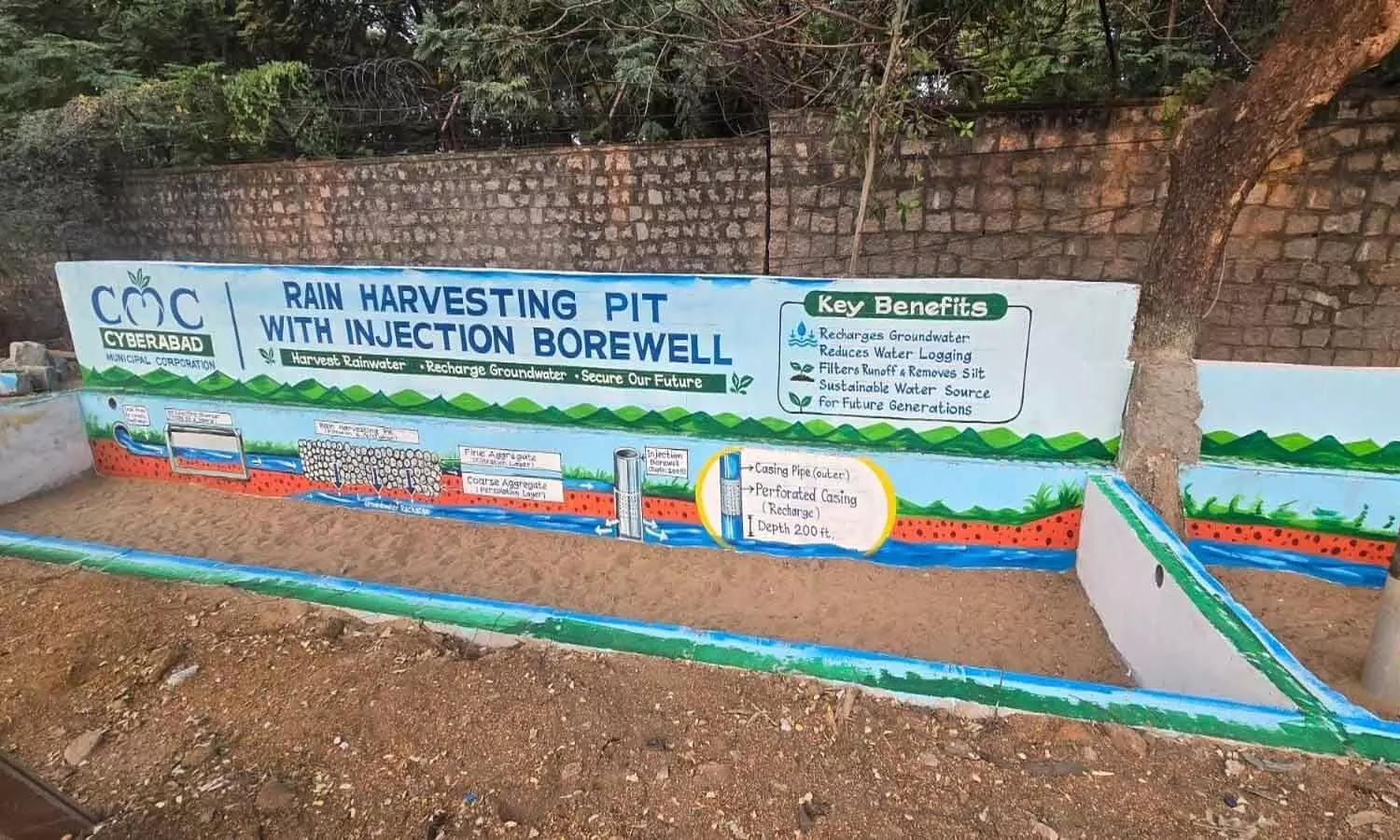
Hyderabad: Stepping up efforts to conserve rainwater and strengthen groundwater resources, the Cyberabad Municipal Corporation has constructed a rainwater harvesting pit with an injection borewell in the Serilingampally zone as part of a broader initiative to improve groundwater recharge across its jurisdiction. Using a scientific filtration and recharge mechanism, the structure collects rainwater, removes impurities, and channels filtered water into deeper underground formations to prevent wastage, curb waterlogging, and replenish depleted aquifers.
Under the design, rainwater collected from an RU culvert first enters a silt collection chamber where sediments and impurities settle out. The water then moves through a harvesting pit layered with fine and coarse aggregates that aid filtration and percolation, before entering a 200-foot injection borewell fitted with outer and perforated casing pipes to accelerate groundwater recharge.
The Serilingampally facility forms part of CMC’s wider plan to establish two to three rainwater harvesting structures in each of its 76 wards, covering public parks, road medians, and waterlogging spots. The corporation has developed 10 designs, including small recharge pits, modular units, installations beneath flyovers, and engineered borewell models to suit varied sites. Pilot projects at Gulmohar Park and beneath the Madhapur flyover have already yielded encouraging results.
CMC currently manages around 550 developed or ready-to-use parks, with another 300 under development, and plans rainwater harvesting structures across all of them. Around 80 waterlogging points have also been identified for recharge and injection wells, alongside suitable road medians targeted for completion before the coming monsoon. The civic body is encouraging residential associations and private stakeholders to participate; structures on municipal properties will be maintained by CMC, while colony installations will be maintained by respective residents’ associations.
Furthermore, CMC plans stricter enforcement of mandatory rainwater harvesting norms in large buildings, especially those built on plots measuring 1,000 square yards, with compliance verified prior to issuing Occupancy Certificates. Through these steps, the corporation aims to embed rainwater conservation into urban infrastructure and secure long-term groundwater sustainability.


