Tungabhadra reservoir’s water crisis raises concerns for farmers

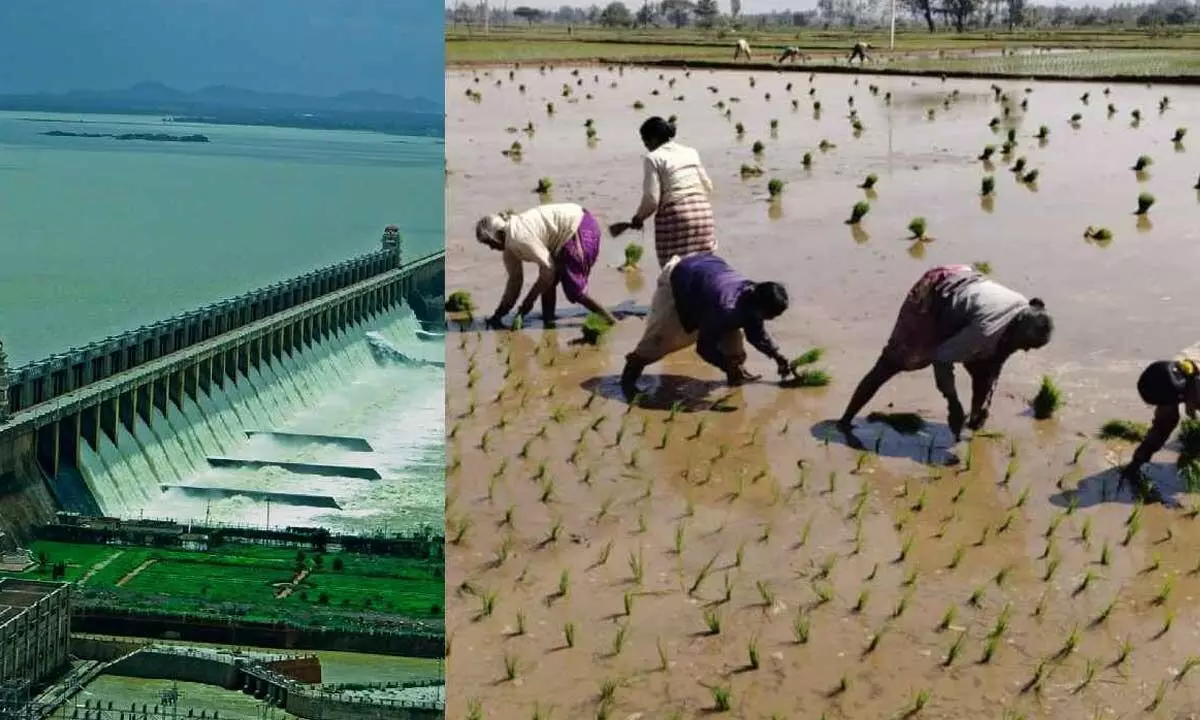
The Tungabhadra Reservoir has become a lifeline for farmers in Ballari, Vijayanagara, Koppal, and Raichur districts. Many farmers rely on this water source to sustain their agriculture, cultivating a variety of crops, including paddy, chickpeas, jowar, cotton, and toor dal.
Koppal: The Tungabhadra Reservoir has become a lifeline for farmers in Ballari, Vijayanagara, Koppal, and Raichur districts. Many farmers rely on this water source to sustain their agriculture, cultivating a variety of crops, including paddy, chickpeas, jowar, cotton, and toor dal. Depending on the water availability, some can irrigate two crops, while others may only get water for one crop. As the farmers have already harvested their rabi crops, they are now in the process of planting summer paddy.
However, those who are starting to plant paddy may face significant water shortages. In light of this, officials have advised farmers not to proceed with planting paddy. They have issued a stern warning that if farmers continue to plant paddy while relying on reservoir water, they will not receive supplies from the reservoir for their crops. The officials have stated that water will only be released for crops until the end of March, after which it will not be available due to the need to conserve water for drinking purposes during the summer.
In a meeting held in November, the irrigation advisory committee decided to allocate water for the second crop from January 1 to March 31. The Edandande canal currently receives a daily flow of 3,800 cusecs of water. Starting April 1, the water will be reserved solely for drinking purposes.
Currently, the reservoir holds 53 tmctf of water, with no inflow expected. If the canals are drained to Andhra Pradesh, it is estimated that between 8 to 10 TMC will remain in the reservoir after April, with approximately 4 to 5 TMC available after accounting for dead storage. Chief Minister has directed that this should be reserved for drinking water during the summer. Thus, there will be no water released for crops from April 1 onwards. This situation leads to concern for farmers who need water for crops planted until the end of April. Officials have suggested that farmers consider short-duration crops instead of paddy.
Despite the information provided to farmers by the irrigation advisory committee, some continue to plant crops, disregarding the officials’ warnings. Karnataka’s Irrigation Department officials stressed that they will not be responsible for supplying water for any crops planted without compliance with the new guidelines. However, some farmers appear unconcerned, continuing to plant even in February.
There is growing doubt about whether farmers will receive water from the Tungabhadra Reservoir after April 1. It is advisable for farmers to avoid planting paddy and instead opt for alternative crops.
This strategy will help prevent the risk of incurring significant expenses only to face water shortages at a critical moment. Farmers are urged to carefully consider their crop choices moving forward.