Solar-powered wild animal deterrent systems to address issue

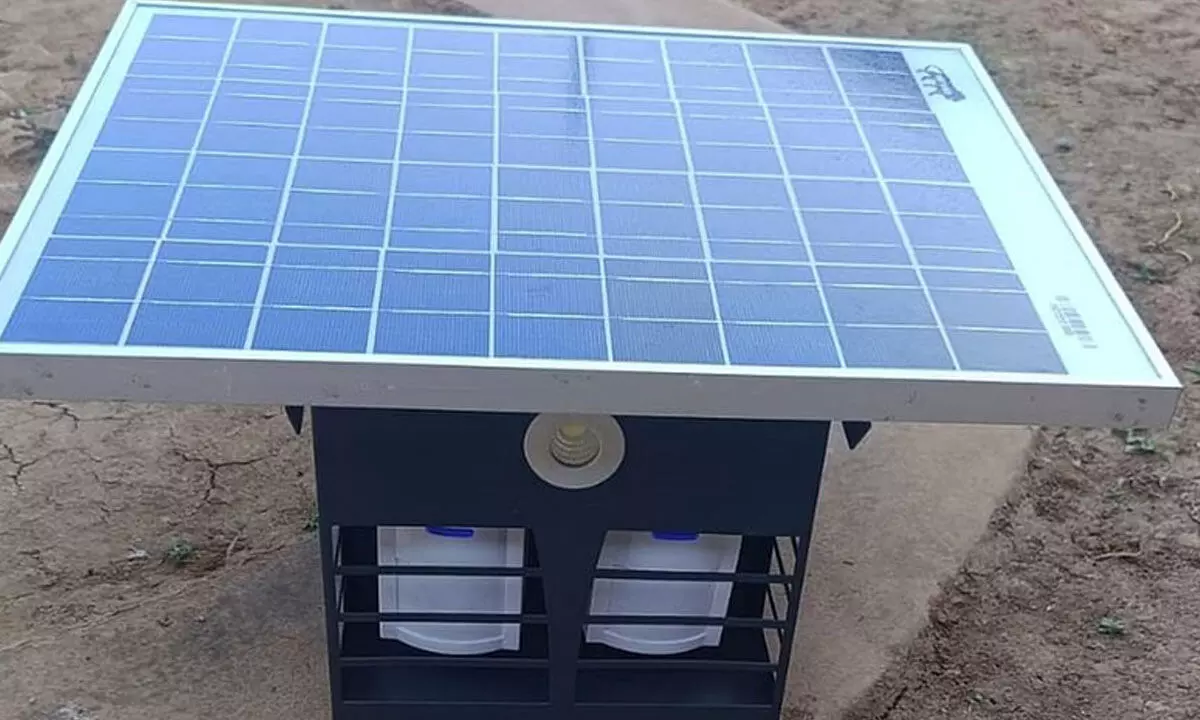
In response to the increasing human-animal conflict in Narasimharajapura taluk, the Forest Department is moving forward with the installation of solar-powered wild ani-mal deterrent systems
Chikkamagaluru: In response to the increasing human-animal conflict in Narasimharajapura taluk, the Forest Department is moving forward with the installation of solar-powered wild ani-mal deterrent systems. This initiative aims to prevent damage to crops and protect lives from incidents involving elephants, tigers, and wild boars that have been on the rise in recent days.
These new systems are being introduced as a practical solution for the hilly regions, providing a cost-effective and quick installation compared to conventional methods like tentacle solar fences and railway barricades, which require additional funding and time. Forest officials state that these deterrent machines will significantly help farmers and local residents safeguard their crops and property from wild animals.
Designed for deployment in farms, agricultural lands, hills, and forested areas, the solar-powered deterrent system utilizes advanced technology. It features a high-beam LED flashlight capable of covering a 240-degree field of vision. The system detects approaching animals: if they come directly towards it, it can sense them from up to 30 meters away, and from surrounding areas up to 12 meters. As animals approach, built-in sensors trigger high-volume sounds to scare them away, thus preventing po-tential harm and property damage.
To combat the rising incidence of elephant intrusions into villages, two of these deter-rent machines have been imported from New Delhi, each costing `16,000. This marks the first time the Forest Department is implementing such systems in the hilly areas to curb wild animal invasions. Officials have indicated that if this trial is suc-cessful, similar installations may be rolled out in other regions as well.
Due to the surge in elephant activity, the solar-powered deterrent units will first be trialed in the village of Jenukatte in the Kadahina Bailu Gram Panchayat. “This instal-lation will serve as a pilot project, and if successful, we plan to extend the deployment to other areas in the near future,” said Pravin Kumar, the Forest Officer of the Nara-simharajapura division.
This initiative has been welcomed by the local community and farmers, offering hope for a safer coexistence with wildlife. The efforts of the Forest Department to imple-ment this innovative technology are being closely monitored by residents, who are eager to see the positive impact it will have on
their lives.