Poulomi Palazzo reflects India’s evolving definition of modern luxury

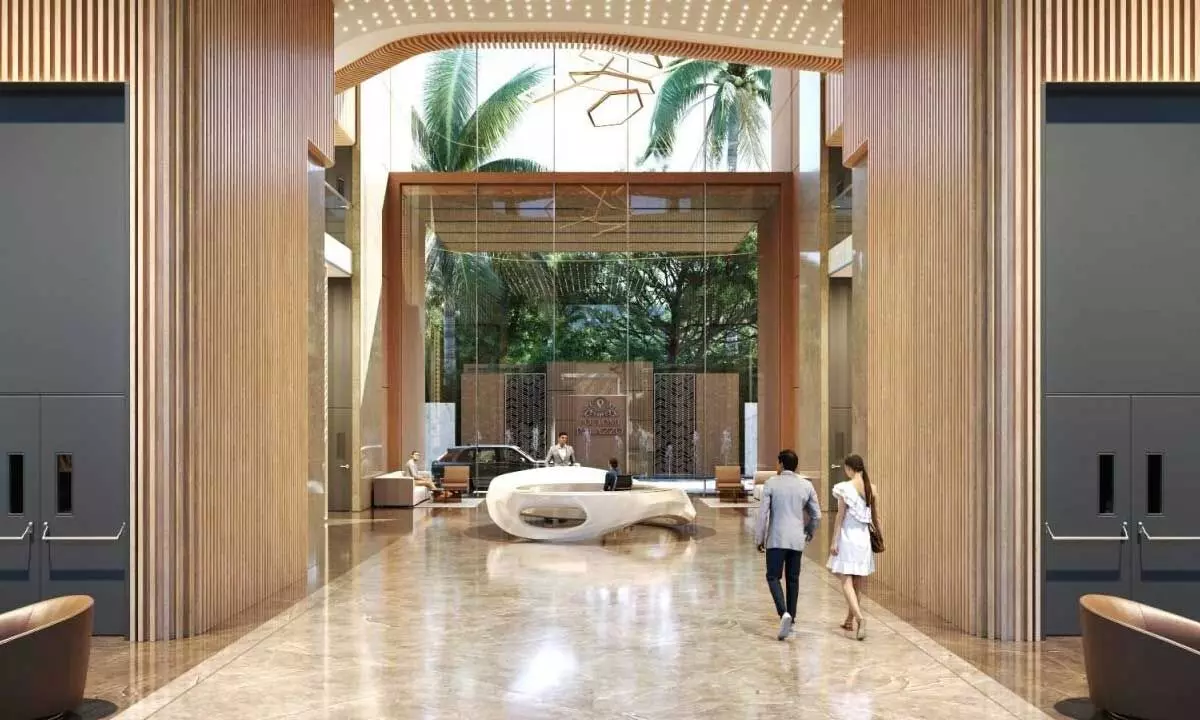
Bengaluru India’s idea of luxury housing is undergoing a quiet but decisive transformation, and Poulomi Palazzo, a 55-storey ultra-luxury residential landmark in Kokapet, is being positioned as a reflection of this shift. Developed by Poulomi Estates on a 2.5-acre premium land parcel and designed by Genesis Planners Pvt. Ltd., the project signals a move away from ostentatious displays of wealth towards a more thoughtful, human-centric approach to luxury living.
Poulomi Palazzo incorporates premium imported marble, international sanitary brands, a refined luxury façade, double-height sky balconies and a multi-level Club Palazzo, along with more than 40 curated lifestyle amenities. Yet, according to the developer, the defining aspect of the project is not visual extravagance but the emphasis on calm, openness and emotional wellbeing.
“There was a time when luxury in India was loud. Homes were meant to impress visitors before they served the families living inside,” said Prashanth Rao, Director of Poulomi Estates. “That definition has changed. Today’s homebuyers are not chasing applause; they are chasing peace.”
Rao noted that the shift in Indian luxury housing is deliberate and rooted in a deeper understanding of how people want to live. Developers, he said, are increasingly designing homes with a long-term perspective, focusing on how families will feel a decade from now rather than how impressive a brochure appears today. “A home is not a product; it is a lifetime,” he said.
Poulomi Palazzo has been conceptualised with this philosophy, with design choices that prioritise light, openness and natural flow. Landscaped spaces, expansive balconies and shared amenities are intended to offer residents room to breathe, reflect and unwind. “We design balconies knowing a child may take their first steps there. We plant trees knowing their shade will one day comfort an evening walk,” Rao explained.
According to industry observers, today’s luxury homebuyers are increasingly choosing serenity over status, space over spectacle and comfort over comparison. Homes are expected to support emotional wellbeing, offering environments where children can grow without pressure and adults can recover from the demands of modern life.
“Lavish décor cannot soothe stress, and grand statements cannot nurture family time,” Rao said. “The luxury buyer of 2025 understands this. They do not want their homes to be a performance; they want them to be a pause.”
In this changing landscape, Poulomi Palazzo aims to embody what Rao describes as the new language of luxury in India—quieter, wiser and more human—where serenity itself has become the ultimate marker of luxury.