




- Trump confirms Iran contact, offers no sign of deal
- India-China ties better, border remains key: EAM Jaishankar
- US adds methanol to Venezuela trade licences
- 45,763 hectares of agri, horticultural crops hit
- Allocated staff join NTR ZP
- YSRCP questions Naidu’s ‘secret’ tour
- VMC gears up for civic polls
- AP to expand cardiac care in govt hospitals
APPCB intensifies checks on aqua units over water pollution
In Short
Dy CM orders continuous monitoring of processing and pre-processing units

Share :
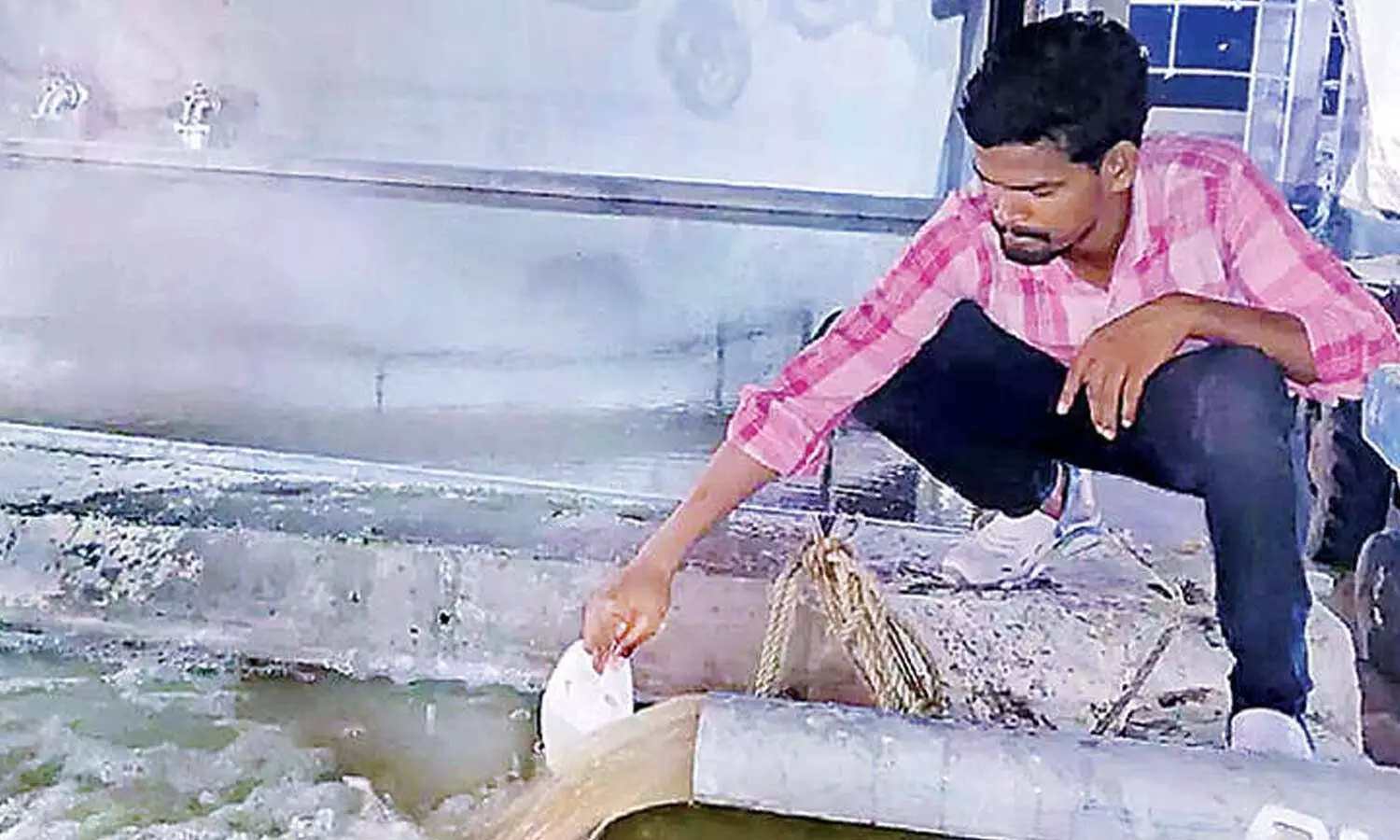
APPCB officials collecting samples from a aqua processing unit
Amaravati: Deputy Chief Minister K Pawan Kalyan has directed the AP Pollution Control Board (APPCB) to strictly enforce environmental regulations governing aquaculture processing and pre-processing units to prevent pollution of water resources.
The Dy CM ordered continuous monitoring of all such units across the State and stressed that the NDA coalition government was giving priority to protecting rivers, canals, estuaries, groundwater and other water bodies from aquaculture waste. He said untreated wastewater containing harmful chemicals could deteriorate water quality and adversely affect public health and livelihoods dependent on water resources. APPCB officials informed Pawan Kalyan that 119 aquaculture processing units and 12 pre-processing units were operating across the State. As part of the enforcement drive, the Board has been conducting inspections, collecting samples and testing wastewater to assess compliance with prescribed environmental standards. Samples collected from 82 units revealed deviations in key parameters, including pH, floating solid waste and Biochemical Oxygen Demand (BOD).
The APPCB has issued show-cause notices to 10 units for violations and given them two weeks to submit explanations and undertake corrective measures. Officials said further action would be initiated under environmental laws against units that continued to violate the prescribed standards.
Pawan Kalyan said pollution had to be identified and prevented at its source. He directed officials to ensure that wastewater discharged from aquaculture units did not adversely affect water bodies. He pointed out that high BOD levels reduce dissolved oxygen in water and can damage aquatic ecosystems, particularly fish stocks. High Total Suspended Solids (TSS) levels can also degrade water quality and aquatic habitats, while abnormal pH levels can harm aquatic life.
He said deterioration of water quality could affect fisheries, agriculture and animal husbandry and pose risks to public health. He called for regular sample collection and testing to detect violations at an early stage, while allowing units an opportunity to undertake corrective measures. At the same time, he stressed the need for precautions to prevent recurrence of violations and directed officials to ensure that all aquaculture units effectively comply with environmental standards.
Be it temporary or long term… ‘Maun’ of ministerial aspirants gives CM Revanth a breather
Fund crunch necessitating capex cut: 2,000 files pending in TG Finance wing
Amit Shah to visit Telangana on Oct 4
CM Revanth for nationwide stir against SIR
Why do dogs behave the way they do?
Value of dissent in CEC: BJP, Congress and changed perceptions


