MyVoice: Views of our readers 11th May 2025


MyVoice: Views of our readers 9th February 2026
In India, where the essence of motherhood is woven into the fabric of our culture, Mother's Day (May 11, 2025) should not be confined to flowers, social media posts, or once-a-year gestures.
US-brokered ceasefire is a welcome relief
It has come as a huge relief that the United States has successfully persuaded India and Pakistan to agree to a ‘full and immediate’ ceasefire. The announcement of the good news has come from none other than the US President Donald Trump himself. We should hail Trump as a peacemaker for all his faults and be grateful to him for his mediation. People, from both sides, who have lived in fear of a full-scale war can now breathe easy and leave their sleepless nights behind. The cessation of hostilities has come as a breakthrough after almost two weeks of cross-border attacks and as a major blow for warmongers pushing for an all-out war. It is a triumph of diplomacy and a victory for those of us who have pleaded the case for averting a war. What is more important is that New Delhi and Islamabad have agreed for talks on a broad set of issues in a neutral site. The realisation that peaceful resolution of disputes and conflicts is the only way out, reflected in the denouement, augurs well for the region and gives hope of normalisation of relations and peace.
G. David Milton Maruthancode, Tamil Nadu
Good development but Pak must prove its sincerity
It is heartening to note that a ceasefire between two arch-rivals, India and Pakistan, has been reached. One should remember that this is not an era of war, which normally impacts civilians and everyday life. Their lives are in perennial danger. Consumables and essential commodities become dearer. It is the lust for power that people with vested interests’ resort to conflicts, including armed battles, unmindful of common people’s sufferings. This ceasefire agreement is a welcome development. However, in hindsight, we cannot take Pakistan at its face value. We should be more vigilant and watchful and see if Pakistan is really interested in peace. Shaking hands with a rifle in one hand is no ceasefire. Pakistan should establish complete peace along the LOC and prove it practically.
Sravana Ramachandran, Pallavaram, Chennai.
Can’t trust Islamabad
US President Donald Trump has announced that consequent to the long debate mediated by the USA, India and Pakistan have agreed to a full and immediate ceasefire. However, Pakistan being a rogue nation cannot be depended as it can show its true colours at the first available opportunity. Honouring the ceasefire terms remains inevitable for Islamabad for its very survival. It’s intention is to ruin peace in the Kashmir valley. Given Pakistan’s past records, a great task lies ahead for India as it strives to restore normalcy in the region
BVK Thampi, Thiruvananthapuram
Modi must call for all-party meeting
With India and Pakistan agreeing to an immediate ceasefire, there is an urgent need for Prime Minister Narendra Modi to chair an all-party meeting and take political parties into confidence. There is a demand that the government must call a special session of Parliament to discuss the events of the past 18 days beginning with the brutal Pahalgam terror attack and the way forward, and to demonstrate a collective resolve. India’s announcement came immediately after a brief statement from US President Donald Trump that India and Pakistan had agreed to a "full and immediate" ceasefire. The US-brokered ceasefire came hours after the militaries of India and Pakistan attacked each other's facilities, dangerously escalating the standoff. Trump's announcement came after US Secretary of State Marco Rubio spoke to External Affairs Minister S Jaishankar, Pakistan Foreign Minister Ishaq Dar and Pakistan Army chief General Asim Munir. It is high time that the Modi government must render justice to those who lost their lives, including civilians, soldiers and villagers at the border.
Bhagwan Thadani, Mumbai
The challenges up ahead for the new Pope
Pope Leo XIV, the first from North America, is expected to usher in new hope to 1.4 billion Catholics. At a time when the world is facing faith crisis, bridled with wars and people drawn towards materialistic life, the Pope says, "God has called me by your election to be faithful administrator". At 69, a comparatively younger Pope than his two predecessors, faces challenges to clean up the Vatican of child abuse scandals as well show dynamism to instil Catholic values into the world society.
P R Ravinder New Mirjalguda, Hyderabad
India to sustain good relations with Pope Leo 14
Pope Leo 14 is the head of the world Catholic church and Sovereign of the Vatican City State. He has been elected 267th Pope in the 2025 conclave following the death of Pope Francis. Pope Leo 14 is the first American born Pontiff, the first Augustanian Pope and possibly the first Pope to root for the Chicago white sox.
The new Pope, who has taken the papal name Leo 14, is not widely known despite a long missionary career and senior roles in the Vatican. The new pontiff is seen as a moderate figure and his time in Peru was marked by a talent for working with different theological factors.
Prime Minister Narendra Modi had a very special relationship with Pope Francis, who despite a strong standing desire to visit to India, could undertake the journey.
Hopes were high that his visit would align with Modi's trip to Vatican, but the plan ultimately did not materialise. Still his efforts to strengthen ties with India's Catholic community never waned. Hope the new Pope will take forward that spirit as regards India.
P. Victor Selvaraj Palayamkottai, Tirunelveli-627002
Covid death toll and govt’s doublespeak
Four years after the deadly delta wave of Covid-19, the government has released a slew of reports that question the official death toll that it had put out earlier. These reports, which were withheld for a long time, show that not only did the wave wreak havoc but years of progress on reducing the death rate was reversed in 2021.
One of the key reports, which the government has released is the Civil Registration System (CRS) 2021 report. The CRS gives numbers of only those deaths that were registered. However, the fact is that not all deaths are registered officially. The CRS presents deaths caused due to all the causes each year or what is known as All-Cause Mortality (ACM) data. The number of total deaths registered in 2021 were 10.2 million. This was also about two million more than 2020, marking an increase of nearly 26 per cent. From 2016 to 2020, the year-on-year rise in the number of registered deaths remained between two and 10 per cent, as against the 26 per cent increase from 2020 to 2021. The question is what can explain the sharp rise from 2020 to 2021, when such an increase was not seen in the previous years? No significant event had happened in 2021 other than Covid-19. And, therefore, does it explain the under-counting of Covid-19 deaths by a big margin? The fact that the Indian government had under-counted pandemic-related deaths was widely published by statisticians and academics. But the Indian government refuted all publications and maintained that the government’s systems were robust enough not to miss any deaths.
Bhagwan Thadani, Mumbai
Rohit Sharma calls it a day gracefully
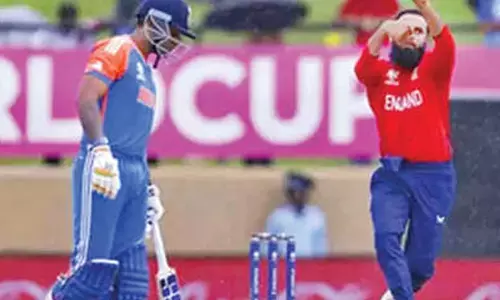
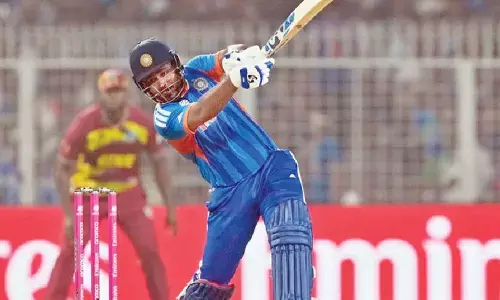
Unfortunately, an underachiever in Whites called it a day for reasons known only to him. India captain Rohit Sharma has retired from Test cricket. It comes after reports in the media that he would be removed as captain for the ensuing Test series in England. He has given us immense joy on his day out in the middle. A good augury is that he called it a day when still good enough to play for a couple of years more. In a fruitful career, Sharma played 67 Test matches, scoring 4,301 runs at an average of 40.57, including 12 centuries and 18 half-centuries. After succeeding Virat Kohli as the Team India Test captain in 2022, he led the country in 24 matches, winning 12. His T20 career ended after quit following the triumphant T20 World Cup last year. Though his departure follows whispers of a captaincy change, Rohit Sharma exits with dignity intact, still capable, still cherished. Having led India to triumphs in the 2024 T20 World Cup and 2025 Champions Trophy, his legacy lives on.
Abhishek Ramaswamy, AECS Layout, Bengaluru
Captaincy ‘cruse’ scalps Rohit Sharma
The recent performances of Rohit Sharma were not encouraging enough for his continuation as the captain of Team India.
He has had a good record having won 50 percent of the 24 Tests he led the team. There was a talk that he was unlikely to be retained as the skipper for the upcoming series against England.
Anil Kumble got the axe, which enabled MS Dhoni to become the surprise India captain. Earlier to that Sourav Ganguly was sacked as captain, and he was made to play under Rahul Dravid.
Indian cricket has seen many skippers going through ups and downs right from the days of Tiger Pataudi (jr) and Sunil Gavaskar. Kapil Dev, the first World Cup winner for India, was unfairly fired after the 1987 World Cup setback.
Both Dilip Vengsarkar and Krishnamachari Srikkanth suffered a similar fate for no fault of theirs. The biggest victim was S Venkatraghavan, while Sachin Tendulkar, smelling danger after the debacle in Australia, quit on his own. Now it is Rohit's turn to go through the ticklish situation.
The battle for captaincy will go on forever in Indian cricket. That is seemingly a curse. Ironically, R Ashwin, despite being a senior, was not offered captaincy and he quit abruptly as an ace off-spinner.
C.K. Ramanathan, Bhandup, Mumbai-78
Let’s make a ‘Mother's Day’ resolve today
In India, where the essence of motherhood is woven into the fabric of our culture, Mother's Day (May 11, 2025) should not be confined to flowers, social media posts, or once-a-year gestures. A mother does not raise her children for celebration—she does so out of unconditional love, sacrifice, and resilience.
From early dawn to late nights, Indian mothers carry invisible burdens—of nurturing, providing, and often silently suffering besides supporting the family. Her strength is rarely acknowledged, her dreams often postponed, and her worth measured by how much she gives, not by who she is. Frankly many of us forget those mothers, who also treat motherless children as their own.
Let us not reduce Mother's Day to token appreciation. What mothers truly deserve is daily care, respect, and dignity—365 days a year. A kind word, shared responsibilities, emotional support, and financial independence—these are real gifts. Let us make space for her to be more than just a caregiver; let her be seen as an individual with her own identity.
Celebration is not wrong—but it must be rooted in truth. Let us use this day to reflect, to honour not just our own mothers, but all our grandmothers, sisters, wives, domestic workers, teachers as each carries the spirit of care.
This Mother's Day, let us move beyond rituals and redefine what it means to honour a mother. Begin at home: listen to her, thank her, support her choices, and stand by her with respect. That, more than any gift, is what she deserves.
N Nagarajan Netaji Nagar, Hyderabad-103
Judicial trust begins with asset disclosure
At a time when the higher judiciary faces rising scepticism over its integrity, the first and most vital step toward restoring public confidence is transparency. By publishing judges' assets and institutionalising an open, accountable process of appointment, the judiciary can begin to reaffirm its moral and constitutional legitimacy.
The perception that judges operate behind a veil of secrecy has eroded public trust. When those entrusted to uphold justice are seen as beyond scrutiny, suspicion grows. Declaring assets—something mandatory for elected officials—should be standard for judges too. It sends a clear message: the judiciary has nothing to hide.
Equally critical is reforming the opaque collegium system. Judicial appointments must not be dictated by closed-door deliberations and insider influence. A transparent, criteria-based selection process, with public oversight, would bolster the system’s credibility and reflect democratic values.
India's justice system cannot afford to appear compromised. Taking the first step through public asset declarations and a transparent appointment mechanism is a commitment to constitutional faith and democratic integrity. Only by opening its doors can the judiciary reclaim the trust it risks losing.
N Sadhasiva Reddy, Gnanabharathi, Bengaluru-56
Hats-off to Col Sofiya Qureshi and Wg Cdr Vyomika Singh
A notable development during and after ‘Operation Sindoor’ has been the limelight that was deservingly hogged by two women officers.
Colonel Sofiya Qureshi and Wing Commander Vyomika Singh stood out during their media briefings with their meticulous presentations.
Col Qureshi and Wing Commander Singh’s appearance did deliver a powerful message about women’s power and the secular fabric of the country. Col Qureshi, who is a Muslim from Gujarat, and Wing Commander Singh is a Kashmiri Pandit from Jammu and Kashmir. They belong to minority communities in their respective States. Both are accomplished military officers, who broke glass-ceilings in a highly regimented armed force. This is in stark contrast to the situation in Pakistan, where women face severe constraints on achieving their true potential.
It is worth mentionable that Supreme Court praised Col Sofiya Qureshi while granting Permanent Commission to women Army officers, On February 17 2020, the apex court referred to the distinctions achieved by women officers and put out an example of Col Qureshi's achievements. It rightly said that absolute exclusion of women from all positions, except staff assignments, in the Army was indefensible and their blanket non-consideration for command appointments without any justification could not be sustained in law.
The court said an absolute prohibition of women Short Service Commission (SSC) officers to obtain anything, but staff appointments evidently did not fulfil the purpose of granting PC as a means of career advancement in the Army.
"Lieutenant Colonel Sophia Qureshi (Army Signal Corps) has served in the United Nations Peacekeeping Operation in Congo in 2006, where she, along with others, was in charge of monitoring ceasefires in those countries and aiding in humanitarian activities. Her job included ensuring peace in the conflict-affected areas," the apex court had said. The country should take pride in drawing inspiration from such women officers.
Yash Pal Ralhan Model Town, Jalandhar-144003