Mediation is a worthwhile alternative

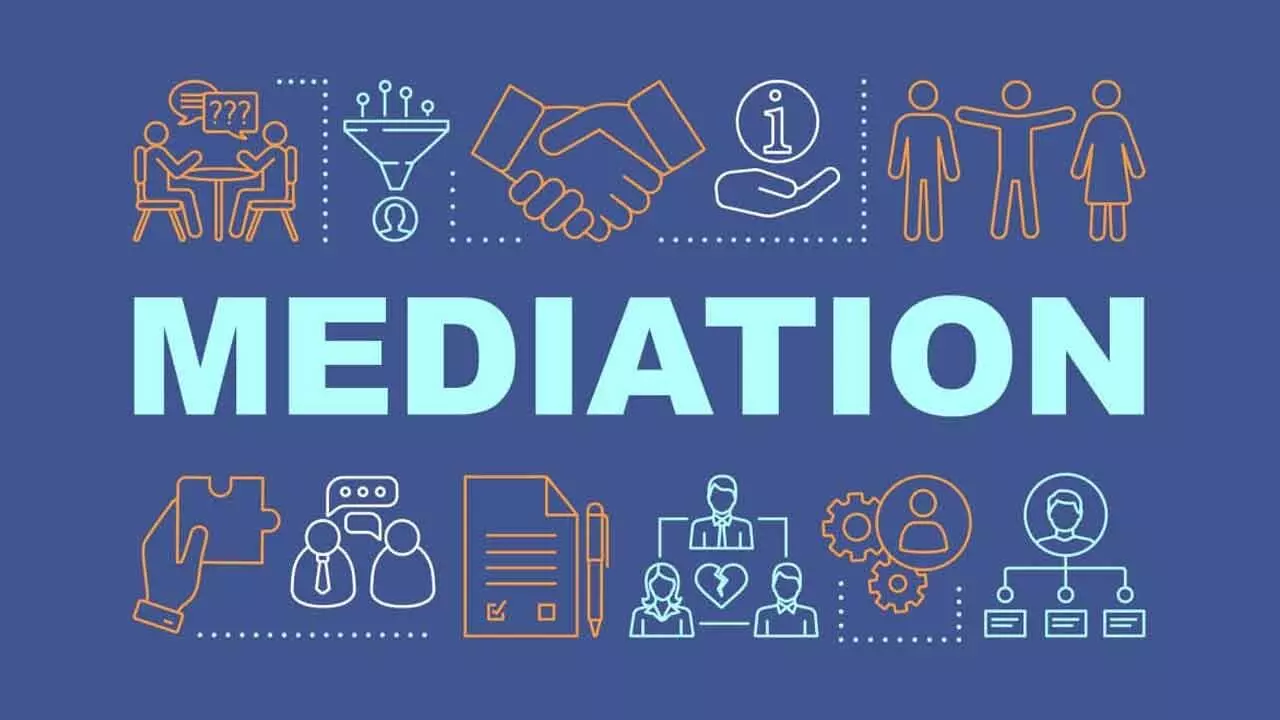
This has reference to your editorial ‘Growing influence of mediation process in dispute resolution’. One recalls the times, when local and family disputes were resolved in the village panchayat – where the ‘Panch’ delivered their verdict that was acceptable to both parties, without the contentious issue being dragged on and on for decades, without a solution as we are witnessing in the courts of the country, today. Unless driven by an irrational ego or extreme case of personal prestige, no sane individual would knock the doors of the courts. The strong points of mediation that have been the strength of our ancestors as the method of reconciliation must not be lost on us.
K V Raghuram, Wayanad
II
THIS refers to the editorial “Growing influence of mediation process in dispute resolution” (THI Dec 30). The “stratospheric” pendency of 53 million cases is a sobering indictment of our current judicial strain. While the Mediation Act 2023 is a commendable milestone, true progress necessitates a shift from an adversarial mindset to one of reconciliation at the grassroots level. Integrating mediation as a parallel, mandatory precursor to litigation is no longer an alternative, it is a fundamental necessity to alleviate this crippling burden.
Jai Prakash Acharya, New Delhi
III
Sir, apropos ‘growing influence of mediation process in dispute resolution’ (The Hans India, December 30). To reduce the burden of cases in courts, the role of out-of-court mediation was discussed. But, the advantage of judicial resolution of cases is that, honouring the court judgment can be ensured through assistance of law enforcing agency like the police. If out-of-court mediations can also be bestowed this crucial assistance, it will help such mediations in the long run, especially those mediated by the village Sarpanch, which was once the practice in Indian hinterland.
Dr George Jacob, Kochi
IV
This refers to your editorial “Growing influence of mediation process in dispute resolution” (December 30). The emphasis on mediation is timely, given the staggering backlog in courts and the human cost of prolonged litigation. Yet, its success will depend less on laws and more on practice. Mediation must be made accessible at the grassroots, with trained mediators, clear procedures, and public awareness in local languages.
Courts should actively screen suitable cases early, while ensuring mediation remains voluntary and fair. Government departments, the largest litigants, must also be nudged to adopt mediation in routine disputes. Without institutional support, monitoring, and confidence-building among litigants and lawyers, mediation risks remaining an idea praised in principle but underused in reality.
A Myilsami, Coimbatore
V
This refers to the editorial “Growing influence of mediation process in dispute resolution” (December 30). The piece rightly highlights the rising role of mediation in easing India’s overburdened courts, with over 50 million pending cases dragging on for years. To build on this momentum, we need practical steps: more investment in training certified mediators, greater awareness campaigns in rural areas, and incentives for lawyers to recommend mediation early. Courts could also prioritise referrals in suitable cases. These measures would help make mediation a true alternative, delivering quicker justice while preserving relationships.
M Barathi, Bengaluru