




- Beyond the USA pill: How Indian pharma quietly reinventing itself
- Technology, spirituality and the search for human balance
- The Eagle’s Sky
- A cultural repository for a young India
- NATS takes up welfare activities in AP
- Badshah introduces his first ever doggo friend Laddu
- Samay Raina Live India Tour 2026-27, announces biggest tour
- Ranbir Kapoor’s ARKS Padel Social unites sport, culture and community
World Tourism Day 2026: When Algorithms Start Planning Our Holidays
In Short
World Tourism Day 2026 spotlights AI's growing role in travel, asking who truly benefits when algorithms decide.

Share :
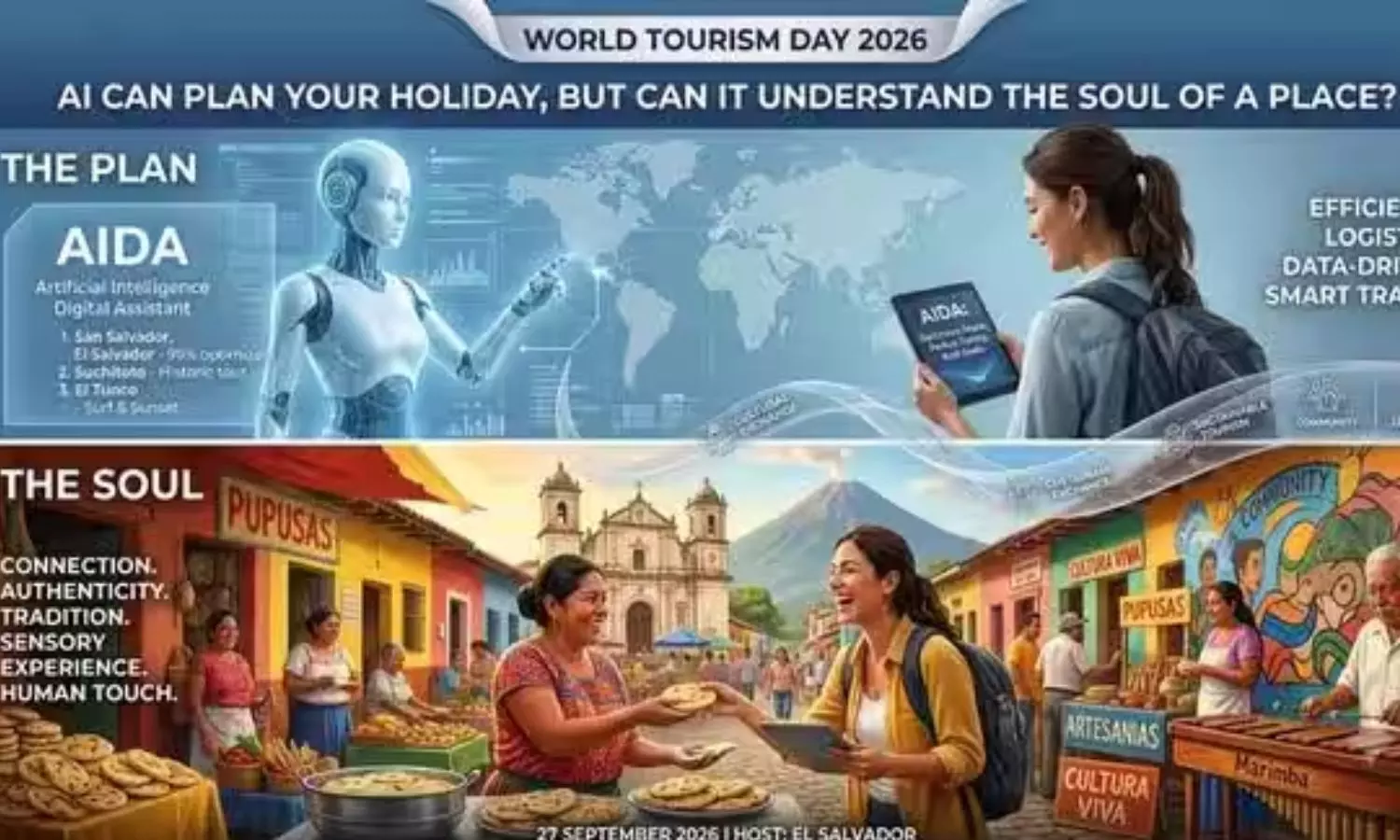
World Tourism Day 2026: When Algorithms Start Planning Our Holidays
Every September 27, the world stops for a moment to recognize something that travellers often overlook: the strength of tourism in supporting lives. World Tourism Day, established in 1980 by the UN World Tourism Organization serves as a reminder to governments, businesses and communities that this industry's more than just sightseeing. It is a jobs engine that keeps millions of families going - from hotel workers in Bali to tour guides in Marrakech and street vendors near the Taj Mahal.
This year’s theme, "Digital Agenda and Artificial Intelligence to Redesign Tourism" fits perfectly with where we're right now. Think about how different travel planning has become in five years. We no longer flip through guidebooks. Call a travel agent. Instead most people ask a chatbot where to eat type a destination into a search bar and let an algorithm suggest the trip or scroll, through short-form videos to decide where to go next. Artificial intelligence has quietly stepped into the role of our travel partner— without us even noticing.
That shift brings real opportunity. AI can help a small guesthouse in rural Vietnam reach travellers it never could before. AI can translate menus instantly for a backpacker in Seoul flag the walking routes for a solo traveller or personalize a Rome itinerary around someones specific interests rather, than a generic top‑ten list. For destinations digital tools mean forecasting, less overcrowding and smarter resource planning.
There is a catch and that is the one this years theme is wrestling with: who gets to be seen? As AI systems increasingly decide which restaurants, hotels and destinations show up first visibility itself becomes something that can be bought. Without thought the biggest brands and best‑funded platforms could crowd out the family‑run inn or the lesser‑known village trying to build its first tourism economy. The technology meant to make travel fair could just easily concentrate power in fewer hands.
That's why this year's observance asks something sharper than usual. It's not simply "how do we use AI in tourism," but "who benefits, and who decides?" Governments, tech companies, and local communities all have a stake in answering that honestly.
As millions gather worldwide this September 27 to mark the day, the message is clear: technology should serve tourism's oldest purpose, connecting people, sustaining communities, and creating opportunity, not replace it with something colder and more commercial. Getting that balance right may be the defining tourism challenge of the decade ahead.

Centre should be apolitical in decision-making: TG CM Revanth Reddy
Naidu backs EC clarification
Flood Fury In State: Fields under water, villages cut off
AP moves to capture flood surge as reservoirs gain 21 TMC
24,057 Vijayawada families to get house ownership rights
It’s a long wait for sea-facing palatial ‘Mahal’ to get repurposed


