Vision Not Clear After Cataract Surgery: Causes & Recovery

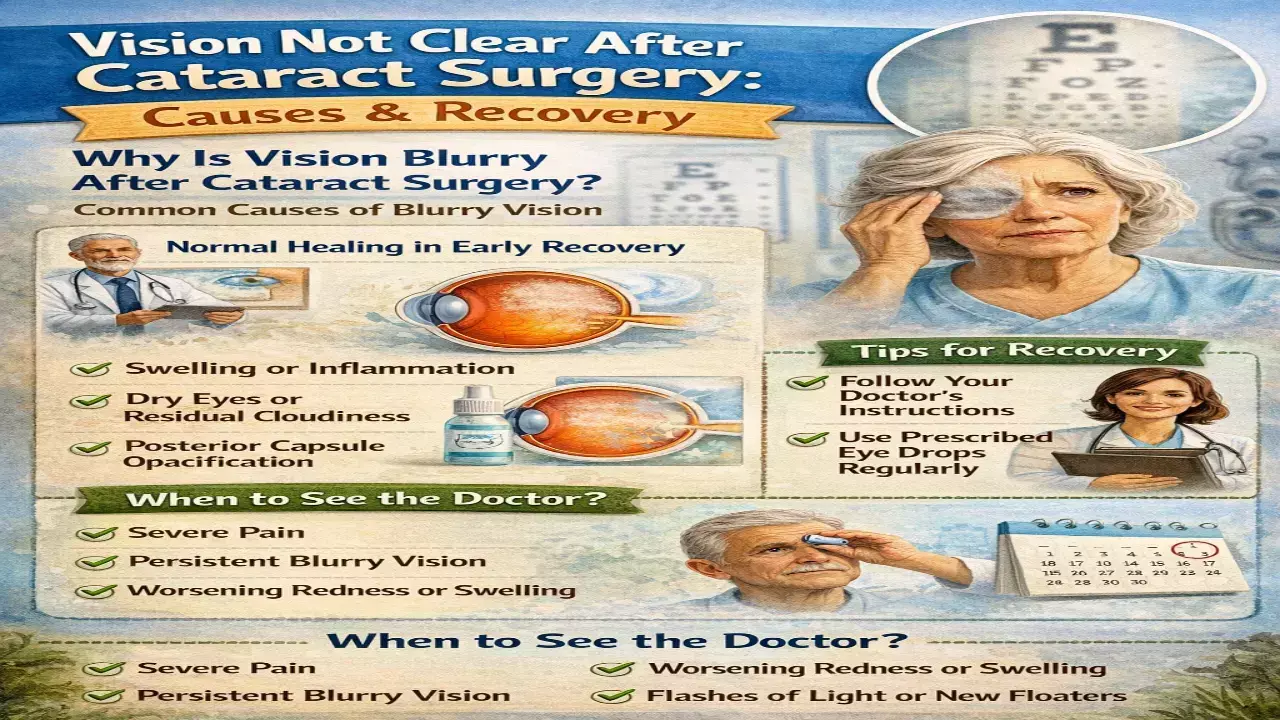
Vision not clear after cataract surgery? Learn common causes, recovery timeline, and when to see a doctor for blurry vision after cataract surgery.
Vision Not Clear After Cataract Surgery: Causes, Recovery, and When to Worry
The only treatment for cataracts is surgery. Therefore, if you have a cataract, you have to get cataract surgery to restore your vision. In most cases, cataract surgery is completely safe. However, like many other surgeries, there are some issues people face after the surgery. There have been instances where patients complained about certain side effects after cataract surgery.
For example, patients often expressed concerns about their vision not being completely clear after cataract surgery. In most cases, it is not something very serious. Blurred vision can get better after a little time. However, you have to keep your expectations realistic and strictly adhere to your follow-up care.
Understanding why vision not clear after cataract surgery and when you need medical care attention can help you make the right decision.
Is Blurred Vision After Cataract Surgery Normal?
The short answer here is yes. Blurred vision after cataract surgery is very common, and most patients experience it. So, if you are experiencing it, do not be alarmed. The thing is that your eye needs some time to heal after the surgery. Additionally, your eye might take some time to adjust to the artificial lens. During this time, mild blurring and haziness are quite normal. You can experience it for just a few days or even weeks. The duration differs from person to person. Other eye conditions can also cause your vision to become blurry after the surgery. Follow post-surgery care to heal your eye quickly.
Common Reasons Why Vision Is Not Clear After Cataract Surgery
1. Normal Healing Process
When the surgery is performed, a small incision is made in your eye. This incision heals automatically but takes some time, just like any other body part. However, it takes a little longer since your eye is a delicate organ. During the healing process, it is normal for your vision to lack clarity. The process is gradual, and your vision will get clearer over time. Additionally, performing activities or day-to-day chores during this period can slow the recovery process.
2. Dry Eyes
Do your eyes get exposed to dust or smoke? Long exposure can cause your eyes to get dry. It may not seem obvious immediately. But you will feel irritation or tiredness in the eye. If you experience it, dry eye could be the reason behind your blurred vision after cataract surgery.
3. Residual Refractive Error
This sounds very technical, but the simple way to say this is you have power in your eyes. Not everyone experiences this because each eye heals slightly differently after surgery. And the best solution for this is to get glasses just like everyone else. While doctors always carefully calculate everything before surgery, it is a possibility. This does not mean the surgery has failed.
4. Posterior Capsule Opacification (PCO)
PCO is one of the most common long-term reasons why vision becomes cloudy after cataract surgery. It occurs when the thin membrane behind the artificial lens becomes cloudy over time. Patients often describe it as “cataract coming back,” though it is not a true cataract. PCO can develop months or even years after surgery and is easily treated with a quick laser procedure.
5. Swelling of the Retina
Doctors call this condition Cystoid Macular Oedema. This is not very common, but can happen. The condition happens when fluid accumulates in the central part of the retina after surgery. As a result, the retina swells and causes blurry vision. In many cases, it heals on its own. But can require medical treatment if the condition persists.
6. Pre-existing Eye Conditions
Cataract surgeries can cure cataract, but not the other conditions. So, even if your cataract is gone, those conditions will continue to affect your vision. In such cases, it is normal to experience blurry vision. The most common include diabetes-related eye disease, glaucoma, and age-related retinal problems. Seek treatment for the other conditions to rectify your vision. Some conditions, like glaucoma, cause permanent damage.
7. Infection or Severe Inflammation (Rare)
Serious complications are rare but possible. Sudden worsening of vision, severe pain, redness, or discharge should never be ignored. Immediate medical evaluation is essential in such cases.
How Long Does It Take for Vision to Clear?
The most common question in people’s minds when they see blurry vision after cataract surgery is how long will it take to improve. The thing is that there is no fixed timeline. However, most patients’ vision improves within just a few days. But the vision is still not stable. Another 4-6 weeks are needed. If you continue to experience blurred vision for a prolonged period of time, visit a doctor.
For quick recovery, you have to follow the recovery instructions of your doctor. Exposure to dirt and dust can slow down the process or even cause complications. Other factors, like your age, diabetes, high blood pressure, etc., also influence the recovery.
What Patients Should Do During Recovery
To support proper healing and clearer vision, patients should:
- Use prescribed eye drops exactly as advised
- Avoid rubbing or pressing the operated eye
- Protect the eye from dust and water
- Avoid heavy lifting or bending initially
- Attend all scheduled follow-up visits
In Bihar, many patients skip follow-ups once pain reduces, which can delay detection of treatable causes of blurred vision.
When Should You Seek Medical Help?
Sometimes, waiting for your vision to improve on its own will not work. If it does not improve within the specified time mentioned by your doctor, you need medical attention. Also, certain symptoms can signal the need for medical attention.
- Vision continues to worsen as time passes
- You are experiencing severe eye pain
- Redness and irritation
- Light sensitivity increases suddenly
- Vision becomes cloudy again
Wrapping up
Experiencing vision not clear after cataract surgery can be worrying, but in most cases, it is temporary and manageable. Blurred vision after cataract surgery often resolves as the eye heals or with simple additional treatment.
For patients in Bihar, awareness, patience, and regular follow-up are crucial. Cataract surgery remains a highly effective procedure, and with proper care, most patients regain good functional vision and improved quality of life.