Widespread steroid use emerging as a key trigger for secondary glaucoma, warn doctors

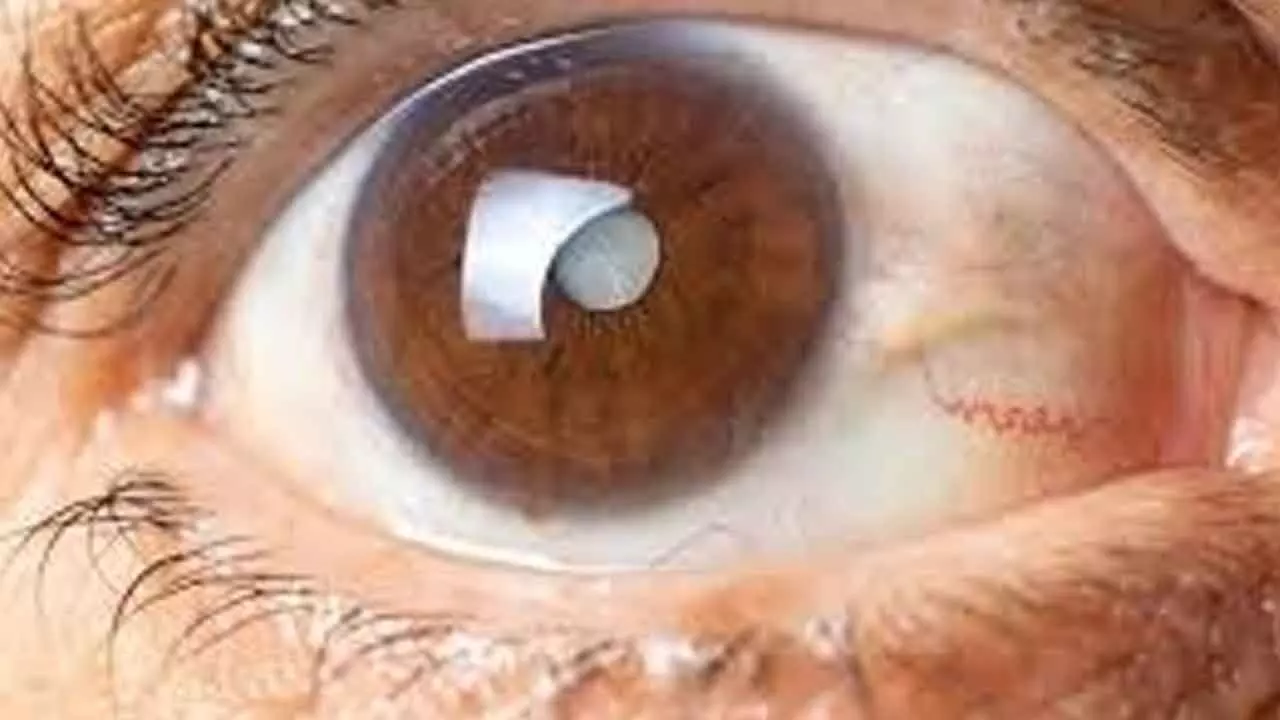
Bengaluru: Doctors across India have raised serious concerns over the growing and often unsupervised use of steroid medications, warning that it is fast emerging as a major trigger for secondary glaucoma—a sight-threatening condition that can result in irreversible blindness if not detected early. Medical experts caution that steroids, commonly prescribed for allergies, skin disorders, respiratory illnesses, and even available as over-the-counter eye drops, can significantly increase intraocular pressure when used for prolonged periods.
India is already facing a heavy glaucoma burden, with an estimated 12 to 13 million people affected—nearly one-sixth of the global total. Worldwide, glaucoma impacts around 75 to 80 million individuals, a figure projected to exceed 110 million by 2040. Despite being the leading cause of irreversible blindness globally, glaucoma remains vastly underdiagnosed in India, posing a major public health challenge.
Doctors point out that nearly 85 to 90 per cent of glaucoma cases in the country go undetected. The disease progresses silently, often without noticeable symptoms in its early stages. By the time vision loss becomes apparent, significant and permanent damage to the optic nerve has usually already occurred. This delayed diagnosis not only leads to avoidable vision loss but also affects quality of life and has far-reaching social and economic consequences.
“We are seeing a noticeable rise in steroid-induced glaucoma, particularly among patients who use steroid medications or eye drops without proper medical supervision,” said Dr Sandhya ES, Consultant Ophthalmologist at Dr Agarwals Eye Hospital, Bengaluru. “What makes this especially dangerous is that patients feel symptom-free initially, while eye pressure continues to rise silently, causing irreversible optic nerve damage,” she added.
Over the last two to three years, clinicians have reported a steady increase in diagnosed glaucoma cases. Factors contributing to this rise include an ageing population, higher prevalence of diabetes and myopia, improved diagnostic technologies, and growing public awareness. However, experts warn that a significant proportion of new cases are now linked to secondary glaucoma caused by prolonged or unsupervised steroid use—an avoidable risk if identified early through regular screening and appropriate medical guidance.
Glaucoma is most commonly diagnosed in individuals over the age of 40, with incidence peaking between 50 and 70 years. However, doctors are increasingly detecting juvenile and early-onset glaucoma, especially in individuals with a family history of the disease or exposure to secondary risk factors such as steroid use. Primary open-angle glaucoma remains the most common form, followed by primary angle-closure disease, while steroid-induced glaucoma and pseudoexfoliation glaucoma are also frequently seen in clinical practice.
“Many patients fail to recognise early warning signs such as peripheral vision loss, frequent changes in spectacle power, or seeing halos around lights,” Dr Sandhya noted. “Since central vision is usually preserved in the initial stages, diagnosis is often delayed.”
Doctors also caution against common misconceptions—that good vision automatically means healthy eyes, that glaucoma affects only the elderly, or that normal eye pressure rules out the disease. Individuals with diabetes, hypertension, thyroid disorders, high myopia, a history of eye injury, or long-term steroid use are at higher risk and should undergo regular eye check-ups.
As part of Glaucoma Awareness Month, experts strongly emphasise the importance of routine eye examinations. People above 40 years of age are advised to undergo comprehensive screening every one to two years, while high-risk groups should be evaluated annually. Vision tests alone, doctors stress, are not sufficient without proper assessment of eye pressure and optic nerve health.