Waterways Development Council 3.0 approves projects worth Rs1,500 crore

Green mobility, cargo movement and river tourism planned on India’s inland waterways
The third meeting of the Inland Waterways Development Council (IWDC 3.0) concluded with a comprehensive roadmap to expand India’s inland water transport network, approve major infrastructure investments and strengthen Centre–State coordination to unlock the full economic potential of the country’s rivers.
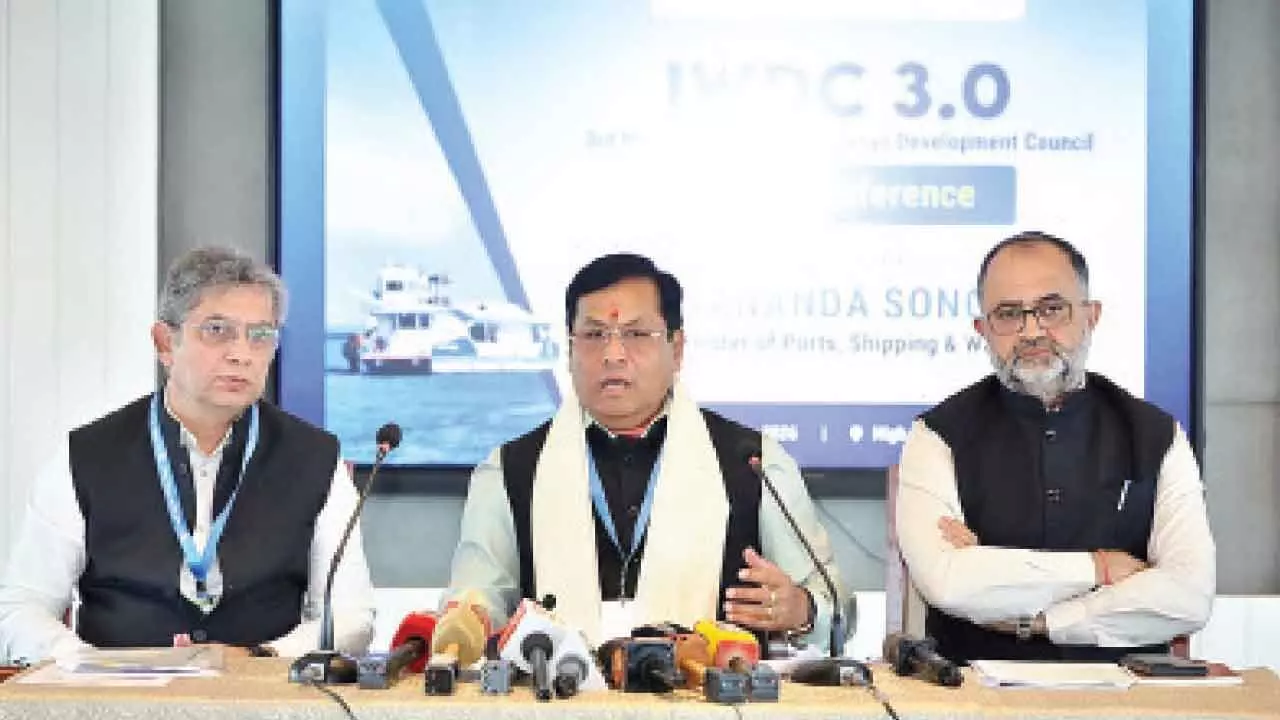
Union Minister of Ports, Shipping and Waterways Sarbananda Sonowal chaired the meeting. The meeting marked a significant milestone in India’s journey towards strengthening inland water transport as a key pillar of sustainable and efficient logistics.
IWDC 3.0 identified projects worth more than ₹1,500 crore, aimed at accelerating green mobility, strengthening multimodal logistics and promoting river-led economic development. Foundation stones were laid for projects exceeding ₹150 crore, including river cruise jetties in Kerala, Gujarat, Karnataka, Odisha and Telangana, supporting the expansion of cruise tourism circuits across the country. Asset procurement worth over ₹465 crore was also announced to enhance navigability, safety and year-round operations. The council was apprised about the major new projects worth over ₹900 crore.
Addressing the council, Union Minister Sarbananda Sonowal said that inland waterways have emerged as a strategic pillar of India’s transport and logistics transformation under the leadership of Prime Minister Narendra Modi. “Our dynamic Prime Minister Narendra Modi ji has given special impetus to inland waterways, which has eased congestion on roads, reduced logistics costs and strengthened ease of doing business. Today, under the visionary leadership of Modi ji, inland waterways have become a strategic pillar of India’s multimodal logistics framework. Guided by this vision, rivers are no longer viewed merely as natural resources but as economic lifelines driving growth, sustainability and connectivity,” he said.
The meeting reiterated that inland waterways remain the most fuel-efficient, cost-effective and environment-friendly mode of transport, helping reduce carbon emissions, decongest roads and railways, and lower overall
logistics costs.