
Senior Congress Leader KN Rajanna Questions Government: Do Muslims Need Permission to Offer Namaz on Roads?

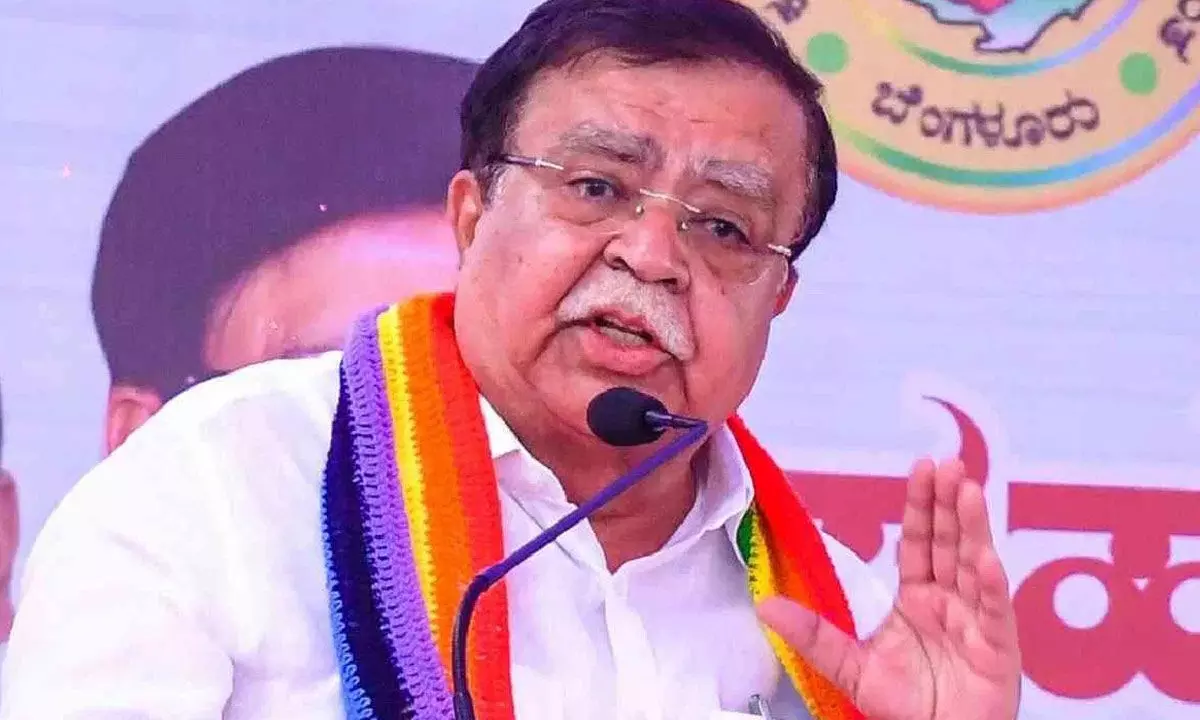
Tumakuru: Senior Congress leader and former minister KN Rajanna, who had earlier lost his ministerial berth amid internal party reshuffles, has sparked controversy by indirectly criticizing the state government’s recent move to regulate Rashtriya Swayamsevak Sangh (RSS) activities in government premises. Rajanna’s remarks have once again created ripples within the Congress and provoked reactions from party leaders.
Addressing the media in Tumakuru, Rajanna emphasized that the government is not outright banning RSS activities but merely proposing that organizations obtain permission before conducting events in government-owned spaces. “Whether it is the RSS or any other organization, permission should be taken to organize programs. Let us see how this regulation is implemented in practice,” he said. His remarks come against the backdrop of ongoing debates over permission rules for public gatherings in government areas, with recent questions raised about Muslim groups holding Namaz in public spaces like the Eidgah grounds. Rajanna queried, “If people want to offer Namaz on the road, will they take permission? Or will the authorities just ask them to get permission? A law that cannot be implemented is only a bookish provision.”
The comments follow a letter by Minister Priyank Kharge to Chief Minister Siddaramaiah, urging a curb on RSS activities at government venues. The government is reportedly moving toward implementing a rule requiring prior approval for all organizational events in public or government spaces. This step has been welcomed by certain Congress functionaries and state-level leaders but has also drawn strong criticism from Hindu groups and BJP leaders, who argue that the move infringes upon the right to free assembly and expression.
Rajanna’s intervention is notable as he indirectly defends the RSS while simultaneously questioning the government’s approach, highlighting the internal complexities within the Congress. Party insiders say Rajanna’s stance subtly challenges the position of leaders like Priyank Kharge, signaling dissent among senior party figures. While the majority of Congress leadership has supported the regulation to avoid communal friction, Rajanna’s remarks reflect the delicate balancing act the party faces in addressing grassroots sentiments while managing state-level political optics.
Observers note that Rajanna’s comments could embolden opposition voices who accuse the Siddaramaiah government of targeting specific organizations for political reasons. Meanwhile, the administration maintains that the permission-based regulation is intended to ensure public safety, maintain traffic flow, and uphold law and order in government spaces.
In Tumakuru, Rajanna’s statements have already generated discussions among local party cadres and the media, as they appear to defend constitutional freedoms of assembly while questioning the practical applicability of the new rules. The coming weeks are likely to see heightened political debate over this policy, with senior Congress leaders trying to navigate the fine line between internal party consensus and public perception.
By indirectly supporting the RSS’s right to organize in government spaces while questioning implementation, Rajanna has positioned himself as a dissenting yet influential voice, underscoring the continuing tensions and debates within Karnataka’s political landscape over religious and organizational freedoms.








