PIL filed in Karnataka High Court challenging SSLC grading decision for third language

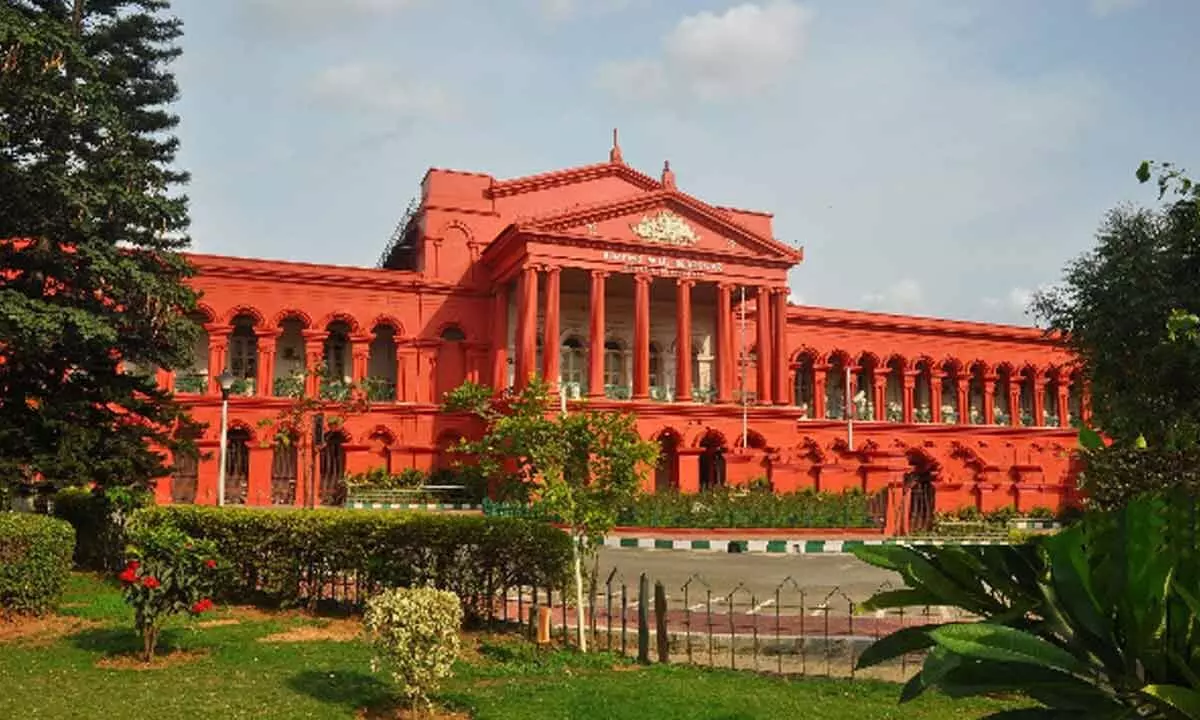
High Court of Karnataka
Bengaluru: A major controversy has erupted in Karnataka’s education sector after the state government’s decision to replace marks with grades for the SSLC third language exam triggered a legal battle. A Public Interest Litigation (PIL) has been filed before the Karnataka High Court, challenging the move as unconstitutional and arbitrary.
The petition has been filed by Bengaluru residents H.N. Chandana and S. Venkatesh, who have questioned the decision announced by Education Minister Madhu Bangarappa. The plea alleges that the ಸರ್ಕಾರ took a unilateral decision without consulting stakeholders or obtaining cabinet approval, raising serious concerns over transparency and due process.
According to the petitioners, introducing such a major academic change during ongoing examinations has created confusion among lakhs of students. “Announcing policy changes in the middle of exams has left students in uncertainty and anxiety,” the plea states.
The petition further argues that the move violates fundamental rights guaranteed under Articles 14 and 21 of the Constitution, which ensure equality and the right to education. It also points out that no official gazette notification has been issued so far, despite attempts to implement the decision.
Under the new rule, marks obtained in the third language (including Hindi or other languages) will not be counted towards the final result. Instead of the total 625 marks, students’ percentage will now be calculated out of 525 marks. The third language will be graded with A, B, C, or D instead of numerical scores.
The issue has also taken a political turn, with opposition leaders accusing the government of indirectly promoting a two-language policy under the pretext of opposing Hindi imposition. Critics argue that the decision undermines the existing three-language formula and could disadvantage certain groups of students.
Concerns have also been raised about the impact on students studying Urdu or Sanskrit as their first language, where Kannada is often the third language. Observers question whether the new system could reduce the importance of Kannada in such cases, contradicting the government’s stated objective of protecting regional language interests.
The state government, however, has defended its decision, stating that the change is aimed at reducing academic pressure and addressing concerns related to language imposition.
Legal experts believe the High Court’s decision will have far-reaching implications for education policy in the state. Whether the court grants a stay on the implementation or allows the policy to continue will be closely watched by students, parents, and educators alike.
The matter is expected to come up for hearing soon.