Locked Out, Beaten Down: Human Rights Violated at KSCA Stadium

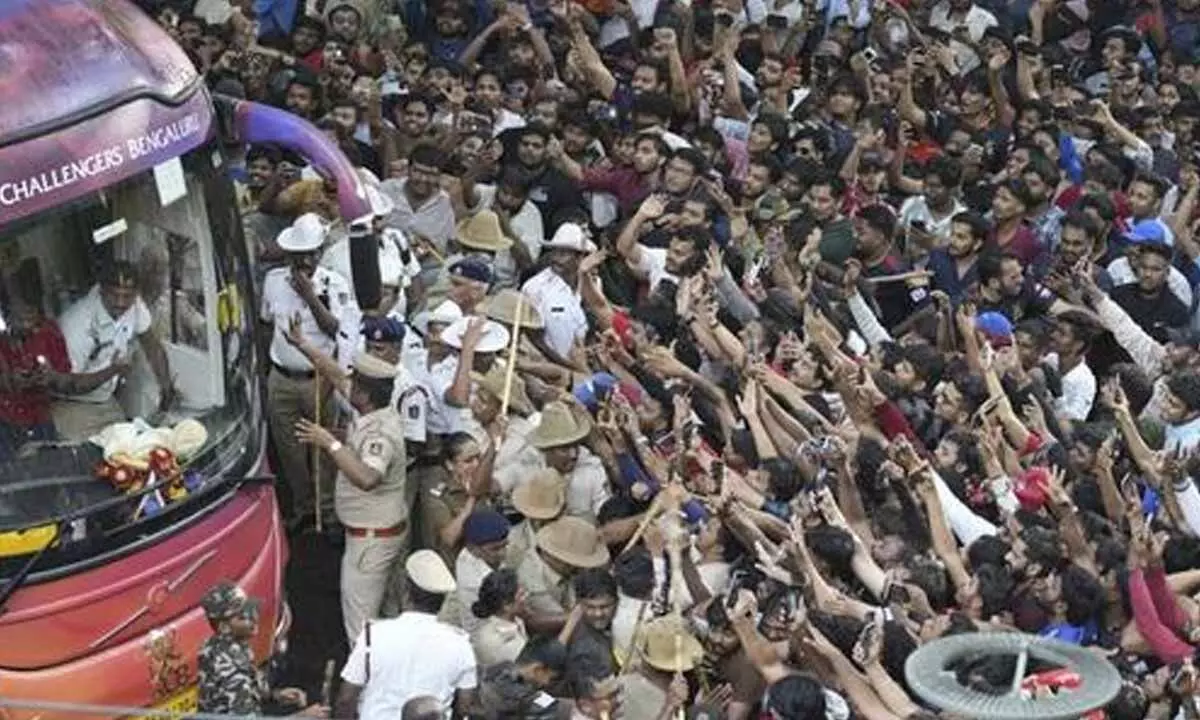
Thousands of RCB fans injured and traumatised after stadium gates were shut and police resorted to lathi charge despite sparse crowd inside.
Bengaluru: The KSCA stadium became the site of serious human rights violations when thousands of RCB fans were locked out of a largely empty venue. With no crowd control in place, fans were injured as gates were slammed shut during a surge. The situation worsened as police launched an indiscriminate lathi charge. At least 40 people were injured in what is now being condemned as a grave failure of public safety and constitutional rights.
What began as a day of enthusiasm and hope for thousands of Royal Challengers Bengaluru (RCB) fans turned into a harrowing example of institutional mismanagement, negligence, and a disturbing case of human rights violations at the Karnataka State Cricket Association (KSCA) Stadium.
On Wednesday, June 4, throngs of cricket fans—many of them students and young adults—arrived at the stadium, eager to witness their beloved RCB team in flesh and blood. But instead of cheers and cricket, they were met with locked gates, baton-wielding police, and chaos that left at least 40 persons injured, many with lacerations, bruises, and trauma.
This was not a stampede born of unruliness. It was the outcome of preventable administrative failure and state-enabled violence—both of which demand scrutiny under the lens of human rights law.
At the core of the fiasco lies a critical breach of Article 21 of the Indian Constitution, which guarantees the right to life and personal liberty. This fundamental right, interpreted over the decades to include the right to safety and dignity, was blatantly disregarded by KSCA authorities and law enforcement officials. Senior Human rights activists and advocates point out that this was a case of grave violation of personal liberty and Human rights put together.
Despite widespread ticketing and crowd anticipation, KSCA inexplicably shut the stadium gates, leaving thousands stranded in tightly packed, suffocating conditions. Eyewitnesses confirmed that less than a quarter of the stadium was filled at the time, raising serious questions about intent, transparency, and competence.
The predictable outcome was a human crush. When the gates were eventually opened—far too late and without any control mechanisms—the desperate crowd surged forward. Instead of orderly entry, fans were met with gates slammed shut in their faces, resulting in dozens of injuries.
These actions are not merely logistical lapses; they represent culpable negligence. Any reasonable authority could have anticipated the danger of locking large crowds outside an underfilled venue. In failing to take even minimal precautions, the KSCA and its partners compromised the safety of citizens—a violation that must be investigated under relevant public safety and human rights frameworks.
As if the chaos outside the stadium gates were not traumatic enough, the police response escalated the situation into an outright assault on civil liberties.
With fans pushed against barricades, police resorted to a lathi charge to control the crowd. But video and first-hand accounts indicate that the violence was indiscriminate, directed even at those trying to de-escalate or retreat.
This use of force—especially on unarmed, peaceful fans including minors—is in direct violation of international human rights standards, including the UN Basic Principles on the Use of Force and Firearms by Law Enforcement Officials, which state that force must be used only when strictly necessary and in proportion to the threat posed.
In this case, the threat was manufactured by institutional mismanagement. The police were not responding to violence—they were reacting to a crowd denied access and dignity. Their role should have been to protect citizens, not to punish them for institutional failures.
The incident raises a series of urgent questions:
Why were the gates kept closed despite the availability of space inside the stadium?
Who authorised the locking and slamming of gates as thousands waited outside?
Why was there no crowd management plan, queuing system, or entry protocol?
Under what circumstances was the police lathi charge ordered?
These are not rhetorical questions. They demand formal investigation and public accountability, not just from the KSCA but also from local police leadership and civic authorities responsible for event coordination.
It is alarming that, as of now, no one has stepped forward to accept responsibility, nor have any apologies been issued to the injured fans or their families.
The treatment meted out to the fans also infringes on Article 19(1)(b) of the Indian Constitution—the right to assemble peacefully. By criminalising a civilian gathering and reacting with force rather than facilitation, both the KSCA and the police turned a peaceful sporting event into a site of state-enabled trauma.
This incident is not merely a matter of mismanagement—it is a case study in how public institutions can turn everyday civil gatherings into rights violations. Sporting events are supposed to unite communities. What happened outside KSCA on June 4 will be remembered as a moment when cricket fans were treated as liabilities, not citizens.
The injuries, physical and emotional, will take time to heal. But unless institutional accountability, apologies, and corrective actions follow, the damage will only deepen.