Labour wages protest halts Lakkundi site excavation

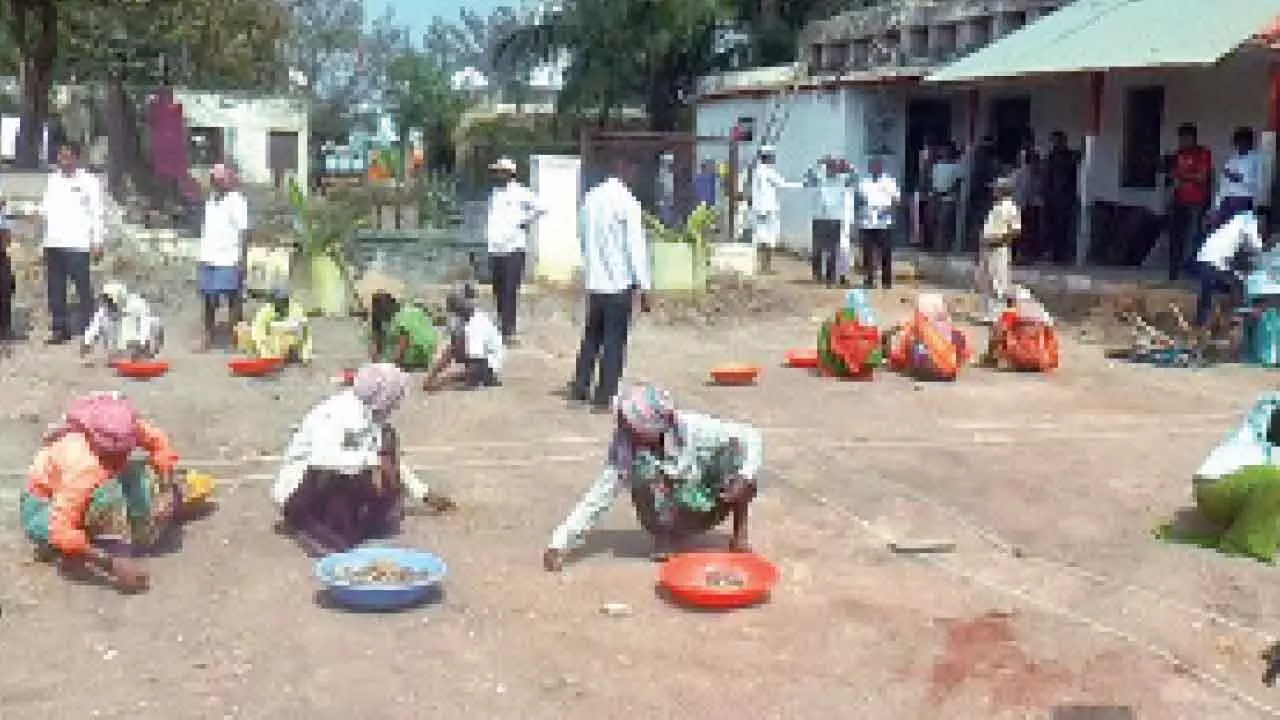
Excavation work at the renowned historical site of Lakkundi in Gadag district faced a temporary disruption on Monday after daily wage labourers engaged in the operation protested against low wages. The protest caused a brief halt to the excavation, which is being carried out under the supervision of the Archaeological Survey authorities following the recent discovery of ancient treasure in the village.
The excavation was scheduled to begin at 8 am, but could not start on time as labourers expressed strong dissatisfaction over the wages being paid. The workers alleged that despite working for nearly 10 hours a day under harsh conditions and intense heat, they were being paid only ₹374, the same wage fixed under the employment guarantee scheme for four hours of work.
“We are working continuously for nearly 10 hours under the scorching sun, but we are being paid only ₹374. This is unfair. At least ₹600 per day should be paid if we are expected to continue this work,” the labourers said, demanding immediate revision of wages.
The workers further pointed out that alternative daily wage jobs offer better remuneration with fewer working hours. “In other labour work and construction-related jobs, workers, especially women, are earning between ₹500 and ₹600 for fewer hours. Here, the workload is heavy, the working hours are longer, but the wages are much lower. If this continues, we will not resume excavation work,” they warned.
After the protest intensified, officials at the site assured the labourers that their grievances would be communicated to senior authorities. “Your demands will be placed before higher officials for consideration,” an official told the protesting workers. Following this assurance, the labourers agreed to resume work, allowing the excavation to continue later in the day.
The excavation at Lakkundi began recently under the leadership of the central archaeological authorities after a significant cache of gold and copper artefacts was unearthed in the village. The excavation is currently underway in front of the Kote Veerabhadreshwara Temple, an area believed to hold archaeological importance.
Lakkundi holds immense historical significance, having served as a major commercial centre during the Kalyana Chalukya period. Historical records indicate that the town once housed a mint where gold coins were produced, making it a strategically important economic hub. This historical background is one of the key reasons the Centre approved detailed excavation in the temple vicinity.
The treasure discovery site, located barely 200 metres from the temple, yielded around 466 grams of gold ornaments and several copper artefacts from a private residence, which were later handed over to the government. Preliminary estimates suggest the treasure is around 300 years old.
Officials believe the ongoing excavation could reveal further evidence of ancient trade activity, minting operations, or other significant relics, adding to Lakkundi’s legacy as a centre of temple architecture and heritage associated with the Chalukyas, Rashtrakutas and Hoysalas.