Codavas invoke Constitution on Constitution Day

Demand geo-political autonomy for ‘Codavaland’ similar to the existing autonomous regions in north-eastern India or the Hill Councils of Leh and Ladakh
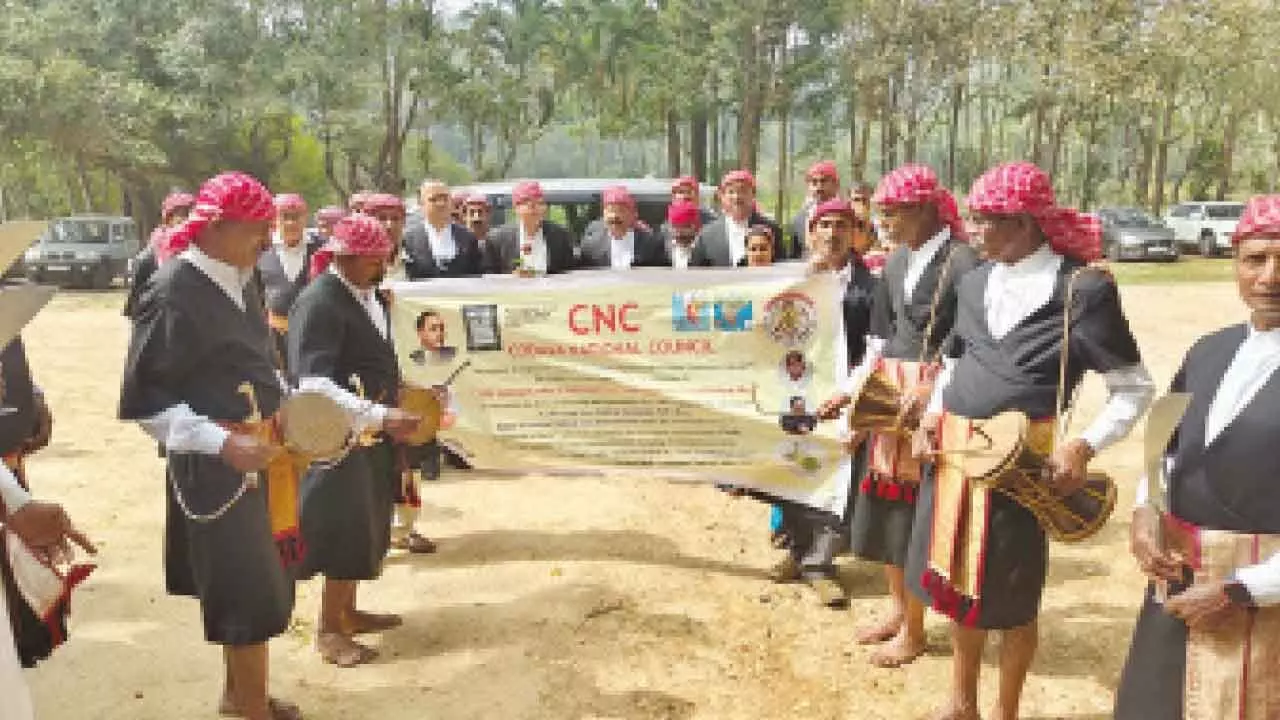
On November 26, as the nation observed Constitution Day to commemorate the adoption of the Constitution of India, a distinct and poignant assertion of constitutional rights unfolded in the hills of Kodagu. Marking the 35th annual ‘Codava National Day’ alongside the national observance, the Codava National Council (CNC) convened a congregation to reiterate their demand for self-determination.
In a resolution addressed to the President of India, the Prime Minister, and the Home Minister, the CNC leveraged the symbolism of the day to argue that the very Constitution being celebrated contains the provisions, specifically Articles 244 and 371 read with the 6th and 8th Schedules, necessary to grant ‘Codavaland’ Geo-political Autonomy.
The confluence of these two observances is no coincidence for the CNC. Under the leadership of N U Nachappa Codava, the council has long argued that the promise of the Indian Constitution has remained unfulfilled for the Codava people since the amalgamation of the erstwhile Part ‘C’ State of Coorg into Vishal Mysore (now Karnataka) in 1956. The congregation resolved that this merger was a “grave Constitutional breach” that reduced a once self-reliant state to an “internal colony.” The Council’s resolution describes the community’s current status as that of “second-class, apartheid citizens,” facing marginalisation, demographic shifts, and the erosion of their distinct mono-ethnic, animistic identity due to what they term as xeno-centric policies and the hegemony of the dominant state community.
Central to the resolution adopted at the meet is a charter of ten paramount aspirations, with the demand for Geo-political Autonomy appearing as the keystone. The CNC is seeking an autonomy model similar to the existing Autonomous Regions in North-Eastern India or the Hill Councils of Leh and Ladakh. They argue that this is essential to protect the indigenous Codava people, whose history is intertwined with the region and the River Cauvery. This political demand is bolstered by legal interventions, including a Public Interest Litigation (WP No. 7769/2023) filed by economist Dr. Subramanian Swamy in the High Court of Karnataka, which seeks to secure these constitutional rights.
Beyond political autonomy, the resolution weaves together a tapestry of cultural and religious demands designed to safeguard the community’s unique heritage. The CNC is pressing for the recognition of Codavas as a Scheduled Tribe (ST), citing their primitive, animistic traits—a claim they believe is substantiated by recent Supreme Court observations on tribal classification.
Furthermore, they have sought constitutional protection for their customary religious rights, specifically the possession of the “Sacrament Gun,” demanding it be protected under Articles 25 and 26 on par with the Sikh Kirpan. The preservation of language is also a priority, with the council urging the inclusion of ‘Codava Thakk’ in the 8th Schedule of the Constitution and its introduction into the state’s administrative and educational curriculum.
The congregation also turned its focus to the environmental and historical sanctity of the land. The resolution demands that the River Cauvery be conferred “Living Entity” status with legal personhood, ensuring that the major share of its waters is utilised within Codavaland. To prevent further demographic displacement, the CNC has proposed the implementation of an Inner Line Permit (ILP) system, akin to those in Nagaland and Mizoram, and the restoration of ancestral properties confiscated or expropriated since the 1956 merger. They have also called for the recognition of historical tragedies, demanding memorials for political assassinations and wars at sites like Naalnaad Aramane and Devaattparamb, and asking that these be recognised on the UN’s Holocaust Remembrance list.
The demands extend to political representation and global recognition. The CNC has proposed the creation of exclusive “intangible virtual constituencies” for Codavas in the Parliament and State Assembly, drawing a parallel to the Sangha constituency for Buddhist monks in Sikkim. On the international stage, they seek the inclusion of Codava Folkloric Heritage in the UNESCO Intangible Cultural Heritage list. As the 16th Census of India approaches in 2026-27, the Council has formally requested a separate Code and Column to enumerate Codavas as an independent ethnic group, harking back to census records from 1871 to 1931 which recognised them as such. As the sun set on this double observance of National and Constitutional significance, the message from Madikeri was clear, for the Codavas, celebrating the Constitution means fighting for the autonomy enshrined within it.