better treated wastewater reuse to tackle summer crisis in capital

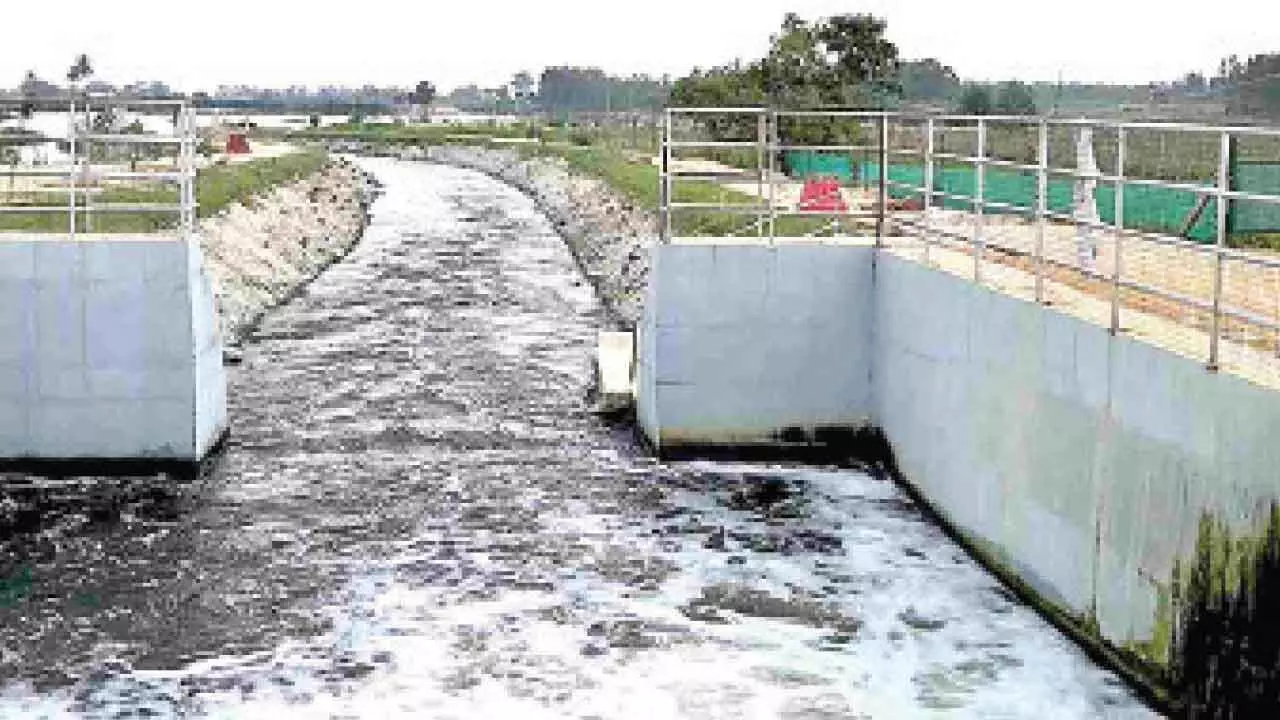
In a major step toward addressing recurring summer water shortages, the Bangalore Water Supply and Sewerage Board (BWSSB) has significantly ramped up the reuse of treated wastewater in Bengaluru. At present, nearly 1,000 million litres per day (MLD) of treated water is being reused across the city and neighbouring districts.
BWSSB, which manages more than 11,894 km of underground drainage network, supplies around 2,225 MLD of drinking water daily to the city from the Cauvery River, located nearly 100 km away. Of this, nearly 85 to 90 per cent turns into sewage after domestic use.
Currently, 34 modern sewage treatment plants (STPs) process about 1,348 MLD of wastewater. Additional STPs are being constructed to treat nearly 900 MLD more sewage in the coming years. Of the treated water, nearly 950 MLD is being supplied daily to fill lakes and recharge groundwater.
Two years ago, only about 750 MLD of treated water was being reused. However, the severe drought during the summer of 2024 led to acute drinking water shortages, prompting BWSSB to expand treated water reuse initiatives. The board began channeling treated water for non-potable purposes and for replenishing lakes to improve groundwater levels.
The treated water is processed as per standards set by the National Green Tribunal. Major treatment operations are carried out at facilities in the Koramangala-Challaghatta (KC) Valley. A team of experts led by the Indian Institute of Science (IISc) has been monitoring water quality for the past five years.
Lake rejuvenation in Bengaluru and neighbouring districts
Treated water is being used to fill 572 lakes in Bengaluru and nearby districts. Around 950 MLD is allocated for this purpose. In Kolar district alone, 415 lakes are being replenished with 440 MLD, with 145 lakes already filled in the first phase. Work to fill 270 additional lakes is expected to begin in the second phase.
In Chikkaballapur district, 210 MLD is being supplied to 65 lakes, while 220 MLD is being used to replenish 69 lakes in Anekal taluk. Proposals have also been submitted to fill additional lakes such as Vabasandra, Tirupalya, Gavi Lake and Yarandahalli Lake in Jigani hobli. Within Bengaluru city, about 80 MLD is used to fill 23 lakes.
The initiative has significantly improved groundwater levels in several areas. In some regions where groundwater levels had dropped to depths of 1,500 feet, they have now improved by 350 to 400 feet.
Supply to industries and institutions
Beyond lake rejuvenation, treated water is being supplied to industries and institutions. Tertiary-treated water is provided to IT companies including Wipro. Secondary-treated water is being supplied to the Indian Air Force, ITC Limited, Bharat Electronics Limited, and Kempegowda International Airport, as well as for government buildings, road works and construction activities.
Additionally, Raj Bhavan, multi-storey buildings, the Race Course and Cubbon Park receive tertiary-treated water from the Cubbon Park STP, with around 15 MLD supplied daily. Plans are also underway to provide 4 MLD of treated water to the Peenya industrial area.
BWSSB officials estimate that the sale of treated water generates nearly Rs 60 lakh per month, amounting to approximately Rs 8 crore annually.
With expanded reuse and additional STPs in the pipeline, the board expects further improvements in water sustainability and resilience against summer shortages.